
China–Central Asia Agricultural Cooperation Update (Issue 4, 2026)
Issue 4
01. Premier Li Qiang visits Uzbekistan: China and Uzbekistan list "modern agriculture" as one of the three major deepening directions (10-17, Tashkent)
on October 17, Premier Li Qiang of the State Council paid a visit to Uzbekistan and held talks with the Uzbek side. The two sides clearly listed "modern agriculture" as one of the three major directions of deepening cooperation (the other two are energy resources and artificial intelligence), and expressed their willingness to import more high-quality and characteristic commodities from Ukraine and expand trade in agricultural products; Ukraine also puts agriculture as a priority area of cooperation after economic and trade investment. During the talks, the two sides witnessed the signing of cooperation documents in the fields of economy and trade, education, customs, health, and poverty reduction.
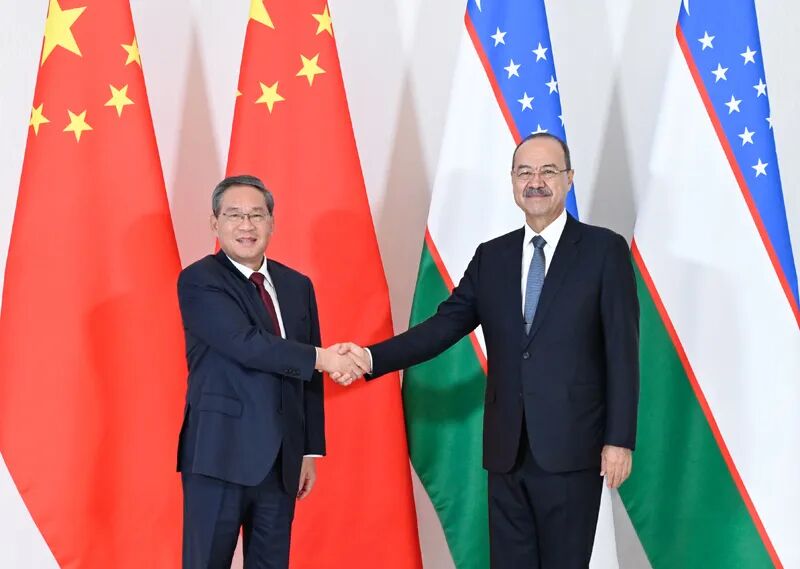
Premier Li Qiang holds talks with Uzbek Prime Minister Ali Bov in Tashkent
02. Premier Li Qiang of the State Council visited Tajikistan: Tajikistan listed "expanding the export category of agricultural products to China" as a specific demand (10-18, Dushanbe)
on October 18, Premier Li Qiang of the State Council held talks with Tajik Prime Minister Rasulzoda in Dushanbe. During the talks, the Tajik side clearly put forward four specific demands related to agriculture: expanding the list and quantity of products exported to China, signing a new protocol to facilitate the entry of Tajik producers into the Chinese market, developing joint ventures for cotton processing to finished product production, and deepening cooperation in the food industry and processing.
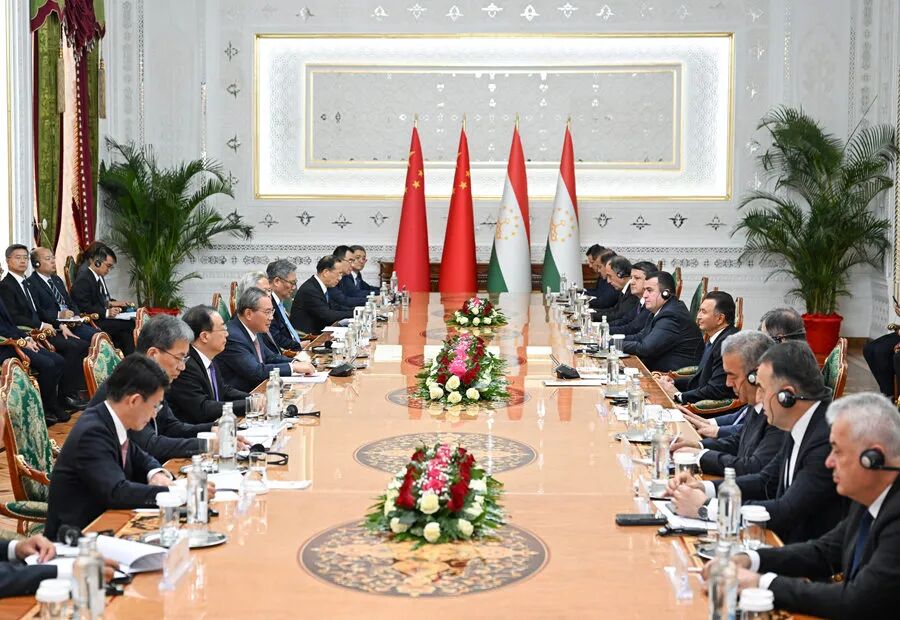
Premier Li Qiang holds talks with Tajik Prime Minister Rasul Zoda in Dushanbe
03. The 4th China-Turkmenistan Scientific Innovation Forum (Wuhan): Focus on Cotton Industry Chain Cooperation (10-15, Wuhan)
from October 13th to 15th, the 4th China-Turkmenistan Science and Innovation Forum was held in Wuhan, co-sponsored by the Ministry of Science and Technology and the Turkmenistan Academy of Sciences. At the forum, Zhang Xianlong, academician of the Chinese Academy of Engineering, made a theme report on "Overview of China's Cotton Science and Technology Development and China-Turkey Cotton Industry Cooperation Vision", and proposed the establishment of international cooperation projects, the establishment of a cotton science and technology innovation center, the establishment of a regular bilateral exchange mechanism, and the promotion of mutual visits of scientific research personnel. Five cooperation suggestions including joint training and promoting exchanges between the seed industry and leading enterprises of smart agricultural equipment. Shihezi University displayed the sand table of Xinjiang cotton industry chain on the spot; earthwork revealed that its Desert Botany Research Institute has signed a cooperation agreement with Xinjiang Institute of Ecology and Geography, Chinese Academy of Sciences, and the cooperation between the two sides in the field of cotton industry chain and drought-tolerant plants has become the focus of this forum.
04. The 2nd China-Central Asia (Uzbekistan) Trade Fair (Tashkent): Uzbekistan's agriculture-related institutions made a high-profile statement (10-16, Tashkent)
from October 14th to 16th, the 2nd China-Central Asia (Uzbekistan) Trade Fair was held at the Tashkent International Exhibition Center. About 200 Chinese companies and 19 provinces, autonomous regions and municipalities participated in the exhibition. During the exhibition, Uzbekistan's agricultural institutions expressed their willingness to cooperate in a high profile: the head of the Uzbekistan Agricultural Innovation Fund said that China's robots and new energy equipment are deeply empowering Uzbekistan's agriculture and are looking forward to cooperation in the whole industrial chain of modern agriculture. The director of the Agricultural Information Innovation Center of the Uzbek Farmers Association and the director of the Cooperation Department of the Uzbek Chamber of Commerce and Industry also expressed their views on the docking of agricultural information and trade.
05. Gansu Province and the National Academy of Sciences of Tajikistan signed a standard cooperation agreement (10-13)
according to a summary of the province's standardization work disclosed by the "Gansu Daily", the Gansu Institute of Commercial Science and Technology signed a standards cooperation agreement with the National Academy of Sciences of Tajikistan. According to the agreement, Gansu will transfer China's national standards to Tajikistan in five aspects, including potato, wheat and cotton, and include the testing methods of 25 products in the testing method system applicable to Tajikistan's national standards. to explore a replicable "standard channel" for advantageous industries to participate in "Belt and Road Initiative". The cooperation takes the standard "soft connectivity" as the starting point, which helps to reduce the technical barriers of bilateral agricultural products and processed products trade, and improve the adaptation of Gansu characteristic agricultural equipment and technology in Central Asia.
Uzbekistan experts look forward to deepening agricultural scientific research cooperation with Xinjiang (10-13, Urumqi)
after the press conference of Xinjiang scientific research results, the director of the Institute of Genetics and Plant Experimental Biology of the Uzbek Academy of Sciences publicly stated that he looked forward to deepening agricultural scientific research cooperation with Xinjiang. The statement continues the existing exchange basis between China and Ukraine in the fields of crop genetic improvement and plant resource utilization, and highlights the practical needs of Central Asian countries to improve their agricultural science and technology level by taking advantage of Xinjiang's location and scientific research advantages.
07. Tianshan white crab has been mass-produced and exported in Xinjiang, and has signed contracts with customers in Kazakhstan and Uzbekistan (10-10, Alar)
the second "Lake Fresh Xinjiang Raising White Jade Crab to Move West" fishing festival was held on October 10 in Alar City, the first division of the Corps. The 500 mu breeding base of the first phase of the project has been completed, and more than 2000 mu of the second phase is under construction, with a yield of 150-200kg per mu, realizing the large-scale mass production of Tianshan white jade crab in Xinjiang. The products are mainly sold to Central Asia and Central Europe. At present, it has signed contracts with customers such as Kazakhstan, Uzbekistan and Turkey. It is estimated that about 50% of the output will be exported to foreign countries, mainly to the Central Asian market. This mode of "raising fresh lakes in Xinjiang" has become a representative case of Xinjiang aquatic products docking with the central Asian consumer market with the help of its geographical advantages.
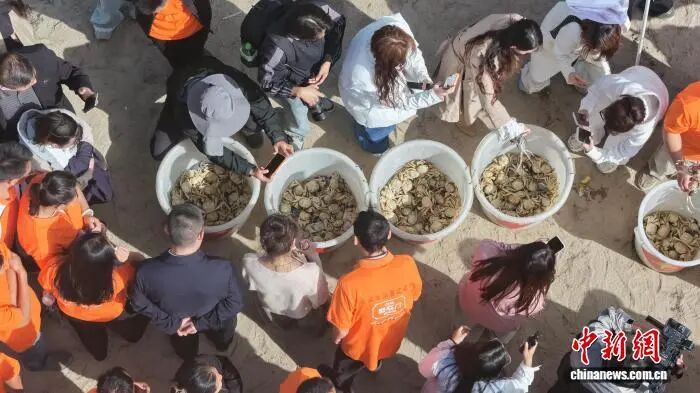
Tianshan white crab officially realized large-scale mass production and export in Xinjiang
08. Henan Agricultural Investment "China-Kazakhstan Agricultural Science and Technology Demonstration Park" Wheat and Corn Harvests Period (10-13, North Kazakhstan)
The "China-Kazakhstan Agricultural Science and Technology Demonstration Park" jointly built by Henan Agricultural Investment and North Kazakhstan National University ushered in the harvest period of wheat and corn. The demonstration park is located in 1000 mu of black land in North Harbin, with planning and layout of water-saving irrigation, agricultural machinery and equipment, intelligent agricultural technology exhibition area, as well as wheat, corn and soybean introduction experimental area; the two sides signed a contract to build it in June 2026. At present, the harvest of crops marks the transformation of the park from the construction period to the output and demonstration period, and provides a physical platform for Henan agricultural technology, equipment and varieties to "go out" and serve Kazakhstan's food production.
09. Qingdao Lulin Dehydrated Vegetables to Kazakhstan to Build Standardized White Onion Planting and Processing Base (10-14)
qingdao Lulin dehydrated vegetable enterprises went to Kazakhstan to build a standardized white onion planting and processing base, forming a full-chain output mode of "product + technology + standard + brand. Qingdao Agricultural and Rural Bureau has included supporting enterprises to build overseas planting and breeding bases and layout overseas warehouses into its annual key work, providing supporting policies and resources for enterprises to "go global. The project takes white onion as the starting point, and drives the two-way connection between Qingdao agricultural processing capacity and Central Asian raw material base by exporting standardized planting and processing capacity.
10. Xinjiang Academy of Agricultural Sciences in Kazakhstan Demonstration Field: Cotton, Corn, Oil Sunflower Yield Set Kazakhstan's National Record (10-16, Kazakhstan)
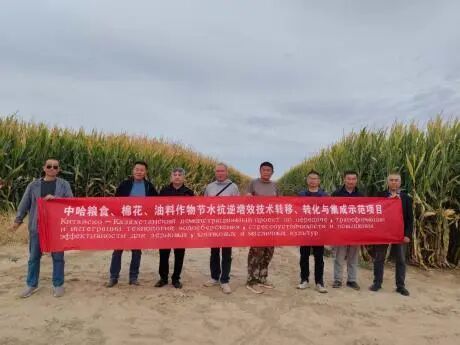
the Xinjiang Academy of Agricultural Sciences implemented the "Transfer of Water-saving, Stress-resistance and Efficiency-increasing Technology for Grain, Cotton and Oil Crops" project and the "China-Central Asia Agricultural Technology Sharing Center (Kazakhstan Sub-center)" in Kazakhstan, handing over brilliant report cards: the yield of cotton seeds and cotton in Lihua 1400 reached 7605kg/ha, a record in Kazakhstan, driving the income of local cotton farmers to increase by about 30%. Corn Dense Planting Drip Irrigation Yield 1274-1303kg per Mu, 33.7-38.6% higher than the local level; Oil sunflower yield 242kg per mu, up 20.62. The project has trained more than 1000 local agricultural technicians and farmers, highlighting the potential of Chinese agricultural technology in Central Asia to increase production and efficiency.
11. Gansu Minqin honeydew melon exported to Kazakhstan for the first time (10-13, Minqin)
after passing the inspection by Lanzhou Customs, 2 tons of Gansu Minqin honeydew melon were shipped to Kazakhstan. This is the first time that Minqin honeydew melon has been exported to Central Asian countries after entering the markets of Singapore and UAE. The transportation adopts the mode of "road cold chain + air freight", which takes about two days to ensure the quality of fresh fruits to the maximum extent. This single export marks that Gansu's characteristic fresh agricultural products have opened up the channel through customs quarantine to Central Asia, and has accumulated experience for Minqin honeydew melon to further develop the Central Asian market.
12. Shaanxi Shangluo walnut kernel was exported to Central Asia via Horgos Port. Hanzhong tea exported 353 tons (10-14) to five Central Asian countries in the first half of the year.
shaanxi Shangluo 54 tons of walnut kernels left the country through Horgos Port and were sold to Central Asian countries such as Kazakhstan and Kyrgyzstan. At the same time, Hanzhong tea exports to Central Asia continued to rise-in the first half of 2026, Hanzhong tea exports to five Central Asian countries reached 353 tons with a value of 4.54 million yuan, up 34.4 per cent and 21.7 per cent respectively over the same period last year. One fruit, one leaf and two commodities went to Central Asia through the western land port, reflecting the steady momentum of Shaanxi's characteristic agricultural products to expand exports to Central Asia with the help of location and channel advantages.
13. Xinjiang Bohu County Pigment Pepper Exported to Central Asian Countries (10-14, Bohu)
the planting area of pepper in Bohu County of Xinjiang is more than 70000 mu, including 63000 mu of pigment pepper, which is exported to Central Asian countries. The local widely used Beidou navigation transplanter, drone plant protection and other intelligent equipment in the planting link, improve standardization and operational efficiency. Bohu pigment pepper is becoming one of the export categories of characteristic agricultural products facing Central Asia, relying on Xinjiang's processing tomato and pepper industry foundation and opening the channel to the west.
This issue is compiled from the WeChat account 「Xinjiang Agricultural University Central Asia Research Center」. Search for 新疆农业大学中亚研究中心 in WeChat to follow.
Attachments
- DOCX中国与中亚农业合作动态2026年第4期.docx279.2 KBDownload