
Objective Mission
the China Foreign Agricultural Economic Research Association is a national first-level society established at the beginning of reform and opening up and registered with the Ministry of Civil Affairs. It is a corporate organization specializing in foreign agricultural economic and policy research and project cooperation. It is headed by the Chinese Academy of Social Sciences and affiliated to the Chinese Academy of Social Sciences. Institute of Rural Development, Academy of Social Sciences. The China Foreign Agricultural Economic Research Association is a non-profit national academic organization, which is voluntarily formed by personnel engaged in foreign agricultural economic research, teaching and related practical work. The purpose of this association is to promote the research and exchange of foreign agricultural economy and international agricultural economy, trade and cooperation. The goal and mission is to carry out academic activities, promote academic exchanges, unite all members, and serve the construction of agricultural modernization.
historical evolution
historical evolution
in 1978, under the new situation of reform and opening up, Zheng Linzhuang, a professor of agricultural economics at Renmin University of China, wrote a letter to Hu Qiaomu, then member of the Political Bureau of the CPC Central Committee and President of the Chinese Academy of Social Sciences, suggesting that a special research society should be established to absorb and organize relevant Chinese scholars to strengthen the research and understanding of foreign agricultural economy. President Hu Qiaomu adopted the proposal and instructed Zhan Wu, director of the Institute of Agricultural Economics of the Chinese Academy of Social Sciences, to carry out the preparatory work. After that, the "Preparatory Group of Foreign Agricultural Economic Research Association" headed by Cai Ziwei, Vice Minister of the Ministry of agriculture, was formed, and began to organize scholars from relevant units to carry out research. In September 1982, the China Foreign Agricultural Economic Research Association (hereinafter referred to as the Research Association) held the first national member congress and academic seminar, and negotiated and determined the formation of the first council, which was chaired by He Kang, deputy director of the National Agricultural Commission. In September 1988, the second National Member Congress and Academic Symposium was held, and the council was re-elected. He Kang, Minister of Agriculture, Animal Husbandry and Fisheries, was still the chairman. In 1991, it was registered with the Ministry of Civil Affairs in accordance with the regulations of the State Council on the administration of mass organizations. It belongs to the state-level social organizations. The competent business unit is the Chinese Academy of Social Sciences and is affiliated with the Institute of rural development of the Chinese Academy of Social Sciences. In 1992, the third council was re-elected and formed with Vice Minister of Agriculture Hong Fuzeng as its chairman. The fourth Council was formed in 1999, the fifth Council was formed in 2005, and the sixth Council was elected by the member Congress in 2012.
Since its establishment, the main areas of work of the Institute include the following eight areas:(1) organizing and promoting members' research on major theoretical and practical issues of agricultural economy on a global scale;(2) introducing relevant developments at home and abroad and conducting relevant information exchanges;(3) promoting academic exchanges with international academic groups, organizing participation in international academic activities, and organizing cooperative research with foreign scientific research institutions;(4) Undertake the demonstration of domestic and foreign development projects and research on domestic and foreign agricultural economic topics;(5) Promote and organize the selection of outstanding research results;(6) Carry out training and consulting services;(7) Edit and publish books on foreign agricultural economic issues Periodicals and materials;(8) Reflect major issues of the international agricultural economy and put forward countermeasures to relevant leading departments.
From 1978 to 1999, it went through the first to third sessions of the Council. During the preparatory period from 1978 to 1982, relevant academic research activities have been carried out. In accordance with the needs of my country to adjust the agricultural production structure and reform the agricultural management system, several academic seminars have been organized to summarize the experience of some countries in Southeast Asia in implementing agricultural diversification reforms to adapt to changes and fluctuations in the international market, and study the reform of highly concentrated countries in the Soviet Union and Eastern Europe. The situation of the agricultural economic management system. After the formal establishment of the Research Society in 1982, it further organized national members to study major issues in many aspects of the international agricultural economy, focusing on providing meaningful experience and practices for the economic reform and development of my country's agriculture. In the following two decades, the main research issues are: the research on the agricultural development strategy of the major countries in the world, which focuses on the basic position of agriculture in the national economy; the research on the price and purchase and sale system of agricultural products in different types of countries, which mainly analyzes the various support and intervention policies adopted by the governments of different countries for agricultural development; the research on foreign agricultural cooperatives, the research results provide a referential organizational form for the reform of China's rural economic system; the research on rural development in the third world mainly summarizes the basic experience of rural development in developing countries; the research on the types and models of agricultural development in the world, which puts forward suggestions for timely adjustment of agricultural policies and agricultural legislation. In addition, scholars have been organized to go to poverty-stricken areas, coastal areas and border areas to conduct on-the-spot investigation on the problems of agriculture and rural development; at the same time, they have introduced the experience of anti-poverty and development of export-oriented agriculture in some foreign areas through various forms, and put forward suggestions for carrying out border trade. Since the 1990 s, extensive research has been conducted on the GATT, WTO and Chinese agriculture, and relevant policy recommendations have been put forward.
In the 13 years from 1999 to the present, it has experienced the fourth and fifth sessions of the Council. During this period, especially in the more than ten years since China's accession to the WTO, the agricultural and rural development situation in the world and China has changed a lot compared with the establishment of the Research Association in the early 1980 s. In particular, since the late 1990 s, before and after China's accession to the WTO, the impact of China's accession to the WTO, the integration of the world agricultural economy and trade liberalization have become hot and key research topics. Since 2004, after the central government has issued a major strategy for building a new socialist countryside, how to learn from the experience of international rural construction and development has become an important issue. After 2007, the fluctuations and crises of the world agricultural product market associated with the international financial crisis, the rise of genetically modified agriculture, biomass energy agriculture, low-carbon agriculture and other issues have reignited the thinking of major issues such as modern agricultural development and food security.
In the face of these changing and unchanging new and old problems, the Research Association firmly grasps the pulse of the development of the times, combines the actual needs at home and abroad, is close to local work practices, and earnestly organizes members to carry out relevant research and academic exchange activities. Basically, the research society will host, co-host or assist in holding various forms of domestic and international seminars and symposiums every year, organize members and invite relevant experts to participate in the discussion of various related topics. Among them, the most influential activities include the "International Symposium on Rural Development and Transformation" held in 2006, the "International Symposium on Comparison of Agricultural and Rural Development Experiences between China and Europe" held in 2007, and the "International Symposium on Sustainable Food Supply Chain" held in 2008 "," Two-Type "International Symposium on Rural and Ecological Agriculture and the Fifth International Symposium on Comparison of China's Agricultural Modernization" held in 2009, and "Development of East Asian Farmers' Specialized Cooperative Economic Organizations" held in 2010 international Forum on the Dilemma and Outlet of Patterns "and" The Fourth Middle Ages Social Science Symposium: agricultural development and food security. During this period, the research association specially organized 4 internal small and medium-sized symposiums and seminars, organized members to write decision-making reference articles, and encouraged members to carry out related project research.
In this series of activities, the study will focus on and explore the following eight areas of topics.
1. Experiences and trends in world agricultural development
since 2005, some members have raised the issue of giving full play to their comparative advantages to guide agricultural restructuring. On the basis of his many years of research on the subject of "foreign agriculture and rural economic restructuring", researcher Li Weimin continued to conduct international comparative research on agricultural structure, and proposed to replace the output value and output structure of agriculture with farm structure. Only in this way can we study the internal law of agricultural development. Researcher Xu Gengsheng organized a number of members to co-write "Our Strategy for Governing Agriculture" on the basis of relevant research in the past, proposing further thinking, pointing out that the concept and policy of food security need to be flexible to a certain extent, and policies should consider the sustainable development of agriculture from the perspective of the protection of resources and environmental capacity and social needs.
2. About new rural construction
since 2005, the international experience of new rural construction has been discussed many times in various activities held by the Research Association. At the academic seminar of the Research Association in November 2005, the reference significance of the Korean New Village Movement to the construction of a new countryside was discussed. In 2006, the Research Association assisted other units to hold a bilateral seminar between China and South Korea to exchange issues related to the New Village Movement in South Korea. In 2007, he co-organized a new rural construction exchange meeting in Nanjing, Jiangsu, and published relevant results after the meeting. In 2009, the "Fifth China Agricultural Modernization Comparative International Symposium" jointly organized by the Research Association and cooperative units. This meeting discussed in depth and detail the concept and practice of the "two-oriented" rural areas implemented in Hunan, and the new rural construction And the concrete practice of sustainable development strategy has received widespread attention from experts at home and abroad.
3. On the impact of WTO accession and countermeasures
the research on China's accession to the WTO began before China's accession to the WTO and has continued to this day. Some members of the Research Association who have been engaged in research in this field for a long time still insist on the research work in this field, such as the research on the impact of China's accession to the WTO carried out by researcher Cheng Guoqiang of the Development Research Center of the State Council in recent years, the significance of this study is to analyze the changes in China's agriculture and food security issues under open conditions, and put forward more in-depth thinking for the further extension of China's food security strategy.
4. on agricultural modernization
the "International Symposium on Comparative Agricultural Modernization" is a seminar series jointly created by the Institute of Rural Development of the Chinese Academy of Social Sciences and the Research Association. Pan Chenguang, the fifth vice president of the Research Association, and Du Zhixiong, secretary general, played an important leading role as the main leaders of the Institute. The seminar is basically an international seminar held every two years. The seminar focuses on agricultural modernization and is interspersed with discussions on related issues. In the 2005 seminar, some members proposed the need to review the connotation of agricultural modernization. The concept of "four modernizations" may not be rigorous. It may be more scientific to replace it with output indicators such as land productivity, labor productivity, return on capital, and contribution rate of scientific and technological progress. In 2009, some members carried out agricultural modernization research in Henan Province, a major agricultural province, inspected the latest practice of developing modern agriculture, and continued to think about the concept of agricultural modernization, especially the resource and environmental constraints, comprehensive production capacity, and ecological agriculture models. Included in the unified framework.
5. On food security
food security has always been the focus of the research. Li Weimin Research Association edited and published the book "Introduction to World Food Security" as early as 1988. Li Chenggui, the executive director of the Research Association, is also an expert on food security issues. His main author "Research on the Target System of Agricultural Structural Strategic Adjustment" Won the second prize of the Ministry of Agriculture's Excellent Research Achievements in Soft Science from 2001 to 2003. The issue of food security can best reflect the characteristics of academic controversy. Many experts have different views on this, but this does not affect the research work of the research society in their respective fields. There are special analyses on this in the "China Ancient Forum" in 2010 and the "China Social Science Forum" in 2011.
6. Comparison of Chinese and foreign land systems
the land system was involved in many activities of the seminar. At the International Symposium on the Comparison of China-EU Experiences held in 2007, the issue of land systems in China and Eastern European countries was specifically discussed. In 2008, the Research Association assisted the Rural Development Institute of the Chinese Academy of Social Sciences to hold a "Sino-German Seminar on Land Issues" in Beijing, which discussed issues such as the transfer of agricultural land between China and Germany, the protection of farmers' land rights and interests, land use planning, protection and management. In the same year, it also assisted the Rural Development Institute of the Chinese Academy of Social Sciences and other units to organize the "International Symposium on China's Rural Land Property Rights Reform". Foreign experts came from the United Kingdom, Japan, Vietnam, the United States and other countries. The issue of land system was also addressed in many seminars in 2010.
Cooperative development
foreign cooperative economic research is a major research work carried out for a long time after the formal establishment of the research society. After the completion of the research results, it has opened several sessions of cooperative economy lectures for the grassroots, and successively published a number of monographs and teaching materials to promote my country The development of cooperatives has played a substantial role. During the term of the Fifth Council, the Research Society jointly assisted in the organization of two international seminars on the theme of cooperatives and cooperative economic development. Some members participated in the organization of the conference or made conference reports.
8. New Agricultural Development
since 2005, some members of the Research Association began to pay attention to agricultural development from the perspective of sustainable food chain. Researcher Du Zhixiong led the research, and Deputy Secretary General Tan Xuewen and some members focused on participating. International visits and exchanges on sustainable fisheries were organized in 2005, international visits and exchanges on sustainable food supply chains were organized in 2008, and international exchanges on sustainable diets were organized in 2012. During this period, personnel were sent abroad to participate in various international exchange activities on the development of new agriculture, such as the slow food campaign and the sustainable catering campaign. Members have organized relevant case studies, published research reports and published professional articles. We also think about new agriculture, post-modern agriculture, modern agriculture, ecological agriculture and other models together, which represents a new development direction in the field of agriculture.
LOGO Interpretation
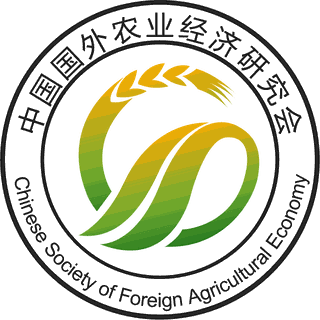
this Association currently uses the LOGO on the homepage of the website as the logo. After discussion, we will describe the meaning of the LOGO:
1. The whole is the abbreviation of CSFAE;
2. The ear of wheat symbolizes agriculture, and wheat is the world's most extensive rations, a metaphor for international vision;
3. From green to yellow represents planting and harvesting;
4. Waves, circles and color gradients imply the hope and vitality of the sunrise.
