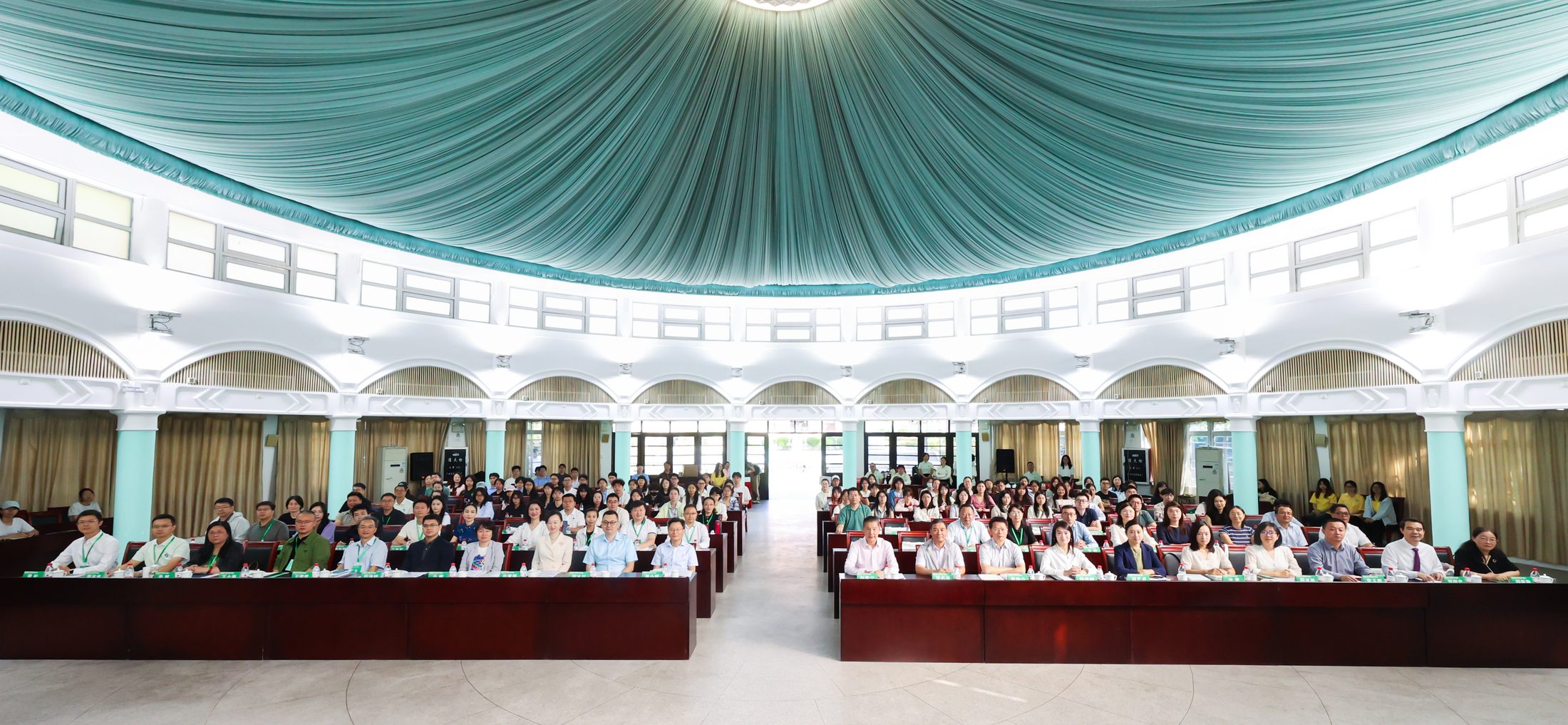
NewsAgricultural Openness and Food Security Forum (Phase II) Held at South China Agricultural UniversityOn October 24, 2026, the special meeting of the China Foreign Agricultural Economic Research Association "Agricultural Opening and Food Security Forum (Phase II)" was successfully held in South China Agricultural University. Representatives from academia, business circles, international organizations and related institutions gathered together to conduct exchanges and discussions on agricultural opening and cooperation and food security. The forum has links such as conference reports and round-table forums. The conference report focused on issues such as circular finance in open agricultural cooperation, external shocks and global food security, the international development of China's agricultural drones, and global multi-crop production resilience and system stability mechanisms, and shared research results and practical experience in related fields. With the theme of "Challenges and Paths of China's Food Security Governance under the High-level Opening of Agriculture", the roundtable forum conducted in-depth exchanges on the new situation, new challenges and coping paths facing food security under open conditions. In addition, the conference also focused on the construction of the discipline characteristics of agricultural and forestry economic management in local colleges and universities. This forum has set up a platform for academic research and industrial practice exchange and cooperation in the field of agricultural economy, which helps to deepen the understanding of issues related to agricultural opening up and food security, and provides ideas and references for promoting high-level agricultural opening up, ensuring national food security and promoting high-quality agricultural development.
NoticesNotice on Convening the “Agricultural Openness and Food Security Forum (Second Session)”All relevant units and experts: in order to deeply discuss the major theoretical and practical issues of high-level agricultural opening and national food security, and promote academic exchanges and practical cooperation, the China Foreign Agricultural Economic Research Association and South China Agricultural University decided to jointly hold the "Agricultural Opening and Food Security Forum (Phase II)". The relevant matters are hereby notified as follows. 1. Conference Themes high-level Agricultural Openness and National Food Security 2. organizational unit sponsor: China Foreign Agricultural Economic Research Association, South China Agricultural University organizer: School of Economics and Management, South China Agricultural University, Guangdong Provincial Key Laboratory of Philosophy and Social Sciences-Key Laboratory of Agricultural and Rural Policy and Reform and Innovation, South China Agricultural University, Key Laboratory of Rural Revitalization, etc. 3. meeting time and place time: October 24, 2026 (field representatives report on October 23 and leave on October 25) venue: Guangzhou City, Guangdong Province (specific meeting venue and registration arrangements will be notified separately) 4. Conference Topics (I) agricultural trade and domestic production coordination (II) global agricultural industry chain supply chain security (III) Agricultural Trade and Support Policy Synergy (IV) Agricultural Science and Technology Innovation and International Cooperation internationalization Development of (V) Agricultural Enterprises 5. Registration both open and invited representatives are open. Please pay attention to the follow-up registration notice and complete the registration as required. 6. other matters no conference fees will be charged for the meeting. Accommodation and transportation expenses will be borne by oneself. Specific arrangements will be notified separately. Contact person and contact information will be notified separately. Notice is hereby given. China Foreign Agricultural Economic Research Association 30 September 2026
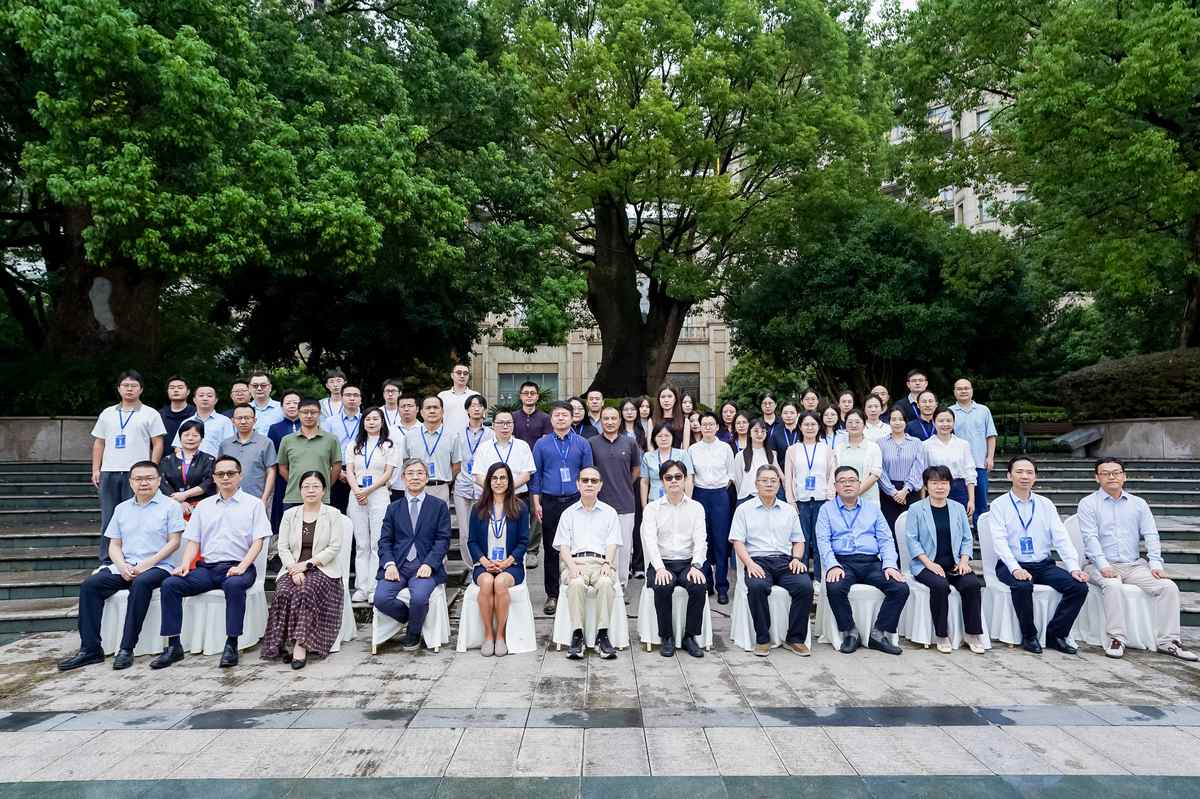
NewsGathering Global Vision to Explore the New Path of Urban Agriculture Development -- "Urban Agriculture and Urban-rural Integration Development" Seminar Successfully Held in ShanghaiFrom September 19 to 20, the seminar on "urban agriculture and urban-rural integration development" was held in Shanghai, jointly sponsored by Shanghai Academy of Agricultural Sciences, China Foreign Agricultural Economic Research Association, Rural Development Research Institute of Chinese Academy of Social Sciences and Shanghai Rural Economic Association. The conference focused on cutting-edge topics such as the high-quality development of urban agriculture, the deepening of urban-rural integration, and the transformation of urban agricultural food systems. It brought together domestic and foreign experts and scholars, representatives of government departments and industry professionals to discuss the new trends and new models of urban agricultural development under the background of megacities. New path. Based on the new stage of agricultural and rural modernization during the "Tenth Five-Year Plan" period, this seminar focuses on the background of the deepening of urbanization, the upgrading of consumption structure, the acceleration of scientific and technological revolution, and the transformation of the global food system. The exchange platform provides intellectual support for promoting the theoretical innovation and practical exploration of urban agriculture. Opening Ceremony: Re-understanding the Value of Urban Agriculture shen Xiaohui, vice president of Shanghai Academy of Agricultural Sciences, Shao Qiliang, President of Shanghai Rural Economic Association, and Hu Glacier, Secretary General of China Foreign Agricultural Economic Research Association, delivered speeches respectively. The opening ceremony of the meeting was presided over by Shi Jianchun, director of the Institute of Agricultural Science and Technology Information, Shanghai Academy of Agricultural Sciences. Shen Xiaohui pointed out that urban agriculture has gradually developed from traditional suburban agriculture to an important carrier connecting agricultural production and urban consumption, rural and urban, industry and ecology. Facing the resource constraints and diversified needs of megacities, Shanghai actively promotes the construction of high-standard farmland, modern facility agriculture, and the deep integration of agriculture, culture, business, and sports, and explores the development path of urban agriculture with Shanghai characteristics. Shao Qiliang said that in the development of megacities, urban agriculture undertakes multiple functions such as ensuring the supply of agricultural products, optimizing ecological space, inheriting local culture, and serving citizens' lives. The Shanghai Rural Economics Association will continue to play its role as a bridge, carry out research and exchanges around the key issues in the development of urban agriculture, urban-rural integration and industrial integration, and promote the transformation and application of theoretical achievements. Hu Glacier said that urban agriculture has become an important window to observe the transformation of agricultural functions and the evolution of urban-rural relations. With the changes in the stage of urban development, the connotation and extension of urban agriculture, urban-rural relations and agricultural boundaries are undergoing profound changes. It is necessary to base on a global perspective, strengthen international comparisons, and draw new ideas from the development of global urban agriculture while summarizing China's practical experience. Thinking. shi jianchun presided over the opening ceremony of the meeting. Publishing Research Results: Shanghai Urban Agriculture Practice Provides Important Sample during the meeting, researcher Zhang Lixia, deputy director of the Institute of Agricultural Science and Technology Information of the Shanghai Academy of Agricultural Sciences, released the "Shanghai Urban" Agriculture, Rural Areas and Farmers "Development Report." The report systematically combs the practical exploration of the integrated development of urban agriculture and rural industry in Shanghai, and provides an important reference for further research on the development law of urban agriculture. The report points out that the integration and development of rural industries in Shanghai presents the characteristics of full-chain value extension, multi-industry scene integration, regional spatial coordination and scientific and technological empowerment, and agricultural development is changing from a single production function to industrial chain extension, service integration and value enhancement. Keynote Report: Global Experience and Chinese Practice Inspire Each other the keynote report focuses on modern supply chain, urban agricultural food system, scientific and technological innovation, new track exploration and agricultural modernization strategy choice. Zhang Chaoxin, a researcher at the rural economic research center of the Ministry of agriculture and rural areas, pointed out that modern supply chain is not only a logistics system, but also a collaborative mechanism connecting production, processing, circulation and consumption. It needs to promote small farmers to better integrate into the modern agricultural industrial system through standard system, digital platform, organized service and risk sharing mechanism. Carmen Zuleta Ferrari, an expert on the Food and Agriculture Organization's Urban Regional Food Systems Project, pointed out from an international perspective that urban agriculture cannot be simply understood as agricultural production within cities, but should be understood within the framework of urban-rural integration and the transformation of urban agricultural food systems. She stressed that urban and rural areas are highly dependent, and urban agriculture can play an important role in ensuring food security, promoting circular economy, improving ecological environment and strengthening community ties. Wang Nan, a researcher at the Institute of Urban Agriculture of the Chinese Academy of Agricultural Sciences, looks forward to the "new track of urban agriculture facing 2030" and believes that artificial intelligence, biological manufacturing, facility agriculture and leisure agriculture will become an important direction for the future development of urban agriculture. Based on Korean experience, Professor Kim Han-ho of Seoul National University in South Korea proposed that the development of urban agriculture should not only be measured by the output of agricultural products, but should also pay attention to the values of health, social welfare and community building. The practice of South Korea shows that urban agriculture can become an important carrier to connect urban residents, improve the quality of life and promote community integration. Researcher Fang Zhiquan, an expert on major administrative decision-making consultation and demonstration of the Shanghai Municipal Government, systematically reviewed the development history of urban agriculture in China, and pointed out that urban agriculture with Chinese characteristics is a modern agricultural form formed under the background of urban-rural integration. In the future, it is necessary to further play the guarantee of supply, technological innovation and urban and rural elements. Flow and other functions. Roundtable Forum: Cross-border Discussion on the Frontier of Urban Agriculture Research on the afternoon of the 19th, the conference held a round table forum on "Frontier Research on Urban Agriculture. The forum brought together representatives of government departments, scientific research institutions, universities and enterprises. Yu Min, Wang Nan, Wang Yue, Fang Zhiquan, Nianmeng, Chen Ming, Yang Zhenshan, Zhang Yuchao, Zhang Zongyi, Hu Ligang, Hu Hao and Jia Bin conducted cross-border exchanges around the development trend, theoretical innovation and practical path of urban agriculture. Experts at the meeting believed that urban agriculture is breaking through the scope of traditional agricultural production and becoming an important link connecting urban development, rural revitalization, ecological construction and consumption upgrading. Future research needs to pay more attention to the function expansion, spatial optimization, technology empowerment, industrial integration and value realization mechanism of urban agriculture. The roundtable forum focuses on the strategic positioning, theoretical basis, practical model and future direction of urban agriculture. Experts pointed out that urban agriculture can not be simply understood as agricultural production around the city, but should be understood in the system of urban-rural integration and regional development; we should not only pay attention to the supply and guarantee of agricultural products, but also pay attention to ecological services, cultural heritage, leisure experience and social value creation. The forum realized the combination of theoretical research and practical exploration, macro strategy and micro case, and provided multi-dimensional ideas for solving the problems of urban agricultural development in mega cities. Academic Forum: Young Scholars Contributing to Diversified Research Results the academic forum held at the same time focused on the development path of urban agriculture under the constraints of mega-city land, the mechanism of agricultural carbon sequestration and emission reduction, the collective economy empowering rural industries, the high-quality development system of urban agriculture, the construction of world-class ecological islands, the reform of urban-rural integration, the upgrading of agricultural products consumption and the comparison of international experience. The first half of the academic forum focused on the development of urban agriculture under the pressure of land in megacities, the transformation of low-carbon agriculture, the development of rural collective economy and the construction of a high-quality development system for urban agriculture. The second half focused on the evaluation system of world-class ecological island construction, the experimental area of urban-rural integration development, the change of agricultural products consumption of urban residents and the comparison of international urban agricultural experience. Experts at the meeting believed that the future development of urban agriculture needs to transform from a single production function to a multi-functional system such as production, ecology, life, culture, and technological demonstration; it needs to improve the resilience of the agricultural industry chain supply chain through organization, digitization and institutional innovation; at the same time, It is necessary to explore differentiated development models based on resource endowments and development stages in different regions. Entering the Countryside: Promoting the Combination of Theoretical Research and Practice on September 20, the conference organized representatives to go to Liyao Village, Qingcun Town, Fengxian District, Shanghai Rural Revitalization Demonstration Village to conduct on-site investigations to understand the rural operation model and the integrated development practice of primary, secondary and tertiary industries, and extend theoretical discussions to agricultural and rural development. Line. Experts at the meeting said that under the background of the continuous promotion of urban-rural integration and the accelerated development of agricultural modernization, urban agriculture undertakes multiple functions such as ensuring supply, optimizing ecology, promoting income increase, and activating rural areas. In the future, it is necessary to further strengthen institutional innovation, scientific and technological empowerment and industrial integration, promote the high-quality development of urban agriculture, and provide a new practical path for the integration of urban and rural areas in mega-cities and the comprehensive revitalization of rural areas. This seminar is co-sponsored by the Shanghai Academy of Agricultural Sciences, the China Foreign Agricultural Economic Research Association, the Rural Development Research Institute of the Chinese Academy of Social Sciences, and the Shanghai Rural Economics Association. It reflects the collaborative promotion of urban agricultural research by academic associations, scientific research institutions and local practice platforms. New exploration.
NoticesNotice on Membership Dues for the Ninth Term (May 2024–May 2029)Members: hello! According to the work arrangement of the seminar, it is now launched. The 9th Session of China Foreign Agricultural Economic Research Association (May 2024-May 2029) Membership Fee Collection Work. Relevant matters are notified as follows: 1. payment standard membership fees for the current session are charged on an annual basis, as follows: member 100 yuan/year, session 500 yuan; director 300 yuan/year, session 1500 yuan; executive director 500 yuan/year, session 2500 yuan; president and Vice President 1000 yuan/year, session 5000 yuan. (II) code scanning payment scan code payment two-dimensional code is as follows (please see attachment/picture below): please indicate in the payment postscript: name mobile phone number 3. information filling (for invoicing) after completing the payment, please complete the information collection form (or provide information according to the following fields) in order to issue the invoice uniformly: https://docs.qq.com/form/page/DVERuTWpscWpZdU1j ?? The study will after unified invoice, send by mail. 4. schedule this payment notice is valid for a long time. The Secretariat will handle invoicing and mail delivery in batches according to the payment and information submission. Please arrange your time reasonably and complete the payment as soon as possible. If you need relevant supporting documents, please also contact the postscript or contact person. 5. contacts hu Lingxiao mobile phone: 18810063886 mailbox: hulingxiao@cass.org.cn yu Jialin mobile phone: 18610572166 mailbox: yujialin@cass.org.cn if you have any questions, please feel free to contact the Secretariat. Thank you members for your long-term support for the work of the research institute! so salute! Secretariat of China Foreign Agricultural Economic Research Association april 8, 2026
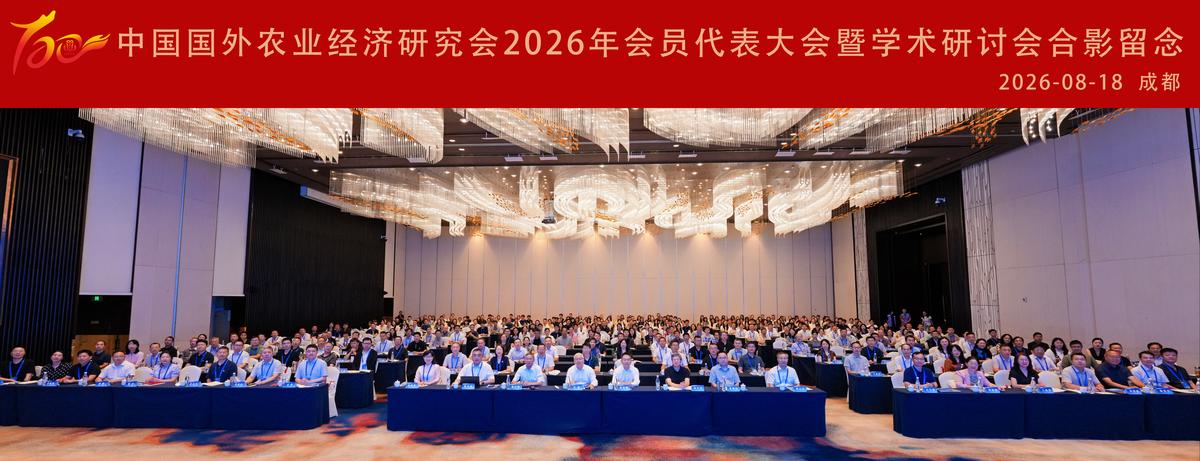
NoticesCall for Papers: CSFAE 2026 Annual ConferenceThe 2026 Member Congress and Academic Seminar of China Foreign Agricultural Economic Research Association (hereinafter referred to as "2026 Meeting") is scheduled to be held in Sichuan Agricultural University (Chengdu Campus) from August 17 to 19, 2026. The conference was hosted by the China Foreign Agricultural Economic Research Association, the Institute of Rural Development of the Chinese Academy of Social Sciences, and Sichuan Agricultural University, and undertaken by the School of Management of Sichuan Agricultural University. It coincides with the 120 anniversary of the founding of Sichuan Agricultural University, and this annual meeting is also included in the series of academic activities for the 120 anniversary of Sichuan Agricultural University. 2026 is the first year of China's "15th Five-Year Plan. The Fourth Plenary Session of the 20th Central Committee of the Communist Party of China and the No. 1 document of the Central Committee in 2026 have made systematic arrangements for promoting agricultural and rural modernization, improving food security capabilities, expanding high-level agricultural opening to the outside world, and deepening international agricultural cooperation. On a global scale, geopolitical conflicts, the adjustment of international trade patterns and the agricultural science and technology revolution are profoundly affecting the global food and agricultural development pattern. How to co-ordinate the domestic and international markets and resources in the complex international environment, and improve the level of China's agricultural opening and cooperation and the ability of global agricultural governance has become an important topic of concern to the academic and policy circles. In order to promote academic exchanges and promote theoretical innovation and policy research, this annual meeting plans to collect academic papers from members, experts and scholars on topics such as agricultural opening and development, global agricultural governance and agricultural modernization. 1. submission qualification all members of the Association are eligible to contribute. Non-members participating in essay-writing activities must submit an application for membership through the Association's website before submitting their contributions and indicate it on the contributions they have submitted. * The subject is an open topic for the seminar and non-member contributions are accepted. 2. Essay Themes and Topics the theme of the essay is "High-level Agricultural Openness and Global Food Security Governance: Comparative Research and Chinese Practice". The theme of the essay includes a number of topics, including but not limited: global food security governance: the evolution of the global food security landscape; energy-food-fertilizer linkage risks; geopolitics and agricultural trade security; global agricultural governance and international rules. High-level agricultural opening to the outside world: the path of high-level agricultural opening to the outside world; "Belt and Road" agricultural cooperation; South-South agricultural cooperation and development experience; global agricultural cooperation mechanism innovation. Agricultural trade system: changes in global agricultural trade pattern; development of agricultural service trade; digital trade and agricultural cross-border services; internationalization of agricultural standards. Agricultural investment and financing: agricultural foreign investment model; multinational agricultural enterprises and global supply chain; international agricultural investment and financing system; global layout of agricultural industry. New quality productivity of agriculture: new quality productivity of agriculture; digital agriculture and intelligent agriculture; agricultural science and technology innovation and industrial upgrading; modern agricultural industrial system; green transformation of agriculture; sustainable development of food system. Regional agricultural strategy *: national food security strategy; strategic hinterland and food production functional areas; "Tianfu granary" and other regional food security practices; regional agricultural development model. Special Session for International Students *: Successful Experience and Policy Practice of Agricultural Development in Various Countries; Comparison and Cooperation Space of Agricultural Development Models between China and Foreign Countries. 3. essay organization and paper evaluation (I) essay solicitation activities are organized and implemented by the paper evaluation committee under the leadership of the council. The paper evaluation committee formulates this year's essay collection and paper evaluation plan, and sets up an essay collection working group to be responsible for the management of essay collection. (II) the Association conducts academic evaluations of submitted papers that meet the requirements. The evaluation of papers adopts unified standards, follows the principles of quality first, openness and fairness, advocates academic, originality, and ideological nature, encourages foreign agricultural research and international comparisons for domestic needs, and encourages original insights and reflective papers and research reports. The (III) will:(1) give priority to speeches at the annual meeting;(2) recommend to publications such as China's Rural Economy, China's Rural Observation, Reform and World Agriculture in the name of the Research Society. (IV), the meeting will arrange the conference proceedings (electronic version) for meeting the requirements of the submitted papers. 4. submission requirements each (I) can only contribute one article as the first author or corresponding author. (II) contributions should be unpublished original works. The paper should not have been published at the time of submission. If the paper has been submitted to academic journals, the submission information should be indicated; If the submitted paper is published before the August 2026 meeting, the author shall notify the research association in time so as to facilitate corresponding processing. Please refer to the writing paradigm of academic journals such as "China's Rural Economy" and "China's Rural Observation" for (III) papers. Please refer to "China's Rural Economy" for the style of the paper, including the title, author's name and unit, Chinese abstract, keywords, text and references. The number of words in the paper is generally about 15000 words. (IV) documents are in Microsoft Word document format, please do not provide PDF version. The file name is in the form of the title of the paper_the name of the first author. At the beginning of the document, indicate the contribution topic and the publication information. The example format is as follows: submission Topics: (I) Governance of Global Food Security published information: Not published or submitted to China Rural Economy the submission mailbox of (V) papers is songjiahao@sicau.edu.cn, and the deadline for submission is July 10, 2026. Overdue submissions will not be accepted. For matters not covered, please send email songjiahao@sicau.edu.cn or contact Hu Lingxiao (18810063886) and Song Jiahao (18972270055), School of Management, Sichuan Agricultural University, Secretariat of China Foreign Agricultural Economic Research Association. Five, meeting arrangements it is planned to be held from August 17 to 19, and the specific meeting arrangements will be notified later. China Foreign Agricultural Economic Research Association march 16, 2026
NoticesCall for Papers: Urban Agriculture Symposium (2026)Urban Agriculture Seminar (2026) Call for Essay Notice in order to promote academic exchanges and practical innovation in the field of urban agriculture, and promote the sustainable development of urban agriculture, the Shanghai Academy of Agricultural Sciences, the Chinese Academy of Social Sciences-Shanghai Municipal People's Government Shanghai Research Institute, the China Foreign Agricultural Economic Research Association and the Shanghai Rural Economic Association Jointly hosted the "Urban Agriculture and Urban-Rural Integrated Development" academic seminar, which is scheduled to be held in Shanghai in mid-to-late September 2026. Now open to all kinds of universities, research institutes, enterprises and industry practitioners to solicit conference papers, invite people from all walks of life to contribute! 1. Workshop Themes urban Agriculture and Urban-rural Integration Development 2. Essay topics (including but not limited to) 1. Model innovation and policy of urban agriculture and urban-rural integration development 2. Research on urban-rural spatial reconstruction and functional integration under the background of metropolitan area. 3. The industrial system of urban modern agriculture and the integrated development of three industries 4. Digital agriculture and smart agriculture empower urban-rural integration development 5. Urban agricultural supply chain and urban and rural market circulation 6. Rural revitalization and high-quality rural development in urban suburbs 7. Integration of urban agriculture, culture and tourism, leisure agriculture and new rural formats 8. Urban and rural factor flows and market-based allocation 9. Domestic and international cases and experiences of metropolitan agriculture and urban-rural integration 10. Other related topics 3. Request for essays 1. The thesis should focus on the theme of the essay, with clear views, detailed data, and academic or practical innovation. 2. The manuscript can be written in both Chinese and English, and the number of words should not exceed 10000 words. 3. The title, abstract (within 300 words), keywords, text, references, etc. of the manuscript conform to academic standards. 4. The manuscript must be an original result that has not been published. 4. Timing 1. Deadline for submission: July 20, 2026 2. Date of employment notice: August 20, 2026 3. Date of the meeting: mid-to-late September 2026 (notice of specific arrangements) 5. Contributions please send the full text of the paper to the forum mailbox and indicate in the title of the mail: "essay subject number, author's name, paper title" the organizing committee's email address: 840939621@qq.com, please indicate the author's contact number in the email. Contact: Han Chao 17862135827 chu Yifei 17798547942
NewsChina–Russia Symposium on Smart Agriculture and Rural Digital Transformation Held in YanglingFrom January 15 to 17, 2026, the "Sino-Russian International Symposium on Smart Agriculture and Rural Digital Transformation and Development under the Wave of Artificial Intelligence" was successfully held in Yangling, Shaanxi. The conference was hosted by Northwest A & Forestry University of Science and Technology, and jointly organized by China Foreign Agricultural Economic Research Association, School of Economics and Management of Northwest A & Forestry University, and Department of Economics of Moscow State University. The conference was held offline, with main forums and parallel forums. Experts and scholars from China, Russia, Belarus, Uzbekistan and other countries focused on artificial intelligence-enabled agricultural production, comparison of digital agriculture and rural digital transformation, agricultural product trade and supply chain optimization, In-depth discussions were conducted on topics such as the modernization of rural governance and the construction of Sino-Russian agricultural science and technology cooperation mechanisms. At the opening ceremony of the meeting, Professor Zhang Hongming, Vice President of Northwest A & F University, Professor Viktor Kovalev, Vice President of Ural State University of Economics, Russia, Researcher Hu Glacier, Secretary General of China Foreign Agricultural Economic Research Association, and Dean of School of Economics and Management of Northwest A & F University Professor Shi Baofeng delivered speeches respectively. Participants agreed that under the background of the accelerated evolution of artificial intelligence technology and the in-depth adjustment of the global agricultural system, strengthening the comparative research and cooperation in the field of agricultural science and technology and policy between China and Russia is of great practical significance for improving the level of agricultural modernization and enhancing the resilience of regional food and food systems. In the main forum report, the participating experts generally believed that digital technology and artificial intelligence are becoming the key forces to promote the transformation of agricultural food systems. Professor Fan Shenggen of China Agricultural University pointed out that the global agricultural food system is facing multiple challenges of food security, sustainable development and structural transformation. The complementarity of resource endowment, technological path and institutional arrangement between China and Russia provides an important basis for deepening cooperation. Associate Professor Roman Romashkin of Moscow University systematically analyzed the application trend of artificial intelligence in agricultural scientific research and production from the perspective of data-driven and knowledge network, and believed that China has become one of the most influential partners in Russian agricultural AI research and cooperation. Focusing on Sino-Russian agricultural trade and industrial chain cooperation, former associate researcher Ruiling of the Rural Economic Research Center of the Ministry of Agriculture and Rural Affairs pointed out that with the support of digital technology and artificial intelligence, Sino-Russian agricultural trade is gradually changing from traditional commodity exchange to "trade-logistics-data-The new stage of coordinated development of" service "evolves, and the construction of cross-border logistics channels and institutional opening will become the key to improving the efficiency of cooperation. Professor Victor Kovalev further stressed that China and Russia have obvious complementary advantages in remote sensing monitoring, risk assessment and agricultural digital application. Through joint research and platform cooperation, it is expected to provide demonstration experience for agricultural modernization in countries along the "Belt and Road Initiative" route. Zhu Yuchun, a professor at Northwest A & F University, pointed out that the development goals of digital agriculture between China and Russia are the same but the paths are obviously different. In the future, we can better serve food security and sustainable agricultural development by promoting the transformation of digital agricultural cooperation from project-based to mechanism-based. In the parallel forum, the participating experts formed a number of consensuses around China-Russia and "Belt and Road" agricultural cooperation: new qualitative productivity should be used as the guide to promote the upgrading of agricultural product trade structure and industrial chain coordination; artificial intelligence and digital infrastructure construction should be used to improve agricultural products Trade efficiency and quality credibility; relying on the practical basis of smart farms and digital farms, promote demonstration cooperation in the fields of precision agriculture and digital agriculture. During the meeting, the participants agreed that this seminar closely follows the frontier topics of agricultural reform in the context of artificial intelligence, and systematically deepens the exchanges and mutual learning between China, Russia and countries along the "Belt and Road" in the field of smart agriculture and rural digital transformation. It has laid a solid foundation for the future expansion of practical cooperation in joint research, trade cooperation, talent training and policy dialogue. Experts at the meeting suggested that the next step should focus on strengthening scientific and technological coordination in the fields of agricultural artificial intelligence, digital agriculture and precision agriculture, improving the Sino-Russian agricultural policy and standard dialogue mechanism, and promoting the upgrading of agricultural product trade from "point transactions" to "stable supply throughout the year". And relying on Xinjiang, Heilongjiang, Shaanxi and other regions to promote demonstration applications, to provide replicable and extusable development experience for "Belt and Road" agricultural cooperation.
(Afghanistan) A Good Harvest Cannot Feed the Winter: Why 19.2 Million Face HungerGlobal Agriculture Watch No. 3 | Country Watch: Afghanistan | 1 November 2026 In 2026, Afghanistan enjoyed an unusually favourable agricultural season: good rainfall revived crops and pastures, and many farming households harvested better than in recent years. Yet the latest Integrated Food Security Phase Classification (IPC) analysis, released by the UN Food and Agriculture Organization (FAO) and the World Food Programme (WFP) on 13 October 2026, projects that during the November 2026–April 2027 lean season some 19.2 million people—38% of the population—will face acute food insecurity at IPC Phase 3 or above, including about 5 million at Phase 4 (emergency), double the April–September 2026 projection. Acute malnutrition cases are expected to reach 4 million in 2027, about a quarter of them severe and life-threatening. WFP says it can now reach only about 2 million people per month, down from 4 million last winter. Why does a good harvest not mean enough to eat? The answer lies in the collapse of purchasing power. First, high unemployment and rising food and transport costs mean households without steady incomes cannot afford nutritious food even when markets are supplied. Second, a returnee shock: more than 1.2 million Afghans were forced back from Iran and Pakistan this year, straining already fragile host communities. Third, shrinking aid: steep funding cuts halted WFP's specialised nutrition supplies as early as May 2025, and current resources cover only a fraction of those in emergency-level hunger. Fourth, disrupted trade: border closures and disruptions through the Strait of Hormuz and other routes pushed up prices of essentials. Even with an anticipated El Niño bringing above-average rains, high fertiliser and input costs alongside low crop prices may push poorer farmers to plant less. Afghanistan exposes a globally overlooked fault line in food governance: the gap between food availability and food access. In fragile and conflict-affected states, higher production does not automatically translate into nutrition and security; what ultimately decides a family's table is the accessibility of incomes, markets and social protection. For China, the lesson is that agricultural cooperation and humanitarian assistance should look beyond productive capacity and invest in resilient systems built on "corridors + markets + social protection." In neighbourhood and global food-crisis governance, a South-South cooperation path that helps farmers grow, sell and households afford food is the sustainable one. Sources: World Food Programme, "Food insecurity and child malnutrition worsen in Afghanistan despite strong agricultural season," October 2026 (https://www.wfp.org/news/food-insecurity-and-child-malnutrition-worsen-afghanistan-despite-strong-agricultural-season); FAO/WFP, IPC Afghanistan Acute Food Insecurity Analysis, released 13.10.2026 (https://www.ipcinfo.org/ipc-country-analysis/details-map/es/c/1165462?iso3=AFG); WFP, Afghanistan Emergency (https://www.wfp.org/emergencies/afghanistan).
Laos on the Eve of LDC Graduation: What Drives Its Agricultural Export 'Gear Shift'Global Agriculture Watch, Issue 2 | Country Focus: Laos | October 19, 2026 I. Event: Graduation on 24 November, the preference clock is ticking Laos will formally graduate from the UN list of Least Developed Countries (LDCs) on 24 November 2026, entering a three-year transition through 2029 and enjoying treatment equal to other developing countries from 2030. Having met the three graduation criteria in three consecutive triennial reviews (2018, 2021, 2024)-gross national income per capita of US$1,996 against a US$1,305 threshold and a Human Assets Index of 72.8 against a 66 floor-Laos is among the few to graduate “on time”. Notably, Bangladesh and Nepal, also due to graduate in November 2026, have requested a three-year extension to 2029; Laos chose not to defer, making it the only member of this “graduating class” to leave the list as scheduled (The Daily Star, 2026; Atlantic Council, 2026). The immediate cost is the phased withdrawal of trade preferences. Under the EU's “Everything But Arms” (EBA) scheme, after the three-year transition Laos will lose duty-free, quota-free access to the European market; the textile and garment sector will be hit first. Although agricultural exports are not the most sensitive items, the narrowing of preferential channels still forces a structural shift in the export mix (Agence Europe, 24 Sep 2026; Laos News Agency, 26 Sep 2026). II. Mechanism: the bright export figures and the shadow of fading preferences On the surface, Lao agricultural exports look resilient. The Ministry of Agriculture and Environment reports that in the first five months of 2026, exports of crops and crop products reached US$752 million, 62.6 per cent of the annual US$1.2 billion target; in the first half, agriculture-forestry grew 4.3 per cent and export value exceeded US$1 billion, 53 per cent of the annual goal. Leading exports are bananas, dried cassava, watermelons, cassava starch and coffee (FreshPlaza, 2026). The real edge is the corridor: since the “iron-to-iron intermodal destination-inspection” pilot on the Laos-China Railway began in January 2026, over 2,020 tonnes of Lao bananas have reached Chongqing, with logistics costs down about 18 per cent and transit cut to under four days from six to eight by road (China Daily, Aug 2026). Behind the brightness lies structural dependence. Laos has secured market access for 84 agricultural product lines-41 to China, 19 to Vietnam, 17 to Thailand and 7 to Cambodia-with China alone accounting for nearly half. These accesses are mostly the product of bilateral SPS negotiations and do not rely on LDC preferences; the real exposure is in preferential markets such as the EU, where, once EBA lapses, Lao products must compete on competitiveness rather than preference. In other words, graduation forces exports to shift from “riding preferences” to “relying on standards, corridors and quality”. Laos is building the foundations early: upgrading plant-quarantine facilities along the railway corridor, drafting agricultural carbon-credit rules, advancing digital land registration (52,887 parcels in the first half, 38 per cent of the 140,000 target), and launching the “Lao Agriculture Link” digital trade platform (Laos News Agency; People's Daily, 25 Aug 2026). III. Observation: a South-South cooperation template from a small “corridor economy” Laos is a textbook case of a “corridor economy”: a landlocked country that uses a single land corridor to reach regional markets, turning geographic disadvantage into nodal advantage. Its pre-graduation layout reflects a replicable South-South model-“corridor standards preference-period management”: the railway as the physical link, quarantine facilitation (overseas-orchard white-lists, destination inspection) as the institutional link, and market-access talks front-loaded before preferences expire. For China, the model carries a dual value of import diversification and surrounding supply-chain layout: stable supplies of tropical fruit, cassava starch and coffee rest on a replicable clearance-and-quarantine template that can later be extended to corridor countries such as Myanmar and Cambodia. The graduation wave will eventually reach more LDCs; the buffer lies not in aid but in connectivity, SPS capacity and access timing. The “homework” Laos completed before its November 2026 node is worth studying by fellow small states. Sources: FreshPlaza (English; reporting Lao Ministry of Agriculture and Environment), 2026; Laos News Agency / Lao News Wire (English), 26 Sep 2026; Agence Europe (French; English translation cited), 24 Sep 2026; The Daily Star (English), 2026; Atlantic Council (English), 2026; People's Daily (Chinese, auxiliary); China Daily (English), Aug 2026. Compiled by the Secretariat of the Chinese Association of Foreign Agricultural Economic Studies.
(United States) Reciprocal Tariff Cuts Take Effect; Soybeans Remain ExcludedGlobal Agricultural Watch Issue 1 | Current Observation: United States | October 1, 2026 On September 28, the Ministry of Commerce of China and the White House of the United States simultaneously announced a list of reciprocal tax reductions of about US $30 billion each for "non-sensitive goods", totaling about US $60 billion, and tariffs on more than 90% of goods were reduced to the most-favored-nation tax rate. Corn, wheat, sorghum and other U.S. agricultural products were selected, but soybeans are not on the list and still face a 10% tariff increase. 1. policy background China suspended purchases of U.S. soybeans for nearly five months in June 2025 and resumed in late October. U.S. Department of Agriculture data show that the 2025/26 market annual U.S. soybean exports fell 18.2 percent year-on-year, while shipments to China fell 45 percent to 12.4 million tons. At the end of October 2025, the two sides reached a one-year trade truce in Busan, South Korea, which was originally scheduled to expire on November 10, 2026. In May this year, the White House said China agreed to purchase at least 25 million tons of US beans and at least US $17 billion of US agricultural products annually from 2026 to 2028. On September 24, the heads of state of China and the United States held their second meeting this year in Washington. The economic and trade teams of the two countries subsequently negotiated and reached a consensus on reciprocal tax cuts and the extension of the truce. The Commerce Department said the extension of the truce provided space for subsequent consultations. Key points of 2. list Tax reduction method. The two sides each recommended a list of about US $30 billion. Based on 2024 import data, about 90% of their commodities will no longer be subject to additional tariffs and will be levied at the most-favored-nation tax rate. It is expected to be implemented simultaneously, but no effective time has been announced. According to the Office of the U.S. Trade Representative, this could lead to improved market access for about 30 percent of U.S. exports to China. List of Chinese. More than 1600 commodities are involved, including corn, wheat, sorghum, meat, dairy products, vegetable oil and oil meal (including soybean oil and soybean meal), and tariffs on fish and seafood, logs and wood products, cosmetics, medical devices, etc.; the trade volume of agricultural products and related products in 2024 is about 17 billion US dollars, which is roughly equivalent to China's annual purchase commitment of 17 billion US dollars. Non-seed soybeans are not included, 10% of the tariff is retained, and the combined tax burden after the 3% MFN tariff is about 13%, while Brazilian soybeans are only about 3%. The American Soybean Association (ASA) believes that the elimination of tariffs can enhance the competitiveness of U.S. soybeans. U.S. list and mechanism arrangements. The U.S. list covers Chinese consumer goods such as toys, small appliances, tableware, bedding, holiday decorations, and child safety seats. The two sides will set up a China-US Trade Council to promote "30 billion-to -30 billion" reciprocal tax cuts, and set up an agricultural working group to meet for the first time before the end of the year; the truce will be extended to January 10, 2027; and the energy sector will only involve coal. 3. Influence on China and Observation Points First, the cost of feed grain imports is expected to fall, but the actual pull or limited. After the restoration of the most-favored-nation tax rate for corn, wheat and sorghum, the cost disadvantage of grain sources in the United States has narrowed significantly, while the domestic pig stock has contracted, feed consumption has weakened, and the elasticity of import demand has declined. Second, soybeans remain off the list, and short-term purchases may still be dominated by state-owned channels. China has purchased more than 12 million tons, close to half of its annual commitment. Industry insiders report that the 10% tariff makes it difficult for private crushing enterprises to absorb it. Even if the tariff is abolished, the CIF price of US-Pakistan soybeans is roughly the same (about US $595/ton). Some analysts believe that the soybean will be treated separately, leaving room for China's follow-up consultations. Third, as of July 2026, Brazil accounted for 72.1 percent of China's soybean imports, the logistics and contractual arrangements formed by the abundance of South America have strong inertia, and the global oil and grease pattern will not be quickly reversed. Tax reduction is good for domestic vegetable oil refining and feed processing enterprises to control the cost of raw materials. Follow-up can be observed: whether the first meeting of the Agricultural Working Group before the end of the year touches on soybean tariffs; changes in the pace of Chinese procurement and the participation of state-owned and private enterprises; extension arrangements before the expiration of the truce on January 10, 2027; and planting decisions by U.S. farmers to 2027 the planting season. Source: The official website of the Ministry of Commerce of China, the list of tax reductions published by the White House and the Office of the Trade Representative (USTR); Reuters, NBC News, "World Grain" (World Grain), etc., September 28-30, 2026. Compilation: Secretariat of China Foreign Agricultural Economic Research Association.
(EU) EUDR Product List Finalized, with Implementation Due by Year-EndOn 17 September 2026, the European Commission Authorizing Regulation (EU)2026/2102 was published in the Official Journal of the European Union and entered into force on 18 September 2026, finalizing the list of products in Annex I of the EU Zero Deforestation Products Regulation (EUDR). As the European Parliament and the Council did not raise any objection before the deadline of the objection period on September 13, the product scope of this regulation, which has been postponed twice since its promulgation in 2023, will no longer change and enter the final stage before its formal implementation at the end of the year. This round of adjustment does both subtraction and addition. The items removed from the list include cow leather and hide, retreaded tires, seed soybeans, vulcanized rubber products, conveyor belts and transmission belts, aircraft and motor vehicle seats, etc. Instant coffee, some palm oil derivatives (including palm oil soap) and frozen cow tongue will be added. The new categories will only be applicable from December 30, 2027. The regulations also specify exemptions, covering waste, second-hand and used goods, packaging materials, medical uses, and samples and products for analysis and testing. The reasons for the adjustment given by the European Commission include limited economic value, insufficient influence of operators, and encouragement of recycling. The implementation schedule will remain unchanged: large and medium-sized enterprises and all downstream operators (regardless of scale) will be applicable from December 30, 2026; micro and small enterprises established before December 31, 2024 can be extended to June 30, 2027; Timber products governed by the original EU Timber Regulation will be applicable from December 30, 2026 regardless of the size of the enterprise. The deadline for determining whether a product is under control is December 31, 2024, and products harvested or born before June 29, 2023 are not subject to this Regulation. For China, the impact of EUDR is concentrated on three levels. First, compliance costs rise: seven types of controlled commodities and their derivatives to enter the EU market, must submit due diligence statements and land-level geographical coordinates, domestic rubber tires, wood furniture, paper packaging and other industries export enterprises have been asked by customers to provide origin coordinates information. Second, the trade pattern shift: on the one hand, the export of related products to the EU is blocked, on the other hand, high deforestation risk sources may be diverted to China and other markets, forming a double squeeze. Third, rule spillover: the zero deforestation requirement is evolving from an EU regional rule to the default standard for global commodity trade. In response, the Brazilian Chamber of Foreign Trade has launched an official socio-environmental analysis report for the country's soybean, beef, coffee, timber, palm oil, rubber and cocoa exporters. The follow-up focus is on the operation of the EU Information System (TRACES) and the enforcement efforts of member states after its implementation on December 30, as well as the availability of traceability data for China's relevant export industries. Source: Directorate-General for the Environment of the European Commission; Regulation of the Official Journal of the European Union (EU)2026/2102; Shanghai Securities News, September 2026.
(United States) Soybean Futures Hit a Three-Year High as China Buys the New CropIn late August 2026, the Chicago Board of Trade (CBOT) soybean futures price rose above $12.6 a bushel, once approaching $13, a new high since December 2023. At the same time, the United States Department of Agriculture (USDA) continuously confirmed export sales to China: 488000 tons on August 3, 238000 tons on August 7, 244000 tons on August 12, and 333000 tons on August 26, all of which were delivered in the 2026/27 market year. This means that after the stagnation of procurement in 2025, China's bookings for new US soybeans have restarted. The upward price support comes from both sides of supply and demand. On the demand side, China's procurement volume is obviously large, and state-owned enterprises play a major role in it. On the supply side, USDA's August supply and demand report lowered the U.S. soybean yield to 52.7 bushels per acre in 2026/27, with a production forecast of 4.52 billion bushels. In late August, the excellent and good crop rate dropped from 61% to 60%. In addition, China's main soybean producing areas encountered extreme high temperatures and heavy rainfall during the growing period, threatening quality and yield, which may further push up import dependence. Record production expectations constitute a reverse suppression, limiting the upside of prices. It should be pointed out that China still retains a 10% counter-tariff on U.S. soybeans, and the combined tax burden after the MFN tax rate is significantly higher than that of South American sources, so commercial buying continues to shift to Brazil. The USDA Overseas Agriculture Bureau report shows that Brazil's shipments to China from June to August 2026 hit a record high for the same period, and China's domestic profits are still negative. This means that the current round of U.S. soybean purchases is more of a policy procurement tinge-the market generally links it to the Chinese procurement arrangement disclosed by the U.S. side after the meeting in Kayama in October 2025, but the arrangement has not been formally confirmed by the Chinese side so far, and the pace of implementation has become the biggest uncertainty in the market. There are three follow-up observation points: first, whether the U.S. harvest season output can meet the USDA forecast, second, whether the continuity of China's reserve procurement and tariff adjustment, and third, the progress of Brazil's new planting and its quotation competitiveness. Source: USDA export sales report and August supply and demand report; Chicago Board of Trade quotes; Reuters, August 2026.
(Indonesia) B50 Biodiesel Mandate Takes Effect, Lifting Palm-Oil DemandIndonesia has officially implemented the B50 biodiesel policy since July 1, increasing the blending ratio of palm oil-based biodiesel in diesel from 40% to 50%, becoming one of the countries with the highest mandatory blending ratio in the world (neighboring Malaysia's current standard is B15). The policy sets a three-month transition period. The national oil company Pertamina plans to clear B40 inventory within two months, and all distribution points will switch to B50 from October 1. The Indonesian government has incorporated B50 into the overall framework of energy security, import substitution and palm oil industry upgrading. The Ministry of Energy and Mines predicts that switching B50 in 2026 will reduce the consumption of fossil diesel by about 4 million kiloliters and save about 157.28 trillion rupiah (about US $8.8 billion) in foreign exchange for fuel imports. Indonesia also plans to stop importing diesel from July 1. On the raw material side, the Indonesian Palm Oil Association estimates that B50 requires about 16 million tons of crude palm oil (CPO) per year, an increase of about 3 million tons from about 13 million tons of B40. Indonesia's total palm oil production in 2025 is about 56.55 million tons, of which CPO is about 51.66 million tons. The focus of the policy after landing is on cost and suitability. B50 subsidies rely on palm oil export tax and export levy income, the recent fall in international crude oil prices, palm oil prices remain high, the spread between the two increased subsidy pressure. In terms of terminal adaptation, users of heavy diesel equipment such as mining and logistics reported that a high proportion of biodiesel may lead to an increase in fuel consumption (tests show about 3%-5%) and accelerated wear and tear of components, thus shortening the maintenance cycle. Indonesia's Ministry of Energy and Mines said that the durability test of B50 on heavy equipment has accumulated for more than 900 hours, and there has been no engine failure due to fuel quality, so it is technically ready for promotion. As the world's largest producer and exporter of palm oil, Indonesia's domestic demand expansion will reduce its export supply elasticity. Palm oil is China's largest import of vegetable oil varieties, the international price upward will be through the import cost and oil price difference, to the downstream transmission to soybean oil, vegetable oil alternative consumption. Source: Indonesian Ministry of Energy and Mineral Resources; Antara News Agency; Xinhua News Agency, July 2026.
China–Central Asia Agricultural Cooperation (Issue 06, 2026)In This Issue Inner Mongolia's agricultural exports to Central Asia reach RMB 710 million in the first three quarters, up 55.2% Turugart Port handles 2.041 million tonnes of cargo in January–September; agricultural trade totals RMB 1.751 billion China–Europe freight train service from Changsha completes China's first cross-border financing on multimodal electronic documents, secured on grain imported from Kazakhstan Alashankou comprehensive bonded zone bulk grain line: Kazakh barley trains run directly to silos for local processing Tajikistan's cotton fabric output halves in January–September; 17,200 tonnes imported from China CAAS Institute of Bast Fiber Crops hosts an international symposium in Changsha and reaches cooperation intent with two Uzbek research institutes Xi'an's trade with the five Central Asian countries reaches RMB 7.23 billion in the first three quarters, up 12.3%; Shaanxi fresh pear exports rise in both volume and value Colour peppers from Fuxingdi, Fuxin, Liaoning enter Central Asian markets Fresh-cut roses from Linxia County, Gansu reach Kazakhstan and other West and Central Asian markets within 48 hours First batch of 150,000 seedlings shipped from Xinjiang's Hutubi National Seedling Trading Market to Tashkent The 33rd Yangling Agricultural High-Tech Fair and the 2026 SCO Agricultural Expo close: platforms, technology and talent oriented to Central Asia Horgos Port fruit and vegetable exports hit a record high Uzbekistan's citrus import eligibility list for China: 241 Chinese companies Kashi–Khujand (Tajikistan) air route: fresh-cut flower exports begin to normalise Articles 1. Inner Mongolia's agricultural exports to Central Asia reach RMB 710 million in the first three quarters, up 55.2% (23 October; sources: Information Office of the Inner Mongolia Autonomous Region Government; Hohhot Customs) Customs statistics show that in the first three quarters Inner Mongolia's trade with Belt and Road partner countries reached RMB 174.96 billion, up 42.4%, accounting for 84.3% of the region's total, a share 5.7 percentage points higher than a year earlier. Among emerging markets, trade with Africa, South Asia and Central Asia stood at RMB 7.36 billion, RMB 5.04 billion and RMB 2.27 billion respectively, growing 44.2%, 17.6% and 45.3%. On the export side, shipments to South Asia, Africa and Central Asia grew 18.5%, 50.2% and 51.8%, together accounting for 13.6% of the region's total export value. Agricultural exports to Central Asia reached RMB 710 million, up 55.2%; imports from Central Asia totalled RMB 540 million, up 27.4%, of which agricultural imports reached RMB 250 million, up 100.7%, a doubling. Cui Jiangao, deputy director of the statistics and analysis division of Hohhot Customs, said emerging-market economies have become an important direction for diversifying Inner Mongolia's import and export mix. Customs will continue supporting enterprises in expanding into emerging markets in Africa, Latin America, the Middle East and Central Asia, helping them secure markets and orders and guiding them in responding to new foreign trade regulations. Source: Information Office of the Inner Mongolia Autonomous Region Government; Hohhot Customs 2. Turugart Port handles 2.041 million tonnes of cargo in January–September; agricultural trade totals RMB 1.751 billion (26 October; source: Silk Road New Observation) Turugart is the only land port between China and Kyrgyzstan open year-round to passenger and freight traffic, and its agricultural trade data is a direct indicator of the structure of China–Kyrgyzstan agri-trade. According to Urumqi Customs, cargo throughput at the port reached 2.041 million tonnes in January–September, passing the 2 million tonne mark 82 days earlier than last year, with agricultural trade valued at RMB 1.751 billion, up 5.6% year on year. In April 2026 China and Kyrgyzstan signed 17 agricultural export protocols; in September the two sides agreed on the export of Kyrgyz grain products to China through Turugart and signed three quarantine and health protocols covering horses, heat-treated beef and mutton, and fresh fruit. China–Kyrgyzstan agri-trade is shifting from "fast clearance for a single category" to an "all-category corridor" covering grain, meat, fruit, vegetables and dairy products. Song Hongbo, head of Turugart Customs, said that as construction of the Kyrgyz section of the China–Kyrgyzstan–Uzbekistan railway gets fully under way, exports of railway construction materials through the port have surged. "Customs has opened a dedicated corridor for China–Kyrgyzstan–Uzbekistan railway construction materials and introduced a package of facilitation measures. In the first three quarters we supervised 353,500 tonnes of railway construction materials, up 179.18% year on year," Song said. Source: Silk Road New Observation, citing Urumqi Customs 3. China–Europe freight train service from Changsha completes China's first cross-border financing on multimodal electronic documents, secured on grain imported from Kazakhstan (27 October; source: Hunan Daily) A China–Europe freight train arriving in Changsha from Central Asia carried grain and grain products imported from Kazakhstan, and China's first trade finance transaction based on electronic negotiable cargo documents (eNCD) issued under the China International Freight Forwarders Association (CIFA) framework was completed alongside it, allowing payment to be settled while the goods were still in transit. The transaction was arranged by Hunan Zhongnan International Land Port Co., Ltd. together with China Merchants Bank. The agricultural shipment's route spanned rail, road and water: the goods departed from the Zhanayesli station in Kazakhstan, entered China through Horgos, travelled to Changsha North Station on a Central Asia train, were short-hauled by road to Changsha Port and then transshipped onto a domestic vessel bound for the Chenglingji terminal in Yueyang. Previously, rail waybills did not function as documents of title, so financing for grain had to wait until the cargo reached port, tying up working capital for a long period. The significance of this transaction for Central Asian grain imports lies in unblocking the working-capital cycle. Source: Hunan Daily 4. Alashankou comprehensive bonded zone bulk grain line: Kazakh barley trains run directly to silos for local processing (26–28 October; sources: Alashankou Municipal People's Government; CCTV.com) At the bulk grain rail siding in the Alashankou Comprehensive Bonded Zone, trains of barley from Kazakhstan pull in one after another to be unloaded under the discharge shed, with the grain moved into storage by automated equipment. The dedicated line handles unloading, storage and in-zone processing transport for Kazakh bulk grain, and is the key transport link that turns transit cargo into locally processed product. On transport efficiency, the line has an unloading capacity of 600 tonnes per hour; a 42-wagon bulk grain train is unloaded in about five hours, and daily silo turnover capacity is 6,000 tonnes. With automated transloading and smart sampling, customs inspection and loading time for grain has been cut from 48 hours to 12 hours, a 75% efficiency gain; loading and unloading time per grain wagon has been reduced by 60%; and a smart laboratory system has shortened testing time by more than 30%. The zone has built more than 600,000 square metres of standard factory space and 28 dedicated rail sidings, and hosts more than 360 enterprises. On supporting capacity, the zone has more than 50 grain silos with total storage capacity of 280,000 tonnes. Trains use hopper wagons to carry barley, wheat, flaxseed and other bulk grain, which moves through discharge ports directly onto conveyors into the silos. Once grain arrives in the bonded zone, enterprises can process it on site and benefit from bonded policies. Customs applies a "two-stage access with conditional release" model. At the clearance stage, inspection of a single truck has been cut from 15 minutes to under 6 minutes and inspection of a single train from 40 minutes to under 15 minutes, reducing overall clearance time by 85%. On volumes, trade value in the bonded zone reached RMB 20.11 billion in January–September, of which imports were RMB 15.56 billion, up 35.6%. Inbound grain on the bulk line reached 379,000 tonnes, 2.7 times last year's full-year total of 140,000 tonnes and 34.3% of the port's inbound grain volume. On the enterprise side, Liu Xiaofeng, plant director of Alashankou Jinmu Biological Technology Co., Ltd., said a batch of raw material now takes two to three days less from import through processing to sale, and the company's oilseed imports are up nearly 25% this year. Source: Alashankou Municipal People's Government; CCTV.com 5. Tajikistan's cotton fabric output halves in January–September; 17,200 tonnes imported from China (27 October; sources: Statistics Agency under the President of Tajikistan; Customs Service under the Government of Tajikistan, compiled by the Economic and Commercial Office of the Chinese Embassy in Tajikistan) Asia-Plus reported on 23 October that, according to the Statistics Agency, Tajikistan produced 7.3 million square metres of cotton fabric in the first nine months of 2026, down 46.8% year on year, while cotton yarn output reached 14,400 tonnes, up 19.9%, and lint cotton output was 34,800 tonnes, down 17.4%. According to the Customs Service, Tajikistan imported 20,100 tonnes of cotton fabric over the same period, up 38.2%. Of that, 17,200 tonnes came from China, 1,900 tonnes from Uzbekistan and 752 tonnes from Türkiye. Cotton fabric exports were 661 tonnes, down 66.9%, mainly to Türkiye, Belarus and Poland. Tajikistan's Ministry of Industry and New Technologies and Ministry of Economic Development and Trade say the textile sector faces shortages of high-quality lint cotton, outdated equipment, high electricity prices, limited concessional lending channels and a lack of specialised personnel. Source: Statistics Agency under the President of Tajikistan; Customs Service under the Government of Tajikistan 6. CAAS Institute of Bast Fiber Crops hosts an international symposium in Changsha and reaches cooperation intent with two Uzbek research institutes (27–29 October; sources: Institute of Bast Fiber Crops, Chinese Academy of Agricultural Sciences; Hunan Daily) The Conference on High-Quality Development of the Natural Fibre Industry and International Youth Academic Symposium, hosted by the Institute of Bast Fiber Crops of the Chinese Academy of Agricultural Sciences (CAAS), was held in Changsha from 27 to 29 October. More than 100 experts and young scholars from China, Greece, Poland, Uzbekistan, Nigeria and other countries attended, with 12 plenary presentations. Muminov Mansurbek Rakhimovich, deputy director of the Uzbekistan Natural Fiber Research Institute, presented a systematic overview of his country's potential in fibre crop cultivation and primary processing; and Kulbonov Abrorjon Yorkinovich, professor at the Uzbekistan Cotton Research Institute, reported on integrated molecular breeding technology for climate-adapted cotton. During the event the two visiting experts were invited to the institute for scientific and technological cooperation talks chaired by Ma Xiongfeng, deputy director (presiding). The two sides reached consensus on deepening cooperation in natural fibres and new agricultural materials and on cultivating landmark outcomes through joint project applications. Young scientists from the institute presented 10 research results, covering jute variety breeding, ramie decorticating equipment development and biological degumming of bast fibres. Source: Institute of Bast Fiber Crops, Chinese Academy of Agricultural Sciences; Hunan Daily 7. Xi'an's trade with the five Central Asian countries reaches RMB 7.23 billion in the first three quarters, up 12.3%; Shaanxi fresh pear exports rise in both volume and value (27–31 October; sources: Shaanxi Provincial People's Government website; CNR.cn) A responsible official of Guanzhong Customs said: "Xi'an's trade with Belt and Road partner countries reached RMB 462.36 billion, up 142.4% year on year. Of that, trade with the five Central Asian countries was RMB 7.23 billion, up 12.3%." On 29 October the provincial fruit industry centre reported that in the first three quarters of 2026 Shaanxi exported 30,400 tonnes of fresh pears worth USD 25.701 million, up 26.14% and 16.28% respectively, ranking fourth nationwide by export value. Export markets expanded to 19, four more than the previous year. By destination, Viet Nam took 15,800 tonnes worth USD 14.2615 million and Thailand 7,511 tonnes worth USD 6.3589 million, the two main markets, while Uzbekistan, Indonesia and Kyrgyzstan maintained steady growth. The province's share of national export volume and value rose 0.37 and 0.26 percentage points respectively year on year. Source: Shaanxi Provincial People's Government website; CNR.cn 8. Colour peppers from Fuxingdi, Fuxin, Liaoning enter Central Asian markets (28 October; source: Liaoning Provincial People's Government website) Fuxingdi township in Fuxin Mongol Autonomous County, Liaoning, has entered Central Asian markets through protected vegetable production. Nine of the township's 10 villages grow crops in solar greenhouses, with greenhouses covering nearly 26,000 mu (about 1,730 hectares) and 6,900 mu (about 460 hectares) under production, involving 1,450 households and more than 20 cooperatives that cover seedling raising, technical services, agricultural inputs and contracted procurement. "Fuxingdi tomato" has been included in the national list of famous, special and new agricultural products, and colour peppers are now "sold abroad, to Central Asian and European markets". Facility upgrades underpin export capacity. This year Shijiazi village renovated more than 50,000 linear metres of greenhouses and the township more than 90,000 linear metres, adding automated ventilation, integrated water and fertiliser systems and transport rail carts. Produce is sold to Russia, Kyrgyzstan, Uzbekistan and Kazakhstan. The township now has 3,100 greenhouses growing more than 20 varieties, with tomatoes accounting for over 80%, producing 144,000 tonnes of fruit and vegetables a year with an annual output value of RMB 720 million. Source: Liaoning Provincial People's Government website 9. Fresh-cut roses from Linxia County, Gansu reach Kazakhstan and other West and Central Asian markets within 48 hours (29 October; source: Workers' Daily app) At the smart greenhouses of the Zhenxing Baihui (China–Netherlands) International Flower Port in Linxia County, Gansu, light, temperature, water and nutrients are precisely controlled to grow more than 40 rose varieties, with annual output of 60 million fresh-cut stems. With cold-chain logistics, flowers cut in the morning can be exported to Russia, Kazakhstan and other West and Central Asian markets within 48 hours. The benefits for local households are visible: flower planting, cutting, packing and maintenance jobs employ more than 500 local residents at around RMB 4,000 a month, and all 218 village collectives in the county receive a share of industry dividends. Source: Workers' Daily app 10. First batch of 150,000 seedlings shipped from Xinjiang's Hutubi National Seedling Trading Market to Tashkent (29 October; source: China Changji Network) Cross-border biosafety quarantine for live agricultural and forestry products has long been a bottleneck for exports. At 12:58 on 29 October a refrigerated truck loaded with seedlings left the Hutubi National Seedling Trading Market in Xinjiang for Tashkent, the capital of Uzbekistan — the market's first shipment of seedlings to Central Asia after obtaining full export qualifications, marking the formal opening of a regular cross-border seedling sales channel for Hutubi on the back of the only national-level seedling trading market in north-west China. The shipment comprised 150,000 seedlings of four shrub species — lilac, privet, Sabina juniper and red-barked dogwood — chosen for drought and cold tolerance to suit urban greening and ecological restoration needs in Central Asia. Before departure the seedlings were pruned and shaped, infected branches and leaves removed, roots washed, dipped in disinfectant and wrapped to retain moisture; customs inspected and released the consignment on site; and temperature and humidity were controlled in the refrigerated trailer. On the institutional side, the two sides have signed a long-term cooperation agreement under which annual exports over the next five years are expected to reach 35 million small ornamental shrubs and 5,000 trees, with 700 to 800 truckloads a year. Besides Tashkent, talks are under way with other Uzbek cities and several cities in Kazakhstan. On the production side, Hutubi County sold 9.6 million seedlings in January–May 2026, up 42.8%, worth RMB 137 million; by the end of May it had exported more than 41,000 seedlings to Uzbekistan and Tajikistan. Hutubi National Seedling Trading Market, Xinjiang: customs officers inspect seedlings for export Hutubi National Seedling Trading Market: staff sorting seedlings due for export Hutubi National Seedling Trading Market: export seedlings being loaded Source: China Changji Network 11. The 33rd Yangling Agricultural High-Tech Fair and the 2026 SCO Agricultural Expo close: platforms, technology and talent oriented to Central Asia (Sources: Yangling District People's Government website, 30 October; Shaanxi Provincial People's Government, 28 October) (1) Platform level: three Central Asian countries host overseas editions Overseas exhibitions are this year's main channel towards Central Asia, held in Uzbekistan, Kyrgyzstan and Kazakhstan in partnership with mature local trading platforms and demonstration parks to create regular bilateral agricultural cooperation matchmaking. The exhibition architecture follows a "1+5+9+N" model — one main domestic exhibition, five overseas touring exhibitions, nine thematic events and N featured activities — forming a dual-track structure of self-organised exhibitions and overseas touring exhibitions. (Shaanxi Provincial People's Government) (2) Technology transfer: country-level results in Kazakhstan and Uzbekistan To date the SCO Agricultural Base has built 11 agricultural science and technology demonstration parks in five SCO member states, dispatched more than 190 experts for on-site guidance, and completed comparative trials and demonstration of more than 110 improved varieties. The country-level results point to different technological stages: Kazakhstan (rapeseed): new rapeseed varieties bred in Yangling out-yield local varieties by 32%–51%, with core quality indicators leading across the board; in 2025 four tonnes of commercial rapeseed seed were exported in bulk, opening the critical path from technical trial to commercial extension. Uzbekistan (water and fertiliser): smart water and fertiliser equipment raised crop yields by 30% while cutting water use by 50%. Wang Jun, deputy secretary of the Yangling Demonstration Zone Party Working Committee and executive deputy director of the management committee, said Yangling will continue to leverage the SCO Agricultural Base platform to accelerate the "going out" of agricultural machinery, improved varieties and practical technologies, precisely serving sustainable agricultural development in SCO member states. (Shaanxi Provincial People's Government) (3) Trade and two-way channels Agreements: A number of Chinese agricultural enterprises and agriculture-related universities signed cooperation agreements with agricultural technology academies and institutions in Kazakhstan, Uzbekistan and other countries. During the event, more than 180 SCO agricultural cooperation intentions were formed in areas including agricultural science and technology cooperation, efficient trade systems, green agriculture and mutual recognition of agricultural product standards. (Yangling District People's Government) Trade scale: In 2025 Shaanxi's agricultural trade with SCO member states reached RMB 2.278 billion; the total import and export volume of the Yangling Demonstration Zone was more than 112% higher than in 2021; and the Yangling Cross-border Commodity Exhibition and Trading Centre displays more than 1,000 specialty agricultural products from 35 countries, with Shaanxi's signature products having successfully entered multiple Central Asian markets. (Shaanxi Provincial People's Government) Source: Yangling District People's Government; Shaanxi Provincial People's Government 12. Horgos Port fruit and vegetable exports hit a record high (30 October; source: CCTV.com, China Media Group) Every day large numbers of refrigerated box trucks loaded with apples, oranges, grapes, peppers, tomatoes and cucumbers pass through the China–Kazakhstan green channel for fast clearance at the Horgos road port, bound for Kazakhstan, Uzbekistan and other countries. On volume, Horgos Port exported 490,000 tonnes of fruit and vegetables in January–September 2026, up 23.7% year on year and a record high. On the enterprise side, Zhang Shuli, a company manager, said this is the peak export season, with more than 50 truckloads and over 1,000 tonnes shipped daily; in January–September her company exported 170,000 tonnes of fruit and vegetables worth RMB 1.5 billion. On transport support, Horgos Customs has continued to streamline clearance and worked with other agencies at the port to compress processing time, so that fresh fruit picked in the morning clears customs the same day. Source: CCTV.com, China Media Group 13. Uzbekistan's citrus import eligibility list for China: 241 Chinese companies (Issued in late October; source: Food Safety Committee of Uzbekistan) Uzbekistan's food safety authority has published the list of packaging facilities approved to export citrus fruit to the country in 2026, which includes 241 companies from four Chinese provinces and autonomous regions. Province / regionCompaniesCustoms districtMain production areaJiangxi129NanchangLargely Nanfeng County, south-eastern JiangxiFujian99XiamenMainly Pinghe County, ZhangzhouXinjiang11Horgos; Ili Kazakh Autonomous Prefecture; Kashi—Zhejiang2Taizhou— Source: Food Safety Committee of Uzbekistan 14. Kashi–Khujand (Tajikistan) air route: fresh-cut flower exports begin to normalise (1 November; source: Silk Road New Observation) More than 500 kilograms of fresh-cut flowers left through the Kashi air port and reached Khujand, Tajikistan, in 1.5 hours. It was the third such shipment this month, marking the "initial normalisation" of fresh-cut flower exports from Kashi air port to Central Asia. Supporting arrangements: Kashi Customs and the airport have streamlined inspection, warehousing and loading; policies of the Kashi area of the China (Xinjiang) Pilot Free Trade Zone have significantly shortened clearance time for fresh agricultural products; and belly-hold capacity on international passenger flights provides the 1.5-hour direct link. Belly-hold carriage plus free trade zone clearance facilitation together form a standard model for exporting fresh agricultural products through an air port. On the supply side, the flower base in Duolaitibage township of Kashi city supports employment for hundreds of households; the Yizediyaer flower planting cooperative in Baren township of Jiashi County operates 42 greenhouses growing more than 20 best-selling varieties, forming a complete chain from propagation and cultivation to sales. Source: Silk Road New Observation
China–Central Asia Agricultural Cooperation Update (Issue 5, 2026)01. General Administration of Customs Access to Central Asian Agricultural Products: Kyrgyzstan Fresh Berries Approved to be Exposed to China (October 20) source: General Administration of Customs announcement of the General Administration of Customs (No. 149 of 2026) Starting from October 20, 2026, Kyrgyzstan will allow the import of fresh berries (raspberries, blackcurrants, blackberries) that meet the quarantine requirements. China-Kyrgyzstan agricultural product access cooperation will be further expanded. According to the announcement, berry orchards and packaging factories exported to China must be reviewed by Kyrgyzstan and approved by China for registration. The registration information includes name, address and registration code. Before the export season each year, Kyrgyzstan will provide a list and China will publish it on official website after review so as to trace the source. China is concerned about a total of five kinds of quarantine pests: woolly floret A, pear fire blight, gooseberry monocystic powdery fungus, tobacco ring spot virus, dahlia veratella. In terms of pre-export management, orchards must implement Good Agricultural Practice (GAP) and Integrated Pest Management (IPM) under the supervision of Kyrgyzstan, monitor every 2 weeks from bud to harvest and keep control records; packaging factories must process and package under the supervision of Kyrgyzstan, maintain hygiene and prevent re-infection, store non-exported fruits separately, pick and classify after elimination, and establish a traceability system that can be traced back to the registered orchards; the packaging materials shall be clean and sanitary, the wooden packaging shall comply with ISPM 15, and the packaging boxes and pallets shall be marked with the name of the fruit, country, place of origin, name or registration number of the orchard and packing factory and the words "to the People's Republic of China. Kyrgyzstan shall conduct 2% sampling inspection according to each batch (no phytosanitary problem can be reduced to 1% for two years), and the whole batch shall not be exported if quarantine pests are found in vivo, branches and leaves or soil. The qualified goods shall be issued a phytosanitary certificate according to ISPM 12, indicating the name or registration number of the orchard, packaging factory and the container number, together with an additional statement that China is not concerned about pests. When the goods arrive at the Chinese port, the customs will check the entry animal and plant quarantine license, plant quarantine certificate and logo, and enter the country from the port allowing the import of fruits. Goods from unregistered orchards and packaging factories are not allowed to enter the country. If quarantine pests or soil and plant residues are found, they will be returned, destroyed or destroyed. If they do not conform to China's food safety laws and regulations and national standards, they will be returned or destroyed. 02. Jiangxi Jinggang tangerine was exported to Kyrgyzstan for the first time, with more than 260 tons leaving the country through two ports (October 19) source: Nanchang Customs nanchang Customs reported on October 19 that a batch of Jiangxi Jinggang tangerines weighing more than 260 tons were shipped from Xiajiang County of Ji'an City after passing the inspection and quarantine by Ji'an Customs and sent to Kyrgyzstan via Horgos and Baktu ports. This is the first time that Jinggang tangerines are exported to the Central Asian market, and it is also another breakthrough for Jiangxi agricultural products to open up the Central Asian market. The export enterprise is Jiangxi Juxian Fruit Industry Co., Ltd., whose products were previously sold in Southeast Asia and the Middle East. In response to the quarantine access requirements of Central Asian countries, Ji 'an Customs has standardized the pest control standards of the imported countries, carried out technical assistance in registered orchards, guided the standardized management of outbound fruit orchards and packaging factories, and standardized the whole chain of field pest monitoring, pesticide use control, picking and sorting and packaging traceability. At the same time, the "green channel" for the export of agricultural products will be opened, and the "cloud issuance" of inspection and quarantine certificates will be realized, compress customs clearance time and ensure the quality of fresh fruits. In the first three quarters of this year, Ji'an City declared the value of agricultural and food products exported to 1.216 billion yuan, up 66.44 percent from the same period last year. 03. Ningxia exported 4,216 live cattle to Uzbekistan in the first three quarters, achieving a "zero breakthrough" (October 21) source: Yinchuan Customs yinchuan Customs announced on October 21 that in the first three quarters of this year, Ningxia exported 4,216 live cattle to Uzbekistan with a value of 72.94 million yuan. Ningxia's live cattle exports have grown from scratch, achieving a "zero breakthrough". In order to open up the whole chain from the farm to the port, Yinchuan Customs took the initiative to connect with the Uzbek embassy in China, formulate the Animal Health Certificate, and systematically sort out the import supervision policy, quarantine requirements and declaration process of live cattle in Uzbekistan. For territorial customs declaration, quarantine inspection, certificate application, live cattle isolation, testing, transportation supervision and port inversion and other pain points, one by one to promote solution. Customs clearance efficiency will be improved simultaneously: on the basis of the integration of "territorial customs declaration, port inspection and release" and "immediate, immediate check and release", a standardized disposal mechanism for domestic live cattle exports will be established, online application, advance isolation inspection, appointment inspection and rapid certification will be implemented, and "cloud issuance" quarantine certificate and remote territorial inspection will be promoted relying on the construction of intelligent customs. In terms of coordination mechanism, Yinchuan Customs and the Agricultural and Rural Department of Ningxia Hui Autonomous region have established a cooperation mechanism to carry out pre-examination and regular inspection on the isolation conditions, biosafety measures and daily epidemic disease monitoring of the breeding sites to be exported, forming a mode of "pre-check by the Agricultural and Rural Department and customs approval and release"; at the same time, it has strengthened the linkage with Urumqi Customs across customs areas to seamlessly connect with the port, such links as changing, inspection and transit, coordinate animal husbandry, quarantine, transportation and other departments to open exclusive green channel. Yinchuan Customs said that it will continue to deepen its gatekeeping services and carry out a three-year special campaign to support the export of agricultural food products, so as to open up the international market for more characteristic agricultural food products in Ningxia. 04. Tianjin Dongjiang Comprehensive Protection Zone and Kazakhstan National Grain Trade Group signed a cooperation agreement to jointly build a cross-border industrial chain of grain and oil in China and Kazakhstan (October 21-23) source: Tianjin Dongjiang Comprehensive Bonded Zone Management Committee from October 21 to 23, during the 2026 "Tianjin trip of multinational enterprises" in Tianjin, the Management Committee of Tianjin Dongjiang Comprehensive Free Trade Zone, together with Tianjin Food Group and Tianjin Branch of China CITIC Bank, signed a strategic cooperation framework agreement with the State Food Trade Group of the Republic of Kazakhstan, and carried out trade cooperation around wheat, sunflower seed oil, linseed oil and other oils and oils. Build a cross-border industrial chain of grain and oil in Kazakhstan that integrates supply, trade, logistics and finance. The agreement was signed by Li Gongliang, Secretary of the Party Committee and Director of the Management Committee of Dongjiang Comprehensive Protection Zone. Dongjiang will rely on the functions of Tianjin Port Hub and Comprehensive Insurance Zone to improve port logistics, cold chain storage and cross-border financial facilities, and expand the trade map of agricultural products and cold chain food between Asia and Europe. 05. Signing of Kiwifruit Export Strategic Cooperation in Meixian County, Baoji City, Shaanxi Province, Central Asia Shaanxi Chamber of Commerce Docking Overseas Sales Channels (October 23) source: Shaanxi Meixian County Party Committee Propaganda Department on October 23, the signing ceremony of kiwifruit export strategic cooperation in Meixian County, Shaanxi Province was held. Ji Yanwei, President of Shaanxi Chamber of Commerce in Central Asia, Guo Airong, Secretary General, Feng Wei, deputy head of Meixian County, and the person in charge of the United Front Work Department of the county Party committee, the Kiwifruit Park of the county, the Agricultural and Rural Bureau of the county, and the special class for promoting consumption of cultural tourism attended. At the meeting, the two sides exchanged views on the development of kiwifruit industry and overseas market expansion in Meixian County. Central Asia Shaanxi Trading Co., Ltd. and Shaanxi New Silk Road Kiwifruit (Group) Co., Ltd. signed a strategic cooperation agreement on the spot, which will give full play to their respective resource advantages, strengthen resource docking and business cooperation, expand kiwifruit overseas sales channels, and enhance brand influence and market competitiveness. Meixian County is an important kiwifruit producing area in my country, and the kiwifruit industry has become an important characteristic industry that drives agricultural efficiency and farmers' income. 06. China-Kazakhstan Agricultural Cooperation Project Set Kazakhstan's Record Yield of Many Crops (October 21) source: Xinjiang Uygur Autonomous Region Academy of Agricultural Sciences the cooperation project between China and Kazakhstan led by the Xinjiang Uygur Autonomous Region Academy of Agricultural Sciences completed multi-point yield measurement in October 2026: the yield of cotton seed cotton in Lihua 1400 reached 7605kg/ha, a record for Kazakhstan's cotton yield, with the average income of local cotton farmers increasing by more than 30%. Jett Suzhou 12000 mu of corn demonstration field yielded 1303.2kg per mu, setting a new record for Kazakhstan's large-scale corn yield. Oil sunflower demonstration field yielded 242.23kg per mu. The project has trained more than 1000 people, built 12000 mu of high-yield demonstration fields and 30000 mu of radiation promotion. 07. Kyrgyzstan Field Exhibition of Shanghai Agricultural Expo and Landing of China-Kyrgyzstan Apple Demonstration Garden (October 25) source: Northwest Agriculture and Forestry University the 2026 SCO Agricultural Expo Kyrgyzstan Field Exhibition and Apple Dwarf Planting Technology Training Activity was held in the China-Kyrgyzstan Apple Demonstration Park from October 16 to 18. More than 60 Kyrgyz fruit growers and enterprise representatives, 16 Chinese-funded enterprises in Kyrgyzstan and 8 enterprises in Shaanxi Province participated. Eight Chinese high-quality apple varieties have been introduced into the demonstration garden, and Kyrgyzstan's first standardized low-rootstock apple demonstration garden has been built, increasing the average yield of local apples by 300kg per mu. 6000 Shaanxi green-rootstock apple seedlings have been bearing fruit in Syer River Prefecture. 08. Lanzhou New District Comprehensive Protection Zone Built Central Asia Grain and Oil Processing and Distribution Center, Selected Products Exhibition Area Landing in China-Kazakhstan Horgos International Border Cooperation Center (October 20) source: Gansu Daily the selection exhibition area of Lanzhou New District Comprehensive Bonded Zone landed in the China-Kazakhstan Horgos International Border Cooperation Center, attracting more than 30 enterprises and more than 200 categories in the province to appear. The exhibits cover six categories of characteristic agricultural products. The comprehensive protection zone is building three distribution centers around grain and oil, non-ferrous metals and cross-border e-commerce, including the Central Asian grain and oil processing and distribution center. Last year, China Kyrgyzstan Uzbekistan railway public transport volume ranked first in China. Merchants who purchase goods in the selection display area 09. Zhengzhou Central Asia Agricultural Products Distribution Center Opens Kazakhstan Grain and Feed Return Train (October 20) source: Zhongyu Port Group china-Henan Port Group has invested a total of 10.3 billion yuan to build Zhengzhou International Dry Port and other key projects. The train has reached more than 140 cities in more than 40 countries and regions, with a total of more than 20000 trains. In the first half of 2026, Henan China-Europe train has 1859 trains, up 22.1 year-on-year, accounting for 10% of the national total, accounting for more than 60% of the return journey. The channel has changed from one-way export to two-way trade. On this channel network, the Central Asian direction is the key layout: since March this year, the regional distribution center of Central Asian agricultural products has landed in Zhengzhou International Dry Port, opened up Kazakhstan's grain and feed return train channel, and has taken on nearly 100 return trains, with an estimated annual volume of more than 350000 tons. At the same time, Central Asian routes such as Zhengzhou-Turkmenistan Agara Station and China-Kyrgyzstan-Uzbekistan Railway Public Transportation have been opened, and according to the "front warehouse after trade" plan to build six major trade centers for imported timber, metal, grain and oil, to promote the "transit flow" into "landing retention". 10. The 33rd Yangling Agricultural High-tech Conference and the 2026 Shanghai Agricultural Expo opened with agricultural officials from Kazakhstan, Uzbekistan, Kyrgyzstan and Tajikistan attending (October 25) source: Shaanxi Provincial People's Government on October 25, the 33rd China Yangling Agricultural High-tech Achievements Expo and the 2026 SCO Agricultural Expo opened at the same time in Yangling Demonstration Zone. The level of attendance in Central Asia was the highest on that day: Ashirbayev, Governor of Kyrgyzstan's Chuhe Prefecture, Khazipova, Deputy Minister of Agriculture of Kazakhstan, Bakhromochong, Deputy Minister of Agriculture of Tajikistan, and Ohumov, Adviser to the Minister of Agriculture of Uzbekistan. Ilzayev, Deputy Secretary-General of the China-Central Asia Mechanism, also attended. All 27 SCO countries participated in the Shanghai Agricultural Expo, with the first 15000 square meters of independent exhibition hall. On October 25, the 33rd China Yangling Agricultural High-tech Conference and the 2026 Shanghai Cooperation Organization Agricultural Fair opened in Yangling Demonstration Zone. Wang Guangqian, vice chairman of the National Committee of the Chinese People's Political Consultative Conference and chairman of the 11th National Committee of the Chinese Association for Science and Technology, delivered a keynote speech and announced the opening This issue is compiled from the WeChat account 「Xinjiang Agricultural University Central Asia Research Center」. Search for 新疆农业大学中亚研究中心 in WeChat to follow.
Central Asia Agricultural Hotspot Tracker (Issue 12, 2026)Kazakhstan 1. Over 42 million tonnes of livestock feed stockpiled for winter According to the Ministry of Agriculture, agricultural enterprises in Kazakhstan have stockpiled more than 42 million tonnes of livestock feed for the winter. Stocks of hay and silage both exceed planned targets, laying the foundation for adequate feed supplies to the livestock sector throughout the winter. According to local government data, agricultural producers have laid in more than 42 million tonnes of various types of livestock feed. Specifically, 26.9 million tonnes of hay were harvested, or 104.8% of the target. In addition, 2.9 million tonnes of silage (101.8% of target), 4.9 million tonnes of straw (103.4% of target) and 5.5 million tonnes of concentrated animal feed (95.8% of target) were produced. Output of the main types of livestock feed exceeded planned targets, which helps build additional reserves and enables livestock enterprises to withstand the possible impact of severe weather in the coming winter, the Ministry of Agriculture said. Farms have also retained 3.6 million tonnes of livestock feed left over from the previous wintering period. These reserves will also be used to meet the needs of the livestock sector. Source: Kazinform (Казинформ) | Date: 2026-10-16 2. Sunflower oil, flour and flaxseed exports surge According to the Ministry of Agriculture, Kazakhstan is increasing exports of agricultural products. Export revenue from sunflower oil, flour and other products rose sharply in the first eight months of this year. Kazakhstan is expanding exports of agricultural raw materials and their processed products. Of particular note, exports of certain product types grew significantly faster than overall exports. Sunflower oil stands out in particular. From January to August this year, export revenue rose 48.5% to USD 672.8 million, while export volume grew 35.9% to 611,400 tonnes. Last year Kazakhstan ranked among the world's six largest sunflower oil exporters and held the position of second-largest supplier to the Chinese market. Kazakhstan also became one of the three largest exporters of sunflower meal to the European Union and China. At the same time, Kazakhstan met most of the demand for these products in the Central Asian countries. The grain sector also showed rapid growth. Wheat exports rose 26.5% to USD 1.25 billion. More than 5.5 million tonnes of grain were exported, up 13.8% year on year. Exports of deep-processed grain products are also growing. Export revenue from wheat and wheat-rye flour increased 36% to USD 400 million, while export volumes of these products rose 22.8% to 1.38 million tonnes. Flaxseed is another commodity with a high export growth rate. Over the past eight months, its export value rose 2.3-fold to USD 387.8 million. At the same time, flaxseed export volume rose 2.5-fold to 780,800 tonnes. Exports of finished animal feed also grew, by 60.8% to USD 577.6 million, while product sales volume rose 44.2%. Total exports of sunflower oil, sunflower meal and prepared animal feed reached USD 1.65 billion. Compared with the same period last year, export revenue from these three product categories rose 48%. Source: Kazinform (Казинформ) | Date: 2026-10-18 3. Cotton fabric output grows 3.4-fold in first nine months According to data published by the National Bureau of Statistics, cotton fabric output reached 4.47 million square metres in January-September this year, 3.4 times the level of the same period last year. Imported products nonetheless still account for a large share of the domestic market, at 88.5%. The data show that in the first nine months of 2026 Kazakhstan's cotton fabric output grew 3.4-fold year on year, with production concentrated mainly in the cities of Almaty and Shymkent. On imports, from January to August 2026 Kazakhstan imported 30.6267 million square metres of cotton fabric, accounting for 88.5% of total market resources; over the same period domestic cotton fabric accounted for 11.5%. The domestic market remains the main sales market for cotton fabric. From January to August 2026, domestic sales of cotton fabric reached 34.3627 million square metres, or 99.2% of total use; exports amounted to 287,500 square metres. Source: KazTAG (КазТАГ) | Date: 2026-10-30 4. Grain harvest reaches 24.3 million tonnes, one of the highest in 15 years With the 2026 harvest season complete, Kazakhstan harvested a total of 24.3 million tonnes of grain, one of the highest levels in the past 15 years and lower only than the two previous record years. The result confirms the high production potential of the country's agro-industrial complex and the contribution of agricultural producers to national food security. Harvest quality was also notable. According to preliminary data, about 72% of the soft wheat delivered to storage reached class 3, and 48% of the tested samples had a gluten content above 28%. In Akmola Region, class 3 wheat accounted for 90% and Hi-Pro class wheat for 70%. Exports continue to grow. In the past two marketing years, Kazakhstan exported 15.5 million tonnes and 16 million tonnes of grain and flour (in grain equivalent), the highest on record since independence. According to Kazakhstan Temir Zholy data, grain exports from September to 19 October 2026 amounted to 1.657 million tonnes, up 9%. Production inputs continue to increase. Mineral fertiliser application has nearly tripled over the past three years, reaching 1.8 million tonnes in 2025; the 2026 target is 2.3 million tonnes, and 2.1 million tonnes have been applied so far. Improved seed (elite seed) accounts for 12%. More than 130,000 tractors, 29,000 combine harvesters, 17,000 swathers and about 130,000 other agricultural machines were deployed for the 2026 harvest. Thanks to continuous renewal of agricultural machinery in 2023-2025, the machinery ageing rate fell from 85% to 65%, and the renewal rate is planned to rise to 8% in 2026. Since the preferential leasing programme was introduced, agricultural entities have purchased more than 12,700 tractors and 2,340 combine harvesters, about 10% of the country's total stock of tractors and combine harvesters. Source: Ministry of Agriculture of the Republic of Kazakhstan | Date: 2026-10-30 5. Grain deep-processing capacity targeted at 5.8 million tonnes a year by 2029 At a government meeting, Minister of Agriculture Aidarbek Saparov reported on grain deep processing, livestock development and sales of agricultural products. The government plans to implement six large grain deep-processing projects by 2029, with annual raw material processing capacity of 5.8 million tonnes and products including starch, gluten, bioethanol and amino acids. Three existing enterprises in the country currently have a combined annual raw material processing capacity of 510,000 tonnes. Project construction and industrial support are advancing together: the Kazkrahmal plant in Turkestan Region was commissioned this year, and the first phase of the Fufeng Group project in Zhambyl Region has been completed. The government proposes to combine budget funds with commercial funds to provide long-term concessional financing for agriculture, and to support investment projects and domestic production of tractors and combine harvesters through development finance and agricultural machinery financing channels. On livestock, the government will continue to promote the experience of building dairy farms in North Kazakhstan Region and plans to bring commissioned farms gradually up to design capacity; 71 farms due to reach full capacity next year have total capacity of 462,000 tonnes, and there is a project pipeline of 21 further dairy farms with combined capacity of 228,000 tonnes. On meat production, six full-chain meat clusters are being advanced, and a large livestock trading market is planned in Turkestan Region. Source: Prime Minister of Kazakhstan | Date: 2026-10-29 Kyrgyzstan 1. Temporary potato import restrictions in force until 1 March 2027 On 16 October 2026, First Deputy Prime Minister Amangeldiev signed Resolution No. 696, imposing temporary restrictions on potato imports until 1 March 2027, covering tariff line 0701 90 500 0 of the Eurasian Economic Union nomenclature. The measure comes against a background of ample domestic potato supply. Potato output in the country is expected to reach about 1.25 million tonnes in 2026, while annual domestic demand is about 800,000 tonnes, leaving a large surplus after domestic needs are met. With the harvest season under way and local supply sufficient, the main purpose of restricting imports is to protect the incomes of domestic farmers and stabilise domestic market prices. In terms of legal basis, the restriction is not a blanket ban. The resolution states that transit shipments, goods already dispatched and research use are not covered; the measure must also comply with Article 29 of the Treaty on the Eurasian Economic Union, which permits trade restrictions where public health or national security is at stake, giving it a legal basis within the union framework. Source: Kabar (Кабар) | Date: 2026-10-16 2. Gross agricultural output reaches 399.5 billion som in Q1–Q3, up 6.5% On 23 October 2026, at the opening of the AgroTechExpo-2026 agricultural technology exhibition, Deputy Prime Minister and Minister of Agriculture Akunbekov announced that gross agricultural output reached 399.5 billion som in the first three quarters of 2026, up 6.5% year on year, pointing to steady expansion in the agricultural sector. Behind the growth is a simultaneous expansion of processing capacity and industrial platforms. In the first three quarters, processing output reached 92.7 billion som, with the physical volume index at 109.4%; over the same period, 75 new large and medium-sized enterprises, 9 trade and logistics centres, 65 agricultural cooperatives and 22 agricultural machinery stations were established, markedly raising the degree of industrial organisation. Policy support has also been stepped up. In the first nine months, 10,453 agricultural operators received concessional loans totalling 12.537 billion som; state agricultural support programmes were expanded from 2 to 8, significantly broadening coverage. Under the plan, Kyrgyzstan also aims to raise the share of raw material processing to 25%, double agricultural exports and install drip irrigation on 60,000 hectares. Source: Kabar (Кабар) | Date: 2026-10-23 3. State backs firms in tapping EU and UAE fruit and berry markets Kyrgyzstan's national "Kyrgyz Export" development and promotion centre announced the launch of the "Fruit, Berry and Vegetable Export Accelerator" project, focused on the EU and UAE markets and aimed at strengthening the international competitiveness of the country's fruit and vegetable industry. The project is part of the "Made in Kyrgyzstan" 2025–2028 national export programme and is implemented under the Cabinet's 2026 action plan. The project plans to support 15 small and medium-sized enterprises engaged in growing and quick-freezing fruit, berries and vegetables. During implementation, experts will assess the enterprises' production facilities, sanitary and hygiene systems and readiness for international certification, identify gaps against the requirements of the relevant markets, and prepare tailored food safety documentation packages for each enterprise, covering hygiene management, water quality control, waste handling, product traceability, storage conditions and temperature control. The project will also provide guidance on international standards, product safety, production control, packaging and labelling, logistics and export documentation, as well as advice on EU and Middle East market access requirements and liaison with certification bodies. The project is scheduled to run from November to December 2026. Source: Kyrgyz news portal | Date: 2026-10-17 Uzbekistan 1. Uzbekistan and Egypt deepen agricultural cooperation A delegation from Egypt's Agricultural Research Center met with the Ministry of Economy and Finance of the Republic of Uzbekistan. The two sides focused on implementing joint projects in agriculture, livestock breeding and veterinary medicine, strengthening cooperation between research institutions and introducing advanced practical experience. The two sides discussed prospects for exchanging experience on food security, water resources management and environmental protection. The talks paid particular attention to raising the efficiency of livestock farms, improving the quality of dairy and meat products and developing sheep breeding. They also examined proposals to expand pasture area in Kashkadarya region and to bring idle land into agricultural production. UzAgroStar Holding presented its projects and development plans, and the two sides held consultations on mutually beneficial cooperation projects in agriculture. A memorandum of understanding on cooperation was signed at the end of the meeting. Source: UzA (УзА) | Date: 2026-10-26 2. Agricultural output up 4.6% in first nine months Preliminary data from Uzbekistan's State Statistics Committee show that gross output of agriculture, forestry and fisheries rose 4.6% year on year in January-September 2026 to 465.3 trillion soum, driven by higher crop and livestock production. Crop farming, livestock, hunting and related services accounted for the largest share of the sector's output, at 416.3 trillion soum combined; forestry output totalled 41.3 trillion soum and fisheries 7.7 trillion soum. Output of crop farming, livestock and related services was up 4.7% on January-September 2025; forestry rose 5% and fisheries 1.2%. The State Statistics Committee said the 2026 statistical calculations incorporated the results of the national population and agriculture census conducted as of 15 January 2026. The census was organised under presidential decree No. UP-173 of 19 September 2025. Growth in agriculture, forestry and fisheries varied across regions: Syrdarya region grew fastest at 7.8%; Namangan region 6.2%, Surkhandarya region 5.7%, Jizzakh region 5.1% and Kashkadarya region 4.9%; the Republic of Karakalpakstan 3.6%, Andijan region 3.8%, Fergana region 3.9%, and Tashkent region and Khorezm region 4% each. In absolute terms, Tashkent region had the highest agriculture, forestry and fisheries output at 53.8 trillion soum in the first nine months; Samarkand region 53.3 trillion soum, Kashkadarya region 46.2 trillion soum, Surkhandarya region 43.3 trillion soum and Fergana region 41.7 trillion soum; Bukhara region 39.2 trillion soum and Andijan region 39.1 trillion soum; Jizzakh region 35.2 trillion soum, Namangan region 32 trillion soum, Khorezm region 27.8 trillion soum and Navoi region 19.7 trillion soum; the Republic of Karakalpakstan 18.5 trillion soum and Syrdarya region 15.5 trillion soum. In January-September 2026, gross crop and livestock output totalled 410.6 trillion soum, up 4.6% year on year. Crop output was 203 trillion soum, up 6.9%, and livestock output 207.6 trillion soum, up 2.1%. Samarkand region had the highest agricultural output at 46.6 trillion soum, followed by Tashkent region at 44.6 trillion soum, Kashkadarya region at 42.6 trillion soum and Surkhandarya region at 40.9 trillion soum. Syrdarya region had the lowest agricultural output at 13.3 trillion soum, followed by the Republic of Karakalpakstan at 14.2 trillion soum and Navoi region at 17.9 trillion soum. Syrdarya region had the fastest growth in agricultural output in the country at 9%; Namangan region 6.6% and Surkhandarya region 5.6%; Samarkand region grew 3.4%, and Tashkent region and the Republic of Karakalpakstan 3.7% each. Dehkan farms and household farms remained the largest producers, contributing 62.3% of total output; commercial farms accounted for 26.7% and agricultural enterprises for 11%. In the first nine months of 2026, grain output totalled 9.9 million tonnes, up 16.3% year on year; potatoes 3.56 million tonnes, up 6.6%; vegetables 10.8 million tonnes, up 3.6%; melons 2.87 million tonnes, fruit and berries 3.31 million tonnes and grapes 1.8 million tonnes, up 4.5%, 4.1% and 4.6% respectively. Among the main crops, grain posted the highest growth at 16.3%, followed by raw cotton at 11.8% and potatoes at 6.6%. Grain output: Kashkadarya region ranked first with 1.03 million tonnes; Jizzakh region 977,300 tonnes, Samarkand region 973,500 tonnes and Surkhandarya region 966,200 tonnes. Potato output: Samarkand region was highest with 935,000 tonnes; Namangan region 344,000 tonnes, Fergana region 339,900 tonnes and Andijan region 328,400 tonnes. Vegetable output: Samarkand region led with 1.79 million tonnes; Fergana region 1.35 million tonnes, Andijan region 1.33 million tonnes and Surkhandarya region 1.08 million tonnes. Structure of grain production: commercial farms contributed 70.6%, dehkan and household farms 14.1% and agricultural enterprises 15.3%. Potatoes came mainly from household farms at 68.6%; commercial farms 27.7% and agricultural enterprises 3.7%. Vegetable production: dehkan and household farms 60.6%, commercial farms 33.4% and agricultural enterprises 6%. Melons, fruit and grapes likewise came mainly from dehkan and household farms. In January-September 2026, livestock output totalled 207.6 trillion soum, up 2.1% year on year. Samarkand region had the highest livestock output at 24.35 trillion soum; Kashkadarya region 23.68 trillion soum and Tashkent region 22.38 trillion soum; Surkhandarya region 19.82 trillion soum and Bukhara region 19.36 trillion soum; Syrdarya region had the lowest livestock output at 4.72 trillion soum, the Republic of Karakalpakstan 7.39 trillion soum and Navoi region 11.85 trillion soum. Fergana region had the fastest growth in livestock output at 3.9%, Namangan region 3.7%, Tashkent region 2.5% and Surkhandarya region 2.1%. Meat output (live weight) was 1.92 million tonnes, up 2.1% year on year; milk output 7.38 million tonnes, up 1.7%; eggs 7.48 billion, up 7.5%; wool 32,200 tonnes, up 6.2%; karakul pelts 938,000, up 7.2%; and fish catch 270,800 tonnes, up 5.8%. Dehkan farms and household farms remain the main suppliers of meat and milk, accounting for 78.3% of meat output in live weight and 87.9% of raw milk output; commercial farms contributed 8.6% of meat and 9.3% of milk, and agricultural enterprises 13.1% and 2.8% respectively. Egg production was relatively evenly distributed: dehkan and household farms 46.7%, agricultural enterprises 35.9% and commercial farms 17.4%. Of wool, 74.3% and of karakul pelts 66.8% came from dehkan farms and household farms; commercial farms accounted for 16% of wool and 17.1% of pelts, and agricultural enterprises 9.7% and 16.1% respectively. Fisheries: dehkan and household farms accounted for 45.8%, agricultural enterprises 29.6% and commercial farms 24.6%. Source: Uzbek business news portal | Date: 2026-10-30 3. White sugar imports capped at 300,000 tonnes a year; mills tax-exempt to 2031 From 1 January 2027, Uzbekistan will apply an annual quota of 300,000 tonnes to white sugar imports by food producers. The measure is set out in cabinet resolution No. 417 of 30 July 2026, which was classified for official use only and not published. Under the resolution, the annual import quota is divided equally among three categories of food producers: beverage producers 100,000 tonnes, confectionery producers 100,000 tonnes and other food producers 100,000 tonnes. The government may revise the quota every six months, taking into account domestic consumption, capacity utilisation, import volumes and domestic market prices; the Ministry of Economy and Finance, the Competition Committee and the State Statistics Committee will submit proposals on the quota size, and the government must approve the quota for the following year each November. From 1 January 2027, purchases by state bodies and state-owned enterprises must give priority to domestically produced white sugar, and the state sugar reserve will also buy from local producers, with all of their output sold through commodity exchanges. Source: Uzbek digital news portal | Date: 2026-10-27 4. Export phytosanitary checks tightened, focus on truck cargo compartments Uzbekistan's Agency for Plant Quarantine and Protection reported that since the start of 2026 the country has received 683 complaints from abroad that exported products failed to meet phytosanitary requirements. By origin of complaint, Russia accounted for 474, China for 198 and Kazakhstan for 8. The complaints mainly concerned the detection of pests in exported products. In response, Uzbekistan will strengthen phytosanitary inspections of export vehicles, focusing on the condition of cargo compartments of vehicles used to transport goods abroad. The move is intended to reduce the risk of pests spreading with transport means and to improve quarantine management at the export stage. The competent authority reminded exporters and carriers to strictly comply with the phytosanitary requirements of destination countries and to manage goods and transport means properly, so as to avoid shipment delays, rejection of goods or additional restrictive measures imposed by destination markets because of quarantine issues. Source: Leading Uzbek business news outlet | Date: 2026-10-28 Tajikistan 1. Meat and milk output both rise in January-September The Statistics Agency under the President of the Republic of Tajikistan released data on October 21: in January-September 2026, farms of all types nationwide produced 227,932 tonnes of beef and mutton (live weight), up 14.7% on the same period of 2025, with positive growth in every major region — Sughd Region up 26.1%, Khatlon Region up 13.7%, districts of republican subordination up 4.6% and the Gorno-Badakhshan Autonomous Region up 1.4%. Poultry meat output over the same period was 36,314 tonnes, up 5.9% year on year; of which Sughd Region accounted for 16,984 tonnes, Khatlon Region 8,819 tonnes, districts of republican subordination 10,439 tonnes and the Gorno-Badakhshan Autonomous Region 72 tonnes. In January-September 2026, national milk output was 770,436 tonnes, up 4.2% year on year; by region, Sughd Region rose 13%, the Gorno-Badakhshan Autonomous Region 1.2% and districts of republican subordination 0.6%. Over the same period, national egg output was 1,063.8 million eggs, up 3% year on year; Khatlon Region rose 8.7%, districts of republican subordination 5.1%, the Gorno-Badakhshan Autonomous Region 2.2% and Sughd Region 1.3%. Source: Statistics Agency under the President of the Republic of Tajikistan | Date: 2026-10-21 2. Agriculture tops 21% of GDP as H1 farm exports reach USD 40.5 million, up 19.7% On October 22, Jumhuriyat (Ҷумҳурият), the government newspaper of Tajikistan, published an industry review citing Ministry of Agriculture data: agriculture accounts for more than 21% of national GDP and absorbs more than 61% of the labour force; the president said earlier that Tajik agricultural products are now exported to more than 30 countries worldwide. On trade, according to data from the Export Agency under the President, Tajikistan's agricultural exports reached USD 40.5 million in the first half of 2026, an increase of USD 6.7 million, or 19.7%, over the same period of 2025; the products went to 21 countries, with 89% destined for CIS countries and 11% for non-CIS countries. On production plans, the planned area for autumn-sown grain crops in 2026 is 192,253 hectares, spring-sown grain 81,786 hectares, industrial crops 213,306 hectares, potatoes 39,400 hectares, vegetables 44,219 hectares, legumes 19,350 hectares and fodder crops 21,535 hectares; seed enterprises have stockpiled 4,300 tonnes of cotton seed, 6,756 tonnes of wheat seed, 90 tonnes of barley seed, 14,063 tonnes of seed potatoes and 146 tonnes of rice seed. On the sector's base, the country has 165,570 hectares of orchards and 36,435 hectares of vineyards; 177.6 hectares of permanent greenhouses and 4,017 hectares of seasonal greenhouses; 2.9 million head of large livestock (including 1.5 million dairy cows) and 13.1 million poultry; output of commercial fish was 2,002 tonnes and honey 718.3 tonnes; there are 234 poultry farms nationwide (142 in Sughd Region, 40 in Khatlon Region and 52 in districts of republican subordination and Dushanbe). Source: Jumhuriyat (Ҷумҳурият) | Date: 2026-10-22 3. Tajikistan discusses farm investment and organic exports with development partners On October 12, 2026, Tajik Minister of Agriculture Kurbon Hakimzoda met with representatives of development partners in Dushanbe. According to the Tajik Ministry of Agriculture, the two sides exchanged views on attracting agricultural investment, implementing joint projects and introducing international agricultural practices. The talks focused on ensuring the supply of domestically produced agricultural products to the consumer market, raising agricultural production capacity and expanding exports of Tajik organic agricultural products to international markets. Participants also exchanged views on prospects for mutually beneficial cooperation in agriculture and on opportunities to implement joint initiatives. The meeting noted that climate change, natural disasters, constraints on land and water resources, volatility in international food markets, rising input costs and supply chain disruptions are affecting agricultural production and the stability of food systems. Given Tajikistan's relatively high dependence of agriculture on water resources, the meeting stressed the importance of promoting sustainable agricultural development, raising production efficiency, applying modern agricultural technologies and strengthening food security. Source: Tajik information agency | Date: 2026-10-12 Turkmenistan 1. Land and water management planning under UNDP/GEF pilot framework 29 October 2026 — As part of the joint project of the United Nations Development Programme (UNDP) and Turkmenistan's Ministry of Environmental Protection, "Conservation and Sustainable Management of Land Resources and High Nature Value Ecosystems in the Aral Sea Basin for Multiple Benefits", funded by the Global Environment Facility (GEF), practical workshops on drawing up plans for the sustainable management of land and water use were held on 23 and 28 October 2026, with sessions on pastures and irrigated land in pilot areas of the country. The first workshop took place at the Turkmen Agricultural Institute in Dashoguz, the second at the Amu Darya State Nature Reserve in Sayat, Lebap Province. The two workshops brought together representatives of government agencies, local authorities, research and educational institutions and land users to share expertise and discuss practical solutions for sustainable land and water management. The workshops were designed to strengthen the practical skills of government experts and local land users in sustainable land and water management. Participants were introduced to digital tools including geographic information systems (GIS) and CROPWAT software, which allow more accurate calculation of crop water requirements and more efficient irrigation planning. Particular attention went to raising forage productivity, preventing land degradation and helping agriculture adapt to climate change. Solutions discussed included restoring livestock watering points and planting desert vegetation to improve pasture conditions. The workshops were co-organized by the Scientific Information Centre of the Interstate Commission for Sustainable Development (SIC ICSD) and the Scientific Information Centre of the Interstate Commission for Water Coordination (SIC ICWC). Cooperation among government agencies, the scientific community and land users supports an integrated approach to natural resource management, helps ease pressure on ecosystems in the Amu Darya basin and strengthens the region's long-term environmental and economic sustainability. Source: UNDP | Date: 2026-10-29 2. Turkmenistan launches five-year agricultural climate resilience project for land restoration and water saving Turkmenistan has launched a five-year agricultural climate resilience project, implemented jointly by the Ministry of Environmental Protection, the Food and Agriculture Organization of the United Nations, the Green Climate Fund and the Regional Environmental Centre for Central Asia, with Charjew district in Lebap Province as the pilot. Farmland in the area adjoins protected natural areas and accounts for about one quarter of Lebap Province's agricultural output. The project will combine agricultural production with ecological restoration: perennial fruit-tree shelterbelts will be planted around farmland to improve pollination conditions for crops and support beekeeping, and vegetation will be added along waterways to form natural barriers against salt-laden winds and dust. In its first year the project also plans to build a nursery at a local forestry enterprise and to select up to 30 landscape sample plots for environmental assessment. The project plans land reclamation, soil desalination and plot levelling on farmland, and the introduction of drought-resistant crops and halophytes on abandoned and saline-alkali land. It will also install carbon-related indicators and air pollution monitoring equipment, and fit laser water meters on irrigation channels between fields to improve water metering and management capacity. The project will further revive farmer field schools and promote nature-based agricultural practices. Source: Central Asia News | Date: 2026-10-28 Regional Agricultural Cooperation 1. Dwarf-rootstock apple, saline-alkali technologies take root in Central Asia Shaanxi Province is advancing China-Central Asia agricultural exchanges through the Yangling SCO Agricultural Technology Exchange and Training Demonstration Base. A high-quality, simplified dwarf-rootstock apple cultivation technique developed by Professor Zhang Dong's team at Northwest A&F University enables apple trees to bear fruit in the second year after planting and reach full production in the fourth year, with yields exceeding 3,500 kg per mu. Professor Mao Jiangping, a core member of the team, said Kyrgyzstan previously imported apple saplings from Europe at more than 100 yuan each, while Chinese premium saplings now sell for just over 50 yuan each and ordinary saplings for just over 30 yuan. The team is raising seedlings locally, and the first batch of apple saplings bred in Kyrgyzstan will be ready for grafting and release next spring. In Tajikistan, the Khujand branch of the China-Tajikistan Digital Agricultural Equipment Science and Technology Demonstration Park of Northwest A&F University was inaugurated in July 2024, jointly built by seven Tajik universities, government bodies and agribusinesses together with six Chinese institutions. Chief expert Yan Fengxin coordinated with a Chinese electric tricycle manufacturer to produce and market agricultural electric tricycles in Khujand, and helped bring in a fruit and vegetable processing line that mainly dries carrots and onions and slices potatoes, with products sold locally and in European markets. In Kazakhstan, Northwest A&F University completed a China-Kazakhstan demonstration park for saline-alkali land remediation and efficient agricultural water use in 2024. The related technologies and products have been applied on more than 2,000 mu, raising maize yields by an average of more than 20% while saving more than 30% of water. More than 200 local agricultural officials and farm technicians have been trained, and 10 Chinese and Kazakh postgraduate students have been jointly cultivated with Kazakh National Agrarian University and Tajik Technical University. Since 2019, the Yangling base has held more than 100 technical training sessions at multiple levels, training more than 3,200 agricultural officials and technicians from SCO member states and countries and regions jointly building the Belt and Road, with more than 60,000 online participants. Source: Xinhua News Agency | Date: 2026-10-27 2. 2026 SCO Agricultural Expo Kyrgyzstan field day held On 17 October, the 2026 SCO Agricultural Expo Kyrgyzstan Field Day and an apple dwarf-cultivation technical training event were held at the China-Kyrgyzstan Apple Demonstration Park. As the fourth stop of the overseas tour of the 2026 Yangling Agricultural High-Tech Fair (SCO Agricultural Expo), the Kyrgyzstan field event ran from 16 to 18 October and featured four segments: a display of Chinese apple dwarf-dense planting technology, promotion of commercial fruit quality, plant protection technical training, and extension of fruit-tree inputs and machinery. About 100 people attended in total, including more than 60 Kyrgyz fruit growers and enterprise representatives, 16 Chinese-invested enterprises in Kyrgyzstan and 8 enterprises from Shaanxi Province. Officials from relevant departments and bureaus of the Kyrgyz Ministry of Agriculture and Rural Affairs, the Moscow District government of Chuy Region, the Jayil District government and the Karabalta city government attended. The event introduced an innovative linkage model combining a comprehensive exhibition in Uzbekistan with on-site field displays in Kyrgyzstan. From 14 to 16 October, Yangling Modern Agriculture International Cooperation Group Co., Ltd. organised agricultural enterprises from Shaanxi to take part in the second China-Central Asia (Uzbekistan) Trade Exhibition held in Tashkent. The exhibition is a national-level platform for Central Asian economic and trade cooperation hosted by the China Council for the Promotion of International Trade, with five major segments including smart manufacturing, green energy and agricultural cooperation, and exhibits covering complete equipment sets, photovoltaic storage, agricultural inputs and produce, among other fields. After the exhibition, the delegation travelled directly to Kyrgyzstan for the field event, linking comprehensive economic and trade exhibitions with the on-the-ground application of technologies overseas. Source: China.org.cn | Date: 2026-10-23 3. EEC, SCO deepen agro-industrial cooperation as SCO states take about 35% of agri-food trade Naira Karapetyan (Наира Карапетян), Director of the Agricultural Policy Department of the Eurasian Economic Commission, attended a series of Shanghai Cooperation Organisation events on modern agricultural development in Xianyang, China, including the Yangling Agricultural High-Tech Achievements Expo and an industry roundtable, where she briefed counterparts on cooperation among Eurasian Economic Union member states in ensuring the sustainable development of the agro-industrial complex. "SCO countries are among our most important trade partners in agricultural products and food. Their share in total agricultural trade is about 35%. The main areas of agricultural cooperation and the institutional interaction mechanisms between SCO countries and EAEU countries coincide," Karapetyan noted. During the meetings, the two sides exchanged views, experience and best practices on agriculture and sustainable agricultural development, stressing the need to promote new agricultural technologies and digitalisation and to work together to safeguard regional and global food security. During the visit, Karapetyan held working meetings with SCO Deputy Secretary-General T.R. Midkhun (Т.Р. Мидхун) and heads of delegations from SCO countries to discuss prospects for dialogue between the Eurasian Economic Commission and the SCO in agriculture and food security. At the industry exhibition, she also learned about modern research and development in agricultural machinery manufacturing and innovative technologies and solutions aimed at improving agricultural production efficiency. The events were attended by representatives of SCO countries, the UN Food and Agriculture Organization and other international organisations, as well as representatives of China's Ministry of Agriculture and Rural Affairs, Ministry of Foreign Affairs and Ministry of Commerce. Cooperation between the Eurasian Economic Commission and the SCO is carried out under a memorandum of understanding signed on 17 September 2021, with the agro-industrial complex one of the cooperation areas identified in the memorandum. Source: Eurasian Economic Commission (EEC) | Date: 2026-10-27 4. EEC revises meat technical regulation standards plan, adds nitrite and polyphosphate tests At its meeting on 27 October, the Board of the Eurasian Economic Commission amended the plan for developing transnational standards for the Customs Union technical regulation on the safety of meat and meat products. The main changes were as follows. As GOST 35098-2024 "Casing products of cooked sausage type for children's food. Technical conditions" and GOST 35280-2025 "Meat pate for children's food. Technical conditions" have been developed and adopted, the corresponding provisions for developing these two standards were deleted from the plan. The plan added provisions for developing two standards, "Liver sausage. General technical conditions" and "Meat and meat products. Determination of nitrite and nitrate content. Continuous flow analysis (CFA) method", and added a provision to revise GOST ISO 5553-2013 "Meat and meat products. Detection of polyphosphates". It also updated the development deadlines for three standards, "Meat and meat products. Methods for determining dispersion", "Meat products for children's food. Methods for determining rice and wheat flour" and "Food products. Determination of trace elements. Determination of mercury by cold vapour atomic absorption spectrometry with pressurised sample pre-digestion", and reclassified the standard for "Raw beef tallow, mutton fat and pork fat" from the "technical conditions" category to the "general technical conditions" category. In addition, it supplemented the basis for revising GOST 18157-88 "Products of livestock slaughter. Terms and definitions", and the basis for developing standards for "Fatty meat products. Technical conditions" and "Food products of animal origin and food raw materials. Enzyme immunoassay methods for antibacterial drugs". The amendments enter into force 30 calendar days after the official publication of the decision of the Board of the Eurasian Economic Commission. Source: Eurasian Economic Commission (EEC) | Date: 2026-10-27 Source compilation: Xinjiang Agricultural University Central Asia Research Center (WeChat public account «新疆农业大学中亚研究中心»). Follow that account on WeChat for updates.
Central Asia Agricultural Hotspot Tracker (Issue 11, 2026)Kazakhstan 1. Juice imports down nearly 23% Kazakhstan's juice output and consumption keep declining, while carbonated drinks remain more popular with consumers. According to Energoprom.kz, in the first half of 2026 per-capita consumption of carbonated beverages reached 5.25 litres — about 1.5 times the 3.41 litres of fruit juice. From January to August 2026, domestic enterprises produced 45.4 million litres of fruit and vegetable juice, down 9.4% year on year. Fruit juice output fell 8.3% to 43.3 million litres, while vegetable juice dropped 30.2% to 1.9 million litres. Among the main categories, only orange juice grew — up 17.4% to 21.6 million litres over the first eight months, close to half of total fruit juice output. Apple juice fell 23.8% to 10.4 million litres, mixed juice 19.2% to 6.7 million litres, and pineapple juice 8.7% to 1.5 million litres. From January to July, Kazakhstan imported 26,000 tonnes of fruit and vegetable juice, down 22.9% year on year; over the same period domestic output by weight fell 11.8% to 45,200 tonnes. As imports shrank, the domestic producers' share of the juice market rose from 60.3% to 63.5%. Domestic sales also slipped: 70,300 tonnes in the first seven months, down 15% from a year earlier. On the export side, juice shipments fell to 980.6 tonnes, about 40% of the year-earlier volume. Kyrgyzstan remained the largest export market at 664.9 tonnes, followed by Russia, Uzbekistan and Georgia. Russia stayed the top supplier, with 18,100 tonnes (nearly 70% of imports); other main suppliers were China, the Netherlands and Israel. In the first half of 2026, per-capita fruit juice consumption of 3.41 litres was below the 3.6 litres a year earlier — the second consecutive annual decline. Prices kept climbing: in September 2026 juice prices were up 9.7% year on year. Regionally, Mangistau posted the biggest increase at 25.3%, with Ulytau and Kyzylorda at 20.3% and 19.6%. Source: Kazinform (Казинформ) | Date: 2026-10-09 2. Fats-and-oils exports targeted at US$1.5 billion by 2028 Kazakhstan is steadily building the export potential of its fats-and-oils industry, prioritising deep processing of domestic raw materials and production of high-value-added finished goods. The plan is to lift fats-and-oils export revenue to US$1.5 billion by 2028 — a 60% increase over current levels — by expanding production capacity, increasing raw-material supply, developing transport and logistics infrastructure and further opening up foreign markets. Over the past five market seasons, sector export earnings grew fivefold, from US$247 million to US$1.232 billion. Last year the industry accounted for 27% of total exports of processed agricultural products, underscoring the growing role of downstream processing in Kazakhstan's agro-industrial complex. Refining capacity of the country's oil processors already exceeds 5.2 million tonnes a year, and with new investment projects capacity is set to rise further. In 2025 Kazakhstan became the world's sixth-largest sunflower-oil exporter and China's second-largest supplier of sunflower oil; in the 2024/25 season it also ranked among China's top five canola-oil suppliers. It is one of the top three suppliers of sunflower meal to the EU and Chinese markets and meets a sizeable share of Central Asian demand. Trade ties with neighbours are strengthening: Kazakhstan is now a leading supplier of vegetable oil to Uzbekistan and Tajikistan — its share rose from 13% in 2017 to 65% in 2024 in Uzbekistan and to over 90% in 2025; in Tajikistan the share went from 15% in 2017 to 74% in 2024 and over 90% in 2025. Fats-and-oils products are exported to more than 20 countries and territories, mainly China, Central Asian states, EU members and the Middle East. Kazakhstan's long-term goal is to join the world's top three sunflower-oil exporters and lift annual sector export earnings to US$2 billion. Expanding domestic raw-material supply is essential: since 2021 sunflower acreage has grown 2.3-fold, from 958,000 hectares to a record 2.2 million hectares in 2026, though processor demand still outstrips supply. Another effective lever is direct financing from processors to farmers — for spring fieldwork, seed, fertiliser and crop-protection inputs; in 2025 alone more than 43 billion tenge was channelled this way, strengthening the farm-to-processing-to-export chain. Positioned at the crossroads of trade routes linking China, Central Asia, Europe and the Middle East, Kazakhstan benefits geographically. The national oilseed processors' association is coordinating rail shipments of vegetable oil through the Dostyk–Alashankou crossing with Kazakhstan Temir Zholy; under this mechanism the fulfilment rate of China shipment plans rose from under 40% in 2023 to over 90%, and over the past three seasons exports of fats-and-oils products to China grew more than 3.7-fold. Developing the sector is a key lever for economic diversification and expanding non-resource exports. Source: Kazinform (Казинформ) | Date: 2026-10-12 3. Grain threshing reaches 23 million tonnes; exports up 13% At a government meeting on 13 October, Deputy Minister of Agriculture Azat Sultanov said crop farming had posted positive results in the first nine months. Grain output has reached 23 million tonnes to date. Despite a harsh growing season and a planned 1.8-million-hectare cut in wheat area, total grain production is still expected to exceed the long-term average. Oilseed harvesting is accelerating — 3.7 million tonnes threshed so far, 2.5 times the year-earlier figure — and the full-season oilseed harvest is expected to exceed the record 5 million tonnes. Vegetables have also done well: 3.1 million tonnes of vegetables, 2.9 million tonnes of potatoes and about 2.4 million tonnes of melons gathered. Total grain and legume area this year reached 15.6 million hectares, with 96% now harvested and an average yield of 15.2 centners per hectare. Leading grain regions posted average yields of 17 centners/ha in North Kazakhstan, 14 in Akmola and 14.2 in Kostanay. Grain quality is good: over 72.4% of wheat delivered to elevators rated as Class III. New-crop exports are off to a strong start — 1.1 million tonnes shipped by end-September, up 13% year on year — making it vital to keep intake facilities running, move grain promptly and use logistics capacity efficiently. Source: Kazinform (Казинформ) | Date: 2026-10-13 4. Wheatgrass juice to be exported to Russia and the UAE According to the Agriculture Ministry, production potential in Aktobe region is growing. Since 2016, Green Vitamin has produced 100% natural wheatgrass juice from young wheat shoots it cultivates itself, giving the company full control over raw-material quality and a fully optimised production cycle. It currently makes up to 3,000 packs a month and can raise that to 10,000. Its products are sold across all regions of Kazakhstan. Exports are crucial: Green Vitamin already supplies the Russian Federation and the United Arab Emirates (including Dubai), and is finalising a contract with Belarus — a move expected to widen the overseas reach and competitiveness of Kazakh-made products. Source: Kazinform (Казинформ) | Date: 2026-10-14 Kyrgyzstan 1. First national satellite in orbit to monitor crops and pastures Kyrgyzstan's first national satellite has reached orbit. Manas Manbetaliyev, head of the Agriculture Ministry's "Agrarnaya Mysl" (Agricultural Mind) agency, told Kabar that the satellite will use remote-sensing data to monitor agricultural land, crops and pastures regularly and objectively. The data will determine actual sown areas, track crop development and flag zones showing drought, water shortages or other stress; monitoring can deliver fresh readings of farmland conditions weekly and follow changes across large areas. Experts can then run field checks and adjust irrigation and other agronomic measures in time. The indicators are also planned for preliminary yield assessment, combining weather and crop-type data to analyse growth dynamics across the season. Satellite information is to be integrated with the "iDyikan" system and the digital land registry so the sector can compare declared land and sowing data against reality, spot discrepancies and improve accuracy. Manbetaliyev said the expected economic benefit comes first from more efficient land and water use; better data will help plan irrigation, forecast yields and allocate state support more rationally. Source: Kabar (Кабар) | Date: 2026-10-02 2. Autumn harvest nearing completion; grain up 714,000 tonnes vs 2025 Preliminary data from the Ministry of Water Resources, Agriculture and Processing Industry show that in 2026 Kyrgyzstan harvested about 2.5 million tonnes of grain and 965,000 tonnes of potatoes — up 714,000 and 317,000 tonnes respectively from a year earlier — with the autumn campaign nearing completion. The Chui region leads in grain: wheat and barley harvesting is virtually done, grain-corn output exceeded 671,000 tonnes (nearly double last year), vegetables reached 891,000 tonnes and melons 240,000 tonnes; potatoes remain concentrated in Issyk-Kul. Sugar beet is about one-third harvested with an average yield of 420 centners/ha, and in the south cotton harvesting is more than twice as fast as last year, with over 16,000 tonnes delivered to collection points. The ministry said the larger harvest helps secure domestic food supply and provides raw material for processing. Source: Kabar (Кабар) | Date: 2026-10-14 3. Plan to allocate 800 million som to buy beans from farmers At a Jogorku Kenesh session, Minister of Water Resources, Agriculture and Processing Industry Erlist Akunbekov, replying to a deputy's question on bean prices, said the authorities are considering allocating 800 million som to support purchases of beans from farmers, with a decision expected within 7–10 days. Under the mechanism under review, red beans would be bought at 100 som/kg and white beans at 130–135 som/kg, prices already agreed with the private sector. The minister noted the funds would cover only part of the expected harvest: Talas region alone produces about 70,000–80,000 tonnes a year, and 800 million som would buy roughly 8,000 tonnes — about 10% of the expected total. Akunbekov said bean cultivation is costly and yields are low, at about 15 centners/ha (1,500 kg); one of the ministry's tasks is to raise the efficiency of agricultural land, and lifting bean yields to 40–60 centners/ha would improve farmers' economics. Source: Kabar (Кабар) | Date: 2026-10-14 Uzbekistan 1. Mirziyoyev proposes food-cooperation programme for landlocked countries President Shavkat Mirziyoyev proposed a food-cooperation programme starting with Central Asia and bringing together landlocked countries and their transit partners. The proposal appeared in his address to participants of the International Cotton Day and Food Security in Developing Landlocked Countries conference, published on 7 October 2026. He also called on international financial institutions and private investors to join projects in food processing, refrigerated storage and transport. "We stand for full freedom of logistics and trade in food products and for simplifying the rules governing food supplies," the address said. The head of state set a goal of doubling food output by 2030 and tripling exports and added value; to that end, Uzbekistan will strengthen cooperation with international organisations and foreign countries. Mirziyoyev noted that climate change, water shortages, drought and logistics disruptions are pushing food prices up, citing FAO data that over 645 million people worldwide suffer from hunger, with experts warning the number could reach 1 billion by 2028 without action. He said International Cotton Day helps raise Uzbekistan's investment appeal and present it as a reliable partner; scientists, experts and entrepreneurs from more than 30 countries and many international organisations attended the forums. Source: UzA (УзА) | Date: 2026-10-07 2. Fergana grapes exported to South Korea for the first time Grapes from Uzbekistan's Fergana region are being exported to South Korea for the first time. Local company Quva-Agro Star plans to ship 300 tonnes in modern packaging. In preparation, South Korean specialists inspected the company's operations, grape pre-export handling and fumigation procedures, after which a supply plan was agreed. According to the Fergana region administration, the region exported 98,664 tonnes of grapes worth US$97.5 million in 2025, and 80,000 tonnes worth US$63 million in 2026. Besides South Korea, Fergana grapes go to European countries, Belarus, China, Russia, Iraq, Ukraine and other markets. Entering South Korea broadens the region's export map and creates more opportunities for local growers. Source: UzA (УзА) | Date: 2026-10-11 3. Cotton: 76% of crop harvested By 12 October, Uzbekistan had harvested 3.4 million tonnes of raw cotton — 76% of the season's contractual target of 4.5 million tonnes, the Agriculture Ministry reported. Machine harvesting accounted for 2.6 million tonnes and hand-picking 848,000 tonnes, about 75% mechanised. Of the hand-picked cotton, 174,000 tonnes came from field edges (cleared to let machines turn and operate) and 674,000 tonnes from small plots machines cannot enter. About 3,000 high-capacity cotton pickers are in use, and more than 1,000 modern pickers were leased to farms and clusters this year. On 12 October alone, machines harvested 147,000 tonnes, averaging about 50 tonnes per machine. Harvesting continues. Source: UzA (УзА) | Date: 2026-10-13 Tajikistan 1. 60,000-bird broiler farm commissioned in Khatlon On 4 October, President Emomali Rahmon remotely commissioned a broiler farm in Pushiyoni Miyona village, Khudoyor Rajabov rural community, Vose district, Khatlon region, as part of 21 facilities launched that day. Designed to raise up to 60,000 birds and produce chicken meat, the farm aims to increase meat output and supply the domestic market, and created 10 jobs. Poultry is an important part of Tajikistan's agriculture, with domestic producers supplying meat and other poultry products; Vose is an agricultural district of Khatlon where livestock and cropping form part of the local economy. Source: Presidency of the Republic of Tajikistan | Date: 2026-10-05 2. Sughd region: 39,700 tonnes of raw cotton, 33.4% of plan Data from Tajikistan's Agency of Statistics show that by 12 October Sughd region had collected over 39,700 tonnes of raw cotton, 33.4% of the planned delivery. Jabbor Rasulov district had delivered over 5,400 tonnes (47.8% of its 11,300-tonne plan) and Spitamen district about 5,700 tonnes (43.9% of its 13,000-tonne seasonal plan). Among rural communities, Panjakent's (Kanibadam) Patar community performed best. At an award ceremony for first-stage harvesting-competition winners, Sughd governor Rajab Ahmadjoda noted this year's difficult weather — a rainy spring and temperature swings delayed farmers' start — yet despite repeated reseeding farms still achieved good yields; the tougher task now is to finish before the cold sets in. He expressed confidence Sughd would deliver no less than 120,000 tonnes to meet industrial demand. Source: Sputnik Tajikistan (Спутник Таджикистан) | Date: 2026-10-12 3. Dushanbe agri-cooperation meeting on eco-produce exports On 12 October, Agriculture Minister Qurbon Hakimzoda met representatives of development partners. Reported by Khovar, the meeting discussed securing domestic market supply, expanding production capacity, increasing exports of eco-clean agricultural products to world markets, and applying international best practices in agriculture. Per the Agriculture Ministry, the two sides exchanged views on mutually beneficial cooperation, attracting investment, joint projects and adapting international experience. Participants noted that global agribusiness is strained by climate change, more frequent natural disasters, limited water and land, volatile world food markets, rising input costs and supply-chain disruptions — pressures Tajikistan cannot escape. Given its climate and water dependence, sustainable development, higher efficiency, modern methods and food security are especially important. Source: Khovar (Ховар) / Agriculture Ministry | Date: 2026-10-13 Turkmenistan 1. State Exchange: five cotton and yarn deals on 1 October Turkmenistan's State Commodity and Raw Materials Exchange (SCRMET) reported new cotton and yarn trades, confirming textiles remain one of the country's most active export channels and a key source of hard-currency trade. In the 1 October session, five deals were concluded — cotton fibre sold to Turkish buyers, cretonne cotton fabric to Kyrgyz entrepreneurs, and cotton yarn on the domestic market — for a total of 11.2 million manat and US$6.7 million. Beyond the headline figures, cotton stays a core agricultural and industrial commodity, and every session that clears textile contracts turns crop output into export revenue and industrial activity. The buyer mix matters: Turkish demand for fibre shows continued regional appetite for textile input, Kyrgyz purchases of fabric show Turkmen textiles finding markets in neighbouring Central Asian economies, and domestic yarn sales show the internal textile chain is still being fed. Analysts note that as long as the exchange keeps clearing fibre, fabric and yarn, Turkmenistan retains a practical channel to convert domestic production into tradable income — though cotton markets remain exposed to weather, price swings and shifts in regional demand, and concentration risk persists. Source: SCRMET / TDH (TDH) | Date: 2026-10-01 2. Cabinet sums up nine months: GDP +6.3%, agriculture +4.1% On 2 October, President Serdar Berdimuhamedov chaired a digital Cabinet meeting summing up the first nine months. GDP growth was 6.3%. The budget revenue side was executed at 100.1% and expenditure at 97.2%. Versus a year earlier, output rose 9.9%, retail trade 10.5%, foreign trade 8.3% and utilised capital investment 3.5%. All sectors posted gains: transport and communications +10.4%, trade and services +8.4% each, construction +6.7%, agriculture +4.1%, industry +3%. The agro-industrial complex's production growth reached 124.2% and the investment-utilisation plan 144.2%. Cotton harvesting and winter-wheat sowing continue across the regions. The oil and gas plan was overfulfilled: oil extraction 109.1%, refining 106.8%, natural and associated gas 109.1%. The president instructed the government to keep steady GDP growth, step up work on the 2027 draft budget, accelerate seasonal farm work and develop transport infrastructure comprehensively. Source: TDH (TDH) | Date: 2026-10-02
Yi Fujin et al.: Market Division in the U.S. Crop Insurance SystemYi Fujin 1,2 muye Group 1,2 sun Zhengyuan 1,2 long Wenjun 3 1. China Rural Development Research Institute, Zhejiang University 2. School of Public Administration, Zhejiang University 3. Rural Economic Research Center, Ministry of Agriculture and Rural Affairs Abstract The research on the system of agricultural insurance in developed countries can provide useful reference for the improvement of China's agricultural insurance system. Starting with the analysis of the development course of crop insurance in the United States, combined with the development and changes in recent years, this paper systematically combs the operation mechanism of grass-roots agents under the public-private partnership model in the United States, and expounds the ways and paths for the government, enterprises and related associations to provide support and protection for crop insurance business. The study found that the agency model characterized by specialized division of labor and the three-dimensional service network are the cornerstones of the efficient operation of crop insurance in the United States. Although the direct insurance model of agricultural insurance in the United States is different from that of China, some of the experience of the United States in carrying out business still helps China to further promote the division of labor in all aspects of agricultural insurance, promote the integration of public resources, and achieve cost savings and efficiency. Keywords crop insurance; United States; operation mechanism; agency mode Original report: china Academy of Rural Development, Zhejiang University (2026-09-15)| World Agriculture 2026 No. 9, DOI: 10.13856/j.cn 11-1097/s.2026.09.005
Sui Xuechao and Hu Lingxiao: Decentralizing Origin Markets for Farm ProductsSuixue Chao Hu Lingxiao school of Economics, Hefei University of Technology; Institute of Rural Development, Chinese Academy of Social Sciences abstract in view of the practical proposition of the construction of the market system of the agricultural product origin in the agricultural industry agglomeration area, the theoretical research and policy design both show a tendency to take the large-scale centralized wholesale market as the leading factor, but the field survey found that some agricultural industry agglomeration areas have the phenomenon of decentralization of the market system of the agricultural product origin. Based on the case of Anhui Province and County, this paper analyzes how the distributed field market gradually replaces the large-scale centralized wholesale market and forms a decentralized origin market system. According to the framework of transaction cost analysis, this paper analyzes the internal logic of the decentralization of the market system of origin, and reveals the mechanism of the two-way cooked noodles transaction led by the origin broker to promote the decentralization of passenger flow, the scale and professional development of the field market to promote the decentralization of logistics, and the wide application of modern communication tools to promote the decentralization of information flow. From the perspective of trading order, this paper analyzes the performance of the market system of origin after decentralization, and finds that competitive market structure, embedded trading and agency brokerage model jointly shape the new trading order, effectively maintain the relationship of competition, stability and coordination between market subjects, and ensure the continuous and effective operation of the market. The construction of a market system for the origin of agricultural products should be based on local conditions and classified policies. In agricultural industrial agglomeration areas with specific conditions, the policy focus can be moderately tilted to the construction of the field market. Source: China Rural Observation, No. 4, 2026, pp. 86-105.
Tao Ran and Yu Jialin: Rural Collective Construction Land Entering the MarketTao Ran Yu Jialin school of Humanities and Social Sciences, The Chinese University of Hong Kong (Shenzhen); Institute of Rural Development, Chinese Academy of Social Sciences abstract orderly promoting the reform of rural collective operating construction land into the market is a key measure to improve the system and mechanism of urban-rural integration development. On the basis of measuring the scale and distribution of rural collective operating construction land, this paper analyzes the difficulties faced by rural collective operating construction land entering the market from a new perspective of land use control. In the industrial, commercial, affordable rental housing and other operational uses, rural collective operating construction land has problems such as insufficient competitiveness and slow progress in entering the market. Further, this paper analyzes the relationship between the entry of rural collective operating construction land into the market and the expropriation of land for development, and points out that under the background that the entry of rural collective operating construction land into the market is restricted by use control, excessive restrictions on the expropriation of land for development will inhibit the maximization of the value of rural collective operating construction land. According to whether it is located within the scope of urban construction land determined by land use planning, this paper divides the rural collective operating construction areas into two types: "in-circle" and "out-of-circle", and puts forward two direct and indirect entry schemes suitable for "in-circle", as well as a remote entry scheme suitable for "out-of-circle", in order to further optimize land management and release the potential of land elements to support economic development. Keywords rural collective operating construction land into the market; land use control; piece development provenance: China Rural Watch 2026, No. 4, pp. 3-21.
Chen Ao et al.: How Party-Building Activates Farmers' AgencyChen Ao, Zhao Yifu, Zhang Haipeng, Wang Lihong institute of Agricultural Economics and Development, Chinese Academy of Agricultural Sciences; Institute of Rural Development, Chinese Academy of Social Sciences abstract activating farmers' subjectivity is the key to achieving effective governance. At present, the contradiction between the continuous strengthening of grass-roots party building and the lack of farmers' subjectivity has become a prominent problem restricting the modernization of rural governance. This paper integrates the new institutional economics and field theory, constructs the "system-practice" mutual construction framework under the leadership of party building, takes the civil direct "1234" work method in Kang County, Longnan City, Gansu Province as a typical case, and discusses the internal mechanism of party building leading to activate the subjectivity of farmers. The study found that the party building leads the activation of farmers' subjectivity, which stems from the fact that the party organization takes value guidance, organization construction and interest connection as the institutional basis, and forms a "mutual shaping" relationship with the governance practice of farmers in cognition, action and capital through the vertical coordination of the party organizations at the county, township and village levels. The "system-practice" mutual structure under the guidance of Party building is gradually carried out along the structural layer, normative layer, operational layer and efficiency layer of the rural governance system, promoting the establishment of subject identity, the awakening of subject consciousness and the expansion of subject ability in turn, thus ensuring the manifestation of subject role and enabling farmers' subjectivity with autonomy, consciousness, initiative and creativity to realize layer-by-layer activation. This paper reveals the institutional roots of the activation of farmers' subjectivity, expands the theoretical cognition of grass-roots party building to enhance the effectiveness of rural governance, and provides decision-making support for the exploration of the path of party building leading the modernization of rural governance in the new period. Keywords party building leading; farmers' subjectivity; new institutional economics; field theory; effective governance source: agricultural economic problems, 2026, no 7 (total no 559), pp. 63-76.
Zhu Jing and Wang Tianzi: Shifts, Pressures, and Responses in China's Grain ImportsZhu Jingwang Tianzi college of Economics and Management, Nanjing Agricultural University; Philosophy and Social Science Laboratory of Jiangsu Province -- "Big Food Safety Governance and Policy Intelligence" Laboratory of Nanjing Agricultural University abstract in the context of the in-depth adjustment of the global political and economic pattern and the tightening of domestic agricultural resource constraints, China's grain imports have shifted from sustained high-speed growth to a new stage of high-scale shocks and phased decline. In this process, the structure of imported varieties presents the characteristics of the coexistence of soybean-led continuation and the phased expansion of feed grains, and the structure of import sources presents the trend of accelerating concentration to Brazil and the marginal expansion of emerging food sources. At the same time, the interweaving of multiple external factors has not only significantly pushed up the cost of China's grain imports, but also increased the risk pressure on grain imports, including geopolitical games and extreme climate risks that have added uncertainty to the acquisition of external grain sources, the vulnerability of key nodes in global cross-border logistics has highlighted the risk of transport disruption, and the inversion of domestic and foreign grain prices has created a competitive squeeze on domestic production capacity. Firmly grasp the initiative of food import security and build a highly resilient food import supply chain system: first, to promote the diversification of import sources and the deepening of international cooperation, and to enhance the ability to guarantee external food sources; second, to strengthen the layout of overseas channels and key nodes Guarantee to enhance the resilience of cross-border logistics; the third is to promote the coordination of import trade and domestic production, and strengthen the security of the supply of key varieties; fourth, it is necessary to improve the market early warning and reserve adjustment mechanism and improve the ability to respond to international price fluctuations. Keywords food security; trade pattern; realistic challenges; supply chain resilience source: World Agriculture 2026 No. 7 (Total No. 567), pp. 17-26.
The State of Food Security and Nutrition in the World 2025About the reportThe State of Food Security and Nutrition in the World (SOFI) 2025 is the flagship report of five UN agencies — FAO, IFAD, UNICEF, WFP and WHO. The 2025 edition examines the causes and consequences of the 2021–2023 food price surge and its impact on food security and nutrition.Global hungerAn estimated 8.2% of the global population — about 673 million people — faced hunger in 2024, down from 8.5% in 2023 and 8.7% in 2022, though still above pre-pandemic levels. Hunger continued to rise in most of Africa (20.2% of the population, 307 million people) and in Western Asia (12.7%), while improving in Southern Asia and Latin America.Food insecurity and affordabilityAbout 2.3 billion people were moderately or severely food insecure in 2024 (28.0% of the population). The average cost of a healthy diet rose to 4.46 PPP dollars per person per day in 2024. Despite higher prices, the number unable to afford a healthy diet fell to 2.60 billion in 2024, but rose in Africa to just over 1 billion and in low-income countries to 545 million.Nutrition and outlookChild stunting fell to 23.2% in 2024, while anaemia among women aged 15–49 rose to 30.7% (2023) and adult obesity to 15.8% (2022). The report projects 512 million people could still be undernourished by 2030 — nearly 60% in Africa — underscoring the gap to SDG 2 (Zero Hunger).Original link: https://doi.org/10.4060/cd6008en
OECD-FAO Agricultural Outlook 2025-2034About the OutlookThe OECD-FAO Agricultural Outlook 2025-2034 is the 21st edition of the joint OECD-FAO assessment of ten-year prospects for agricultural commodity and fish markets at global, regional and national levels. It is the reference medium-term baseline for policy planning and market analysis.Consumption and productionTotal consumption of agricultural and fish commodities is projected to grow 13% by 2034 in constant prices, almost entirely in low- and middle-income countries. Global agricultural and fish production is expected to expand 14% over the decade, driven mainly by productivity gains — particularly in middle-income countries — with some area and herd expansion in Africa and South Asia.Diets, emissions and tradeRising incomes and urbanisation shift diets toward animal-source foods: their share of dietary calories is projected to rise 6% globally (25% in lower-middle-income countries). Direct agricultural GHG emissions are nonetheless expected to increase 6% by 2034. By 2034, 22% of calories consumed globally will cross international borders, underscoring the continued centrality of a rules-based trade system.Key scenarioA scenario analysis shows that undernourishment could be eliminated and direct agricultural emissions cut 7% below current levels by 2034 — but only with a 15% productivity improvement and widespread adoption of available emission-reduction technologies. Real international reference prices are expected to keep a slight downward trend, pressing smallholders to raise productivity.Original link: https://oecd.org/en/publications/oecd-fao-agricultural-outlook-2025-2034_601276cd-en
Agricultural Policy Monitoring and Evaluation 2026About the reportAgricultural Policy Monitoring and Evaluation 2026: Enhancing resilience in a world of interconnected risks is the OECD’s annual review of agricultural support across 56 countries — the 38 OECD members, five non-OECD EU members and 13 emerging economies. It is the reference dataset for cross-country comparability of farm support.Headline findingsGovernment support to agriculture exceeded USD 950 billion in 2025, up nearly 15% (USD 121 billion) since 2023 and reversing a long-run decline relative to production. Support rose to 19.1% of agricultural production in 2025, from 17.6% in 2023. Yet nearly half of support still takes the most distortive forms, and public investment in general services fell to 2.4% of production, down from 4.6% in the early 2000s.Who paysAgricultural support also affects consumers: policies that keep domestic food prices above world levels implicitly taxed consumers an estimated USD 204 billion per year in 2023–2025, equivalent to 4.4% of consumer spending at primary-product prices — outweighing the direct support households receive in some countries.Policy directionsThe report sets out more than 150 country-specific recommendations and four reform priorities: target support more effectively by reducing distortive measures; reinforce systemic risk management to minimise ad-hoc crisis responses; invest more in long-term resilience through research, innovation and infrastructure; and better align agricultural policies with sustainability objectives.Original link: https://www.oecd.org/en/publications/agricultural-policy-monitoring-and-evaluation-2026_2c7f3be1-en.html
Coffee: World Markets and Trade (USDA FAS)Report profileCoffee: World Markets and Trade is a biannual analytical circular from the USDA Foreign Agricultural Service (published each June and December). It presents U.S. and global coffee trade, production, consumption and ending-stocks data together with expert analysis of the developments shaping international coffee markets.CoverageThe report tracks both arabica and robusta supply and demand across the principal producing and consuming origins — led by Brazil, Vietnam, Colombia, Indonesia, Ethiopia and Honduras — and follows marketing-year balances, export availability and import demand by major destinations.Analytical focusRather than a bare price table, the circular interprets year-on-year shifts in production and trade: it explains how weather (drought in Vietnam and Indonesia, favourable yields in Brazil and Colombia), policy and competitiveness move global bean output, exports and stocks, and what these mean for originating and consuming markets.AccessCurrent and archived editions, together with the underlying Production, Supply and Distribution (PS&D) data, are available from the USDA FAS coffee page linked above.Original link: https://www.fas.usda.gov/data/coffee-world-markets-and-trade
Food Waste Index Report 2024About the reportThe Food Waste Index Report 2024, produced by the United Nations Environment Programme (UNEP) with WRAP, measures the scale of food waste to support action toward Sustainable Development Goal 12.3. It builds on the 2021 edition with greatly expanded global data and a shift from measurement toward reduction solutions.Key findingsIn 2022 the world generated 1.05 billion tonnes of food waste (including inedible parts) — about 132 kg per capita and nearly one-fifth of all food available to consumers. Households accounted for 60% of the total, food service 28% and retail 12%.ImpactsFood loss and waste generates 8–10% of annual global greenhouse-gas emissions — almost five times that of the aviation sector — and drives significant biodiversity loss, with an estimated economic cost of roughly USD 1 trillion per year.From measuring to reducingThe report expands guidance on measuring food waste across retail, food service and household sectors, and spotlights public–private partnerships as a practical tool for reduction. It notes that only 21 countries had included food loss and/or waste in their national climate plans (NDCs) as of 2022, making the 2025 NDC revision a key opportunity.Original link: https://unep.org/resources/publication/food-waste-index-report-2024
World Food and Agriculture — Statistical Yearbook 2025About the YearbookThe World Food and Agriculture — Statistical Yearbook 2025 is FAO’s flagship statistical publication, synthesizing the major factors at play in the global food and agricultural landscape. It is a primary reference for policymakers, researchers and analysts.Four thematic chaptersThe publication is structured into: (1) the economic importance of agricultural activities; (2) inputs, outputs and factors of production; (3) implications for food security and nutrition; and (4) agriculture’s impacts on the environment. The digital edition offers interactive visualisations, complemented by a concise Statistical Pocketbook.New for 2025This edition introduces the prevalence of minimum dietary diversity as a new indicator to monitor progress toward SDG 2.2 (ending all forms of malnutrition). It also marks the centennial of the first World Programme for the Census of Agriculture guidelines and features improved data on forest-product trade, including processed wood and paper products.Underlying dataThe Yearbook draws on FAOSTAT, the world’s largest food-and-agriculture database, which provides free access to more than 20,000 indicators across over 245 countries and territories.Original link: https://www.fao.org/family-farming/detail/en/c/1748885