
China–Central Asia Agricultural Cooperation (Issue 07, 2026)
1. 2026 Tianshan Forum on Central Asia Economic Cooperation held in Almaty; local government cooperation sub-forum focuses on four topics
(2–3 November; source: China News Service)
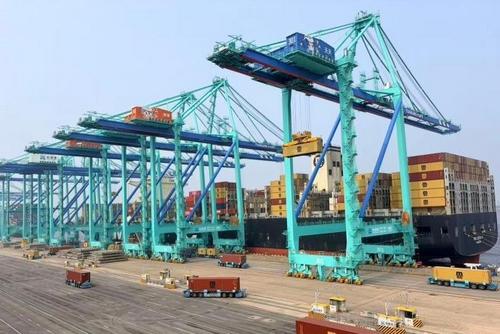
The 2026 Tianshan Forum on Central Asia Economic Cooperation, themed "Strengthening Resilient Connectivity and Promoting Quality Investment in Central Asia", was held in Almaty on 2–3 November. The forum was co-hosted by the Central Asia Regional Economic Cooperation Institute (CAREC Institute) and the Ministry of National Economy of Kazakhstan, with the Asian Development Bank as strategic partner. The Export-Import Bank of China and the People's Government of Xinjiang Uygur Autonomous Region jointly organised, with the Institute, the "Investing in Central Asia Sub-forum" and the "Local Government Cooperation Sub-forum" respectively. More than 300 participants attended, including senior government officials from CAREC member countries, international organisations, the private sector and think tanks.
Zhang Yingchun, deputy secretary of the Communist Party of China Xinjiang Uygur Autonomous Region Committee and executive vice chairman of the region, put forward four proposals in his keynote speech to the main forum. The second was to "jointly promote high-quality investment cooperation and strengthen industrial linkages in agricultural modernisation, green energy, the digital economy and cross-border e-commerce"; the other three were to jointly build a resilient connectivity system, jointly strengthen regional cooperation mechanisms and jointly build bridges of people-to-people understanding. The Local Government Cooperation Sub-forum, themed "Eco-empowerment for Thriving Agriculture and Prosperous Farmers, Local Collaboration for Deeper People-to-People Bonds", heard Zhang propose four initiatives: jointly building a cooperation network for desertification control, jointly cultivating green industries that enrich the people, jointly promoting the sharing of experience in ecological poverty reduction and jointly expanding local exchange channels. The sub-forum featured four topics: land restoration and climate resilience; sustainable oasis agriculture and high value-added industrial chains; green industries and inclusive rural livelihoods; and local governments and people-to-people connectivity.
Namazov Sadman Elgasovich, academician of the Academy of Sciences of Uzbekistan and former deputy director of the Institute of Cotton Breeding, Seed Production and Agricultural Technology, said at the forum that cotton is a key industry in Uzbekistan and that the country has in recent years brought modern agricultural technology into its seed production system, "among which the application of China's advanced cotton cultivation technology is a successful example of efficient technology transfer". Sigmatullozoda, assistant to the President of Tajikistan for economic affairs in the Presidential Executive Office, proposed establishing a "green grain corridor".
Source: China News Service
2. Alashankou Customs: Bortala's agricultural exports reach RMB 110 million in the first three quarters, up 83.6%
(3 November; source: Xinjiang Daily)
According to statistics from Alashankou Customs, in the first three quarters of 2026 the total export value of agricultural products from Bortala Mongol Autonomous Prefecture reached RMB 110 million, up 83.6% year on year. Road transport accounted for RMB 62.466 million, up 86%, and water transport for RMB 43.488 million, up 229.9%. Local specialities such as dried and fresh melons and fruits and canned fruit and vegetables were sold to markets in Central Asia, Europe and Southeast Asia. Among Bortala's specialities, whitefish caviar entered Finland, small potatoes entered Kazakhstan and crabapples were sold to the Philippines. Using its customs-enterprise service groups and business hotline, Alashankou Customs pushed out information on foreign technical regulations, standards and policies eight times, helping 12 agricultural export enterprises avoid overseas trade risks. It has also built a full-process, closed-loop local supervision system covering source control in orchards, monitoring during the growing period, inspection at harvest and certificate issuance, so that export products can be traced by batch, by origin and by destination, consolidating the quality and safety foundations of agricultural exports. To meet the need to export fresh fruit at its freshest, Alashankou Customs has innovated its supervision approach, fully implementing remote local inspection and rolling out the "batch inspection" reform for exported agri-food products, cutting enterprises' average appointment waiting time by 70%. The reform of the supervision model has released dividends that directly benefit growers and operators. Wang Fujun, head of the export processing and packaging plant of the Fengyuan Planting Cooperative in Bole, said: "Fresh grapes have extremely high requirements for appearance and timeliness. In the past, inspections had to be booked in advance and we waited for officers to come and inspect in batches. Now with online remote inspection, inspection can be completed at the plant on the day of declaration, the standards have not been lowered at all, and there is no need to wait for officers to drive over. Inspection is fast, release is fast and certificates are issued fast. We have more confidence in taking export orders and shipping goods."
Source: Xinjiang Daily
3. 21st Wuwei–Khujand freight train service dispatched, having carried equipment including a rice processing line
(2–3 November; source: Khovar National Information Agency of Tajikistan)
According to the Khovar National Information Agency of Tajikistan (citing Xinhua), the 21st freight train from Wuwei in Gansu Province, China, arrived at Khujand railway station. China–Tajikistan cargo has traditionally moved through third countries or by direct road transport; as volumes grew and roads and border crossings in Central Asia became more congested, the parties began looking for alternatives. The Chinese team first considered road-rail combined transport, but severe congestion on some sections in Kyrgyzstan lengthened transit times, so the route was eventually changed to a pure rail path through Kazakhstan and Uzbekistan. The first train left Wuwei for Khujand on 21 February 2026. By August 2026, the "Tianma" international rail express had dispatched 67 wagons towards Dushanbe and Khujand, carrying industrial equipment, door and window fittings, a rice processing line, solar power systems and other goods. The rice processing line is agro-processing equipment; this train, the 21st, carried commercial air-conditioning components. Ubaidullo Obidov, head of Khujand railway station, said the structure of Chinese cargo is gradually broadening. The report said China also intends to help expand Tajikistan's exports of agricultural and mineral products to China in future, but gave no details of return cargo categories, volumes or contracting parties already in place.
Source: Khovar National Information Agency of Tajikistan
4. Shandong Shouguang–Bole protected vegetable park exports about 700 tonnes of colour peppers, reaching Almaty in 12 hours
(2–3 November; source: Xinjiang Daily)
The protected vegetable park (Modern Agricultural Industry Science and Technology Demonstration Park) jointly built by Shouguang in Shandong and Bole in Xinjiang was in harvest in early November. Construction began in September 2024; in the first phase, 187 greenhouse frames have been erected, 150 completed and the first 130 put into production, with two standardised cold stores built alongside. Premium red and yellow colour peppers are picked, graded and packed for sale to Kazakhstan and Russia. From 9 September to 3 November 2026, about 700 tonnes of colour peppers were exported, with quality meeting Kazakh and Russian import standards.
On the export route, picked peppers are packed, weighed and loaded, then moved under full cold chain through Alashankou Port and arrive in Almaty in about 12 hours. The park has obtained Good Agricultural Practice (GAP) and Hazard Analysis and Critical Control Point (HACCP) certification, benchmarks the whole process of production, management, harvesting, storage and transport against international fresh produce export standards, and has established closed loops for traceability, cold chain and supervision.
The 27th China (Shouguang) International Vegetable Science and Technology Fair set up, for the first time, special exhibition areas for ethnic regions in Bole, Xinjiang, and Ordos, Inner Mongolia, bringing growing techniques, varieties, standardised production models and fair-organising experience to the borderlands.
Source: Xinjiang Daily
5. 2026 China International Agricultural Machinery Exhibition opens in Tianjin; sprinkler irrigators and potato sorters exported to Kazakhstan in bulk
(3 November; source: China Agricultural and Rural Information Network)
The 2026 China International Agricultural Machinery Exhibition opened at the National Exhibition and Convention Center (Tianjin), with nearly 300,000 square metres of exhibition space and more than 3,000 exhibitors. Themed "Leading, Safeguarding, Smart, Green", it is jointly hosted by the China Agricultural Machinery Distribution Association, the China Agricultural Mechanisation Association and the China Agricultural Machinery Industry Association.
Among the exhibits, the centre-pivot sprinkler irrigators of Voder (Tianjin) Co., Ltd. save 20%–30% of water on average compared with conventional equipment. Tao Yanli, deputy general manager for sales, said they are "very well suited to large agricultural countries such as Russia and Kazakhstan". As of September 2026, international orders stood at RMB 40 million, against total annual orders of about RMB 200 million for the company. Tianjin Jinfenghua Co., Ltd.'s intelligent optical potato sorting and impurity-removal equipment, the first of its kind made in China, has a peak sorting efficiency of 50 tonnes per hour and has already been exported in bulk to Russia and Kazakhstan; orders for the equipment this year exceed RMB 20 million. The self-propelled green forage harvester of Shandong Senrui Agricultural and Animal Husbandry Equipment Co., Ltd. is "mainly sold to Central Asia".
Source: China Agricultural and Rural Information Network
6. Horgos Port: rail freight services top 8,000 this year; road port fruit and vegetable exports reach 490,000 tonnes
(3–4 November; source: Xinjiang Daily)
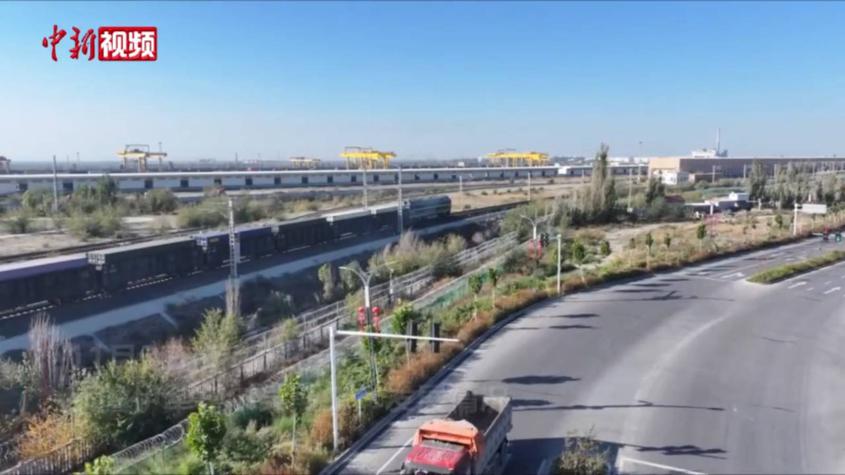
As of 4 November, China–Europe (Central Asia) freight train services through the Horgos railway port had exceeded 8,000 this year, with cargo throughput above 13.8 million tonnes. The port has 91 routes reaching 18 countries and 46 cities and regions abroad and can carry more than 200 categories of goods. Li Wenbin, deputy director of the safety production command centre at Horgos station, said paperless advance data has turned "wagons waiting for documents" into "data waiting for wagons": dwell time for imports at the port has been cut from 2–3 days to under 16 hours, operating time for locally declared exports from 6 hours to 1 hour, and average daily train throughput has risen from two or three at the start of operations to 27. Imports are mainly raw materials such as wheat flour, barley flour and ore, while westbound exports are mainly higher value-added goods such as new energy vehicles, auto parts, machinery and electronic products.
At the road port, 490,000 tonnes of fruit and vegetables were exported in January–September 2026, up 23.7% year on year and a record high. The port operates "24/7 customs clearance", mutual recognition of foreign vehicles across multiple ports and fast clearance for self-driven exported commercial vehicles; in January–August, 494,000 vehicles crossed, up 23.3%, making it the country's largest land port for commercial vehicle exports. In the first three quarters, cargo imports and exports through the port totalled 35.584 million tonnes, up 2% year on year, the highest among Xinjiang's ports, and overall clearance efficiency has risen 80%.
Since Urumqi Customs introduced the "road port plus direct local clearance" model at the Horgos road port on 5 August 2024, goods transferred under local customs supervision have been automatically written off at the port, cutting import clearance steps from nine to four and export steps from 12 to four. Refrigerated fruit and vegetable trucks reach Almaty six hours after clearance and Moscow in about seven days. Jinyi Group has exported 110,000 tonnes of fruit and vegetables this year, with trade value of nearly USD 150 million, up almost 20% year on year, and has expanded from the five Central Asian countries and Russia to Armenia, Georgia, Azerbaijan, Turkey and Iran.
In local processing, Wanhui Grain and Oil Processing Co., Ltd. in the Horgos comprehensive bonded zone imports flaxseed from Kazakhstan and turns it into crude oil through screening, roasting, physical pressing and filtration, with the residue used as feed. It has imported about 13,000 tonnes of flaxseed this year and plans to produce 7,000 tonnes of crude oil for the year, with output value expected at more than RMB 50 million. Lin Tong, deputy director of the Ili Prefecture Commerce Bureau, said the two ports, road and rail, will be coordinated and services refined around high-timeliness businesses such as vehicle exports, cross-border e-commerce, border resident trade and cold-chain fresh produce, to advance bonded processing, local processing, overseas warehouses and the cultivation of foreign trade entities.
Source: Xinjiang Daily
7. Dunhuang Belt and Road forum on China–Central Asia and South Asia cooperation: secretary-general of the China–Central Asia mechanism calls modern agriculture a new growth point for cooperation
(5–6 November; source: Gansu Daily)
On 4 November, the Belt and Road Forum on China–Central Asia and South Asia Cooperation and the 2026 annual meeting of the Central and South Asia Branch of the Chinese Association for South Asian Studies were held in Dunhuang. The events were hosted by Lanzhou University and organised by its Belt and Road Research Centre and its Institute of Central Asian Studies. Talant Turdumamatovich Mamatov, leader of the "Unity–Patriotism" parliamentary group and member of the Supreme Council of the Kyrgyz Republic; Wang Rui, member of the Party Leadership Group and vice chairman of the Gansu Provincial Committee of the Chinese People's Political Consultative Conference; Ma Xiaojie, secretary of the Party Committee of Lanzhou University; and Sun Weidong, secretary-general of the China–Central Asia mechanism, attended and delivered remarks. More than 60 experts and scholars from universities and research institutes in Central Asia, South Asia and China took part.
In his remarks, Sun Weidong said artificial intelligence, the digital economy, green minerals, modern agriculture and intelligent meteorological early warning have become new growth points in China–Central Asia practical cooperation. The results include flagship projects such as the China–Kyrgyzstan–Uzbekistan railway as well as "small and beautiful" livelihood projects such as green power generation and fruit seedling cultivation. The forum had four topics: regional hotspot issues and regional governance; regional economic cooperation and investment facilitation; regional people-to-people exchanges and mutual learning among civilisations; and key areas and priority directions for cooperative development.
Zhu Yongbiao, executive director of the Belt and Road Research Centre at Lanzhou University, said the focus of China's cooperation with Central Asia and South Asia has shifted from physical connectivity such as roads and bridges to the alignment of rules and systems. In the first half of 2026, the scale of international freight train services operated by Gansu International Logistics Group grew 77.5% year on year, with cross-border trade towards Central Asia and South Asia providing important support for that growth.
Source: Gansu Daily
8. Yangling SCO agricultural base discloses overseas park figures: 11 parks in 5 countries, more than 190 experts, over 110 varieties
(4 November; source: People's Daily)
The Free Trade Office of the Yangling Demonstration Zone released figures on 4 November: as of November 2026, the agricultural base of the Shanghai Cooperation Organisation (SCO) has built 11 agricultural science and technology demonstration parks in five SCO countries, sent more than 190 experts to provide on-site guidance, and completed comparative variety trials and demonstration-scale extension of more than 110 improved varieties. Three results stand out: a new rapeseed variety bred in Yangling raised yields in Kazakhstan by 32%–51%; the wheat variety "Xinong 198" lifted average yields per mu in Belarus by 33.31%; and smart water and fertiliser equipment raised crop yields in Uzbekistan by 30% while saving 50% of water.
People's Daily reported on 2 November that since 2025 a team from Yangling Guohe Modern Agricultural Technology Transfer and Conversion Co., Ltd. has established rapeseed demonstration fields in the North Kazakhstan Region, bringing Shaanxi's improved rapeseed varieties and standardised cultivation plans, and that trial yields per mu in a single season rose by 20%–30% over local conventional varieties. After a year of demonstration-driven uptake, quality Shaanxi rapeseed has been planted on nearly 30,000 mu locally, with the company providing full farming services from sowing and field management to harvesting and purchasing the crop centrally. The two sides have signed a new cooperation agreement to carry out targeted improvement based on Kazakhstan's own drought-tolerant wheat varieties and Chinese molecular breeding technology, developing new wheat lines that combine drought tolerance and disease resistance.
Source: People's Daily
9. Kyrgyzstan's raspberries, blackcurrants and blackberries approved for export to China; Kyrgyz side begins registration of enterprises with China
(4 November; source: Kabar National News Agency of Kyrgyzstan)
Kyrgyzstan's Ministry of Water Resources, Agriculture and Processing Industry announced on 4 November that raspberries, blackcurrants and blackberries grown in Kyrgyzstan have been approved for export to China. On 31 August 2026 the Kyrgyz side signed a protocol with the General Administration of Customs of China on phytosanitary and plant health requirements, and on that basis China approved the import of the three categories of fresh berries on 20 October. The growing plots and packing enterprises required for export must be registered with the Chinese side, and producers and enterprise owners must apply to the Service for Plant Chemicalisation, Protection and Quarantine under the ministry or to its regional branches. (Ministry of Water Resources, Agriculture and Processing Industry of the Kyrgyz Republic)
The General Administration of Customs issued Announcement No. 149 of 2026, "Announcement on Phytosanitary Requirements for the Import of Fresh Berries from the Kyrgyz Republic", on 20 October, which corresponds to the Kyrgyz notification: the permitted commodities are raspberries (Rubus idaeus), blackcurrants (Ribes nigrum) and blackberries (Rubus fruticosus); China has identified five quarantine pests of concern, namely the raspberry beetle (Byturus tomentosus), fire blight (Erwinia amylovora), powdery mildew of gooseberry (Podosphaera mors-uvae), tobacco ringspot virus and Verticillium wilt (Verticillium dahliae); the pre-export sampling rate is 2%, which may be reduced to 1% after two consecutive years without phytosanitary problems; and consignments must be accompanied by a phytosanitary certificate meeting the requirements of the protocol, with an additional declaration stating compliance with the protocol.
Source: Kabar National News Agency of Kyrgyzstan
10. Observations from the Shanghai Cooperation Organisation (SCO) Agricultural Expo: quantified results of the China–Kazakhstan, China–Kyrgyzstan and China–Tajikistan demonstration parks
(5 November; source: Economic Information Daily)
On 5 November, Economic Information Daily published observations from the SCO Agricultural Expo, disclosing the quantified results achieved by three demonstration parks.
China–Kazakhstan Demonstration Park for Saline-Alkali Land Improvement and Efficient Agricultural Water Use (completed in 2024, southern Kazakhstan): a team led by Feng Hao of the College of Soil and Water Conservation at Northwest A&F University carried out field trials on film-mulched cultivation, comparative selection of soil amendment products, maize varieties and planting density, intercropping and relay cropping, and optimisation of irrigation methods. The technologies and products have been extended over more than 2,000 mu in cumulative terms, with average maize yields increasing by more than 20% and water savings of more than 30%; more than 200 technical personnel from Kazakh agricultural authorities and farms have been trained, and 10 Chinese and Kazakh postgraduate students have been jointly trained with the Kazakh National Agrarian University.
China–Kyrgyzstan Apple Demonstration Park: the dwarfing-rootstock, high-quality and simplified apple cultivation technology developed by Zhang Dong's team at Northwest A&F University enables trees to bear fruit in the second year after planting and to enter full production in the fourth year, with yields exceeding 7,000 jin per mu; super-grade seedlings cost more than RMB 50 each and ordinary seedlings more than RMB 30 each, against more than RMB 100 each for seedlings imported from Europe; more than 10,000 apple seedlings have already been shipped to Kyrgyzstan on two occasions and are being raised locally, and the first batch of seedlings raised in Kyrgyzstan will be ready for grafting and release in the spring of 2027.
China–Tajikistan Digital Agricultural Equipment Science and Technology Demonstration Park: the Khujand sub-centre was inaugurated in July 2024 and is jointly built by seven Tajik universities, government bodies and agribusiness enterprises together with six Chinese institutions; it has facilitated a Shandong enterprise in producing and launching agricultural electric tricycles in Khujand, and has introduced a fruit and vegetable processing line (drying of carrots and onions, slicing of potatoes, with products sold locally and in Europe); the Dushanbe sub-centre was inaugurated in June 2026 and includes the Tajik Agrarian University and the Tajik Technical University, and has sent five students to jointly develop a maize combine harvester and a thresher with the Tajik Technical University.
Dai Size, Deputy Secretary-General of the SCO, said that the Secretariat will continue to give all-round support to the Yangling SCO Demonstration Base for Agricultural Technology Exchange and Training. Northwest A&F University hosts 505 students from SCO countries; since 2019, Yangling has carried out more than 100 technical training sessions, trained more than 3,200 agricultural officials and technical personnel, and provided online learning to more than 60,000 person-times.
Source: Economic Information Daily
11. Chamber of Commerce and Industry of Uzbekistan and CCPIT Tianjin sub-council agree to jointly draft cooperation memorandum covering agriculture and seed production
(5 November; source: Chamber of Commerce and Industry of Uzbekistan)
On 5 November, the Chamber of Commerce and Industry of Uzbekistan held talks with the China Council for the Promotion of International Trade (CCPIT) Tianjin Sub-Council in Tashkent. The Uzbek delegation was led by Sherzod Ibrakhimov, Deputy Chairman of the Chamber, and Jamil Maksudov, Adviser, while the Chinese side was represented by Tang Xiaowen, Chairman of the CCPIT Tianjin Sub-Council. The two sides exchanged views on expanding cooperation in agriculture, textiles, machinery manufacturing and logistics, and also touched on the corridor opportunities created by the China–Kyrgyzstan–Uzbekistan railway.
The outcomes of the talks were as follows: the two sides agreed to jointly draft a cooperation memorandum covering agriculture and seed production, textiles, machinery manufacturing, vocational education, and port operations and logistics; they discussed support measures for Uzbek agricultural projects, industrial parks and logistics parks, and e-commerce enterprises; and they agreed to establish an information exchange mechanism. The Chinese side proposed that the Chamber of Commerce and Industry of Uzbekistan open a trade representative office in Tianjin. The two sides also made arrangements for entrepreneurs from Uzbekistan's Fergana, Andijan and Namangan regions to make a business visit to Tianjin, and invited Tianjin entrepreneurs to attend the business forum "New Uzbekistan: The Crossroads of Global Opportunities", to be held in Tashkent from 29 November to 5 December.
Source: Chamber of Commerce and Industry of Uzbekistan
12. Ninth China International Import Expo (CIIE) opens, with Kazakhstan and four other countries as annual "Export to China" theme countries
(5 November; source: China International Import Expo)
On 5 November, the Ninth China International Import Expo and the Hongqiao International Economic Forum opened in Shanghai. This year's event involved 162 countries, regions and international organisations, with 4,142 overseas enterprises exhibiting; the total exhibition area exceeded 440,000 square metres for the first time, the enterprise exhibition exceeded 370,000 square metres for the first time, the number of Fortune Global 500 companies and industry-leading enterprises exceeded 300 for the first time, and more than 2,000 companies exhibited for the first time. Kazakhstan, together with the United Kingdom, Spain, Kenya and Thailand, served as one of the five 2026 theme countries for "Export to China".
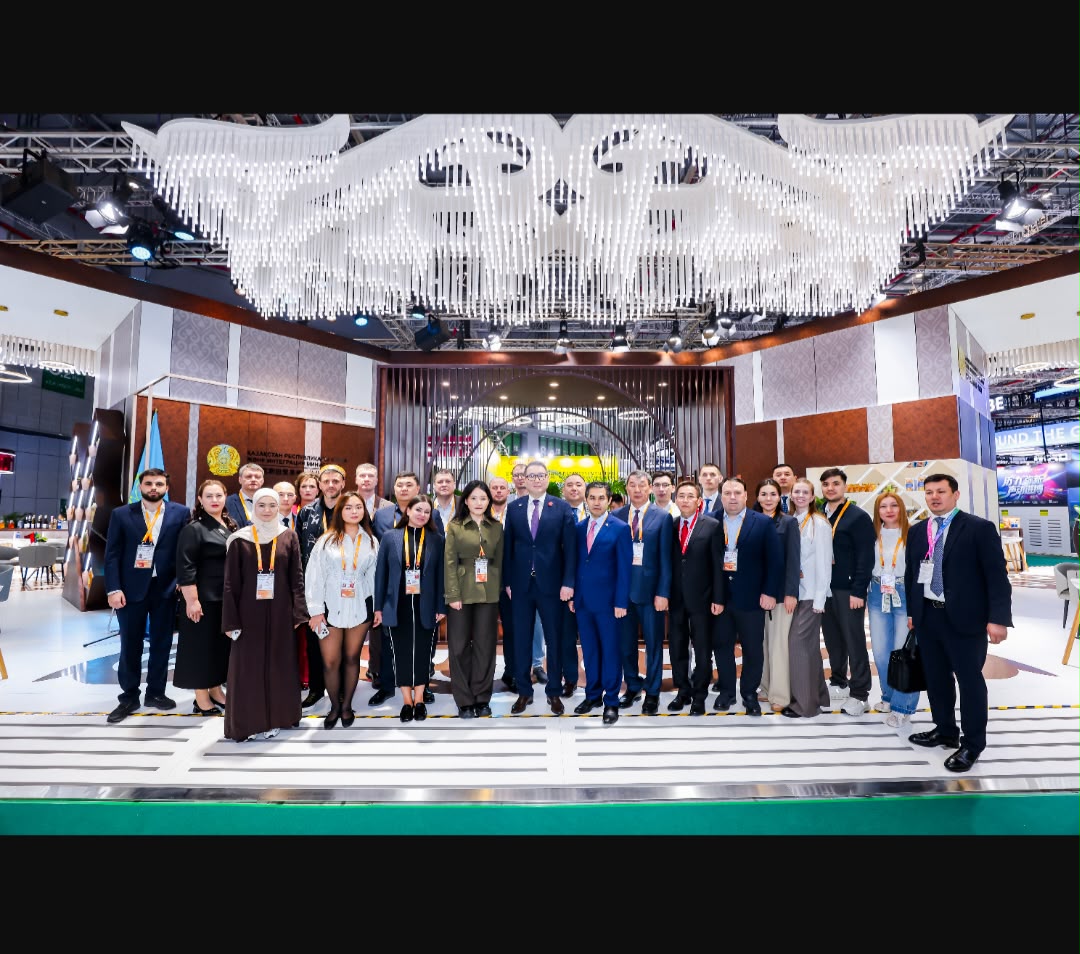
Arman Shakkaliev, Minister of Trade and Integration of Kazakhstan, led a delegation to the expo. The Kazakhstan national pavilion brought together about 40 domestic producers, with exhibits focused on the food industry and covering oils and fats, flour processing, confectionery, dairy products and beverages; on the first day of the expo, Kazakh enterprises signed agreements worth about USD 100 million in total. In 2025, trade between Kazakhstan and China amounted to USD 48.7 billion, up 11% year on year; in January–September 2026 it reached USD 43.3 billion, up 21.9% year on year. Shakkaliev also met with the Chief Executive of the Hong Kong Special Administrative Region to discuss "Hub-to-Hub" interconnection of trade and logistics centres, and held talks with Chinese enterprises on localising high-technology production in Kazakhstan, robotics, transport and logistics complexes, warehousing and distribution centres, and investment in commercial real estate.
This year's Food and Agricultural Products exhibition area is located in Halls 7.1, 8.1 and 8.2 under the theme "From Global Farms to Chinese Tables", with six zones for fruit and vegetables, dairy products, alcoholic and non-alcoholic beverages, meat and seafood, snack foods, and general food products, bringing together more than 2,000 enterprises from 130 countries and regions; the "Global National Brand Showcase Area" brings together 66 agricultural and food national brands from seven countries, including Canada, Sri Lanka, the United Kingdom, Spain and Kazakhstan, one third of which have histories of more than a century. On the opening day, the Kazakhstan stand featured sunflower oil as its main promoted category.
Source: China International Import Expo
13. Supply and Marketing Cooperative delegation signs batch of agreements at the CIIE; Zhongnong Company signs cooperation agreement with Qazaq Kalium
(5 November; source: Xinhua)
On the afternoon of 5 November, the delegation of the All China Federation of Supply and Marketing Cooperatives held a centralised signing ceremony at the CIIE. The Federation organised its affiliated enterprises and institutions, and the supply and marketing cooperatives of 31 provinces (autonomous regions and municipalities) and the Xinjiang Production and Construction Corps, to take part in the expo, with more than 900 enterprises (units) and more than 1,300 people registered. China Co-op Group, the Guangdong provincial supply and marketing cooperative trade sub-delegation and 17 enterprises from the United States, France, Australia, Kazakhstan, Brazil, Vietnam and other countries signed procurement and cooperation agreements on site, covering potash fertiliser, compound fertiliser, cotton, meat, and grain and oil. Among them, Zhongnong Company under China Co-op Group signed cooperation agreements with fertiliser enterprises including BHP, Qazaq Kalium Ltd and FERTPOINT LLC to broaden import channels for potash and high-quality compound fertilisers. Zhongmian Company signed three-year cotton supply chain cooperation agreements with Louis Dreyfus, Cargill and COFCO International, with a total of 300,000 tonnes of cotton expected to be contracted.
Source: Xinhua
14. National Association of Oilseed Processors of Kazakhstan: vegetable oil exports to China to reach 1 million tonnes in the next two seasons
(5 November; source: Ministry of Agriculture of Kazakhstan)
On 5 November, the National Association of Oilseed Processors of Kazakhstan (NAPMK) and its member enterprises took part in the Ninth CIIE in the form of an "agricultural cluster", with the national pavilion displaying the full range of Kazakh oil and fat products.
The association reported that, based on 2025 results, Kazakhstan is China's second-largest supplier of sunflower oil and has entered the top three suppliers of sunflower meal; in the rapeseed oil segment, it remained among the top five suppliers in 2024–2025. In the previous season, supplies to China amounted to 657,000 tonnes, worth more than USD 438 million.
On logistics mechanisms, since February 2024 the association and Kazakhstan Temir Zholy (KTZ) have jointly improved the mechanism for allocating vegetable oil rail loading plans through the Dostyk–Alashankou border crossing. In the spring of 2026, the association, together with KTZ and the Chinese railway authorities, launched a pilot project for shipping pelleted sunflower meal in hopper wagons.
The association estimates that exports of oil and fat products to China will reach 1 million tonnes in the next two seasons, supported by the expansion of the raw material base, the effective use of logistics infrastructure and the commissioning of new processing plants.
Source: Ministry of Agriculture of Kazakhstan
15. Chongqing–Jalal-Abad twin-city joint exhibition: Kyrgyz honey, dairy products and wool products to be matched with the Chongqing market
(5–10 November; source: China Business News Network)
The "Charming Friendship Cities" showcase area of the Ninth CIIE featured a China Chongqing–Kyrgyzstan Jalal-Abad twin-city joint exhibition, with a stand of more than 300 square metres divided into five sections: "Convergence: Twin-City Memories", "Resonance: Galloping into the Future", "Symbiosis: Mountains and Rivers in All Their Forms", "Connectivity: Twin-City Business Opportunities" and "Taste: Twin Cities on the Tip of the Tongue". The Chongqing side displayed traditional qipao, silk cultural and creative products, hot pot base and xiaomian noodles, while the Kyrgyz side displayed handmade essential oil soap, high-mountain honey, ethnic costumes, distinctive handicrafts and speciality beverages. The quantified information disclosed on 7 November was 49 enterprises and 346 exhibits, with exhibitors covering 18 districts and counties of Chongqing.
Goods that have already achieved two-way circulation include: honey coffee made from Kyrgyz honey (collected in high mountain areas at an altitude of 3,000 metres), which has already reached offline stores in Chongqing; and Wushan plum fruit wine from Chongqing Liyu Agricultural Development Co., Ltd. and lemon juice honey from Fulintang Health Zhongyi (Chongqing) Pharmaceutical Co., Ltd., which have already entered the exhibition and sales hall of the Kyrgyzstan–China (Chongqing) Economic and Trade Cooperation Centre. Brands such as Shengshida's Chongqing xiaomian noodles and Bottle Planet's Jiangxiaobai have conducted "one-on-one" talks with the Kyrgyz–China (Chongqing) Economic and Trade Cooperation Centre.
The Chongqing Municipal Commerce Commission said that the next step will focus on precisely matching Kyrgyz honey, dairy products, wool products and handicrafts with the Chongqing consumer market and on building regular exhibition and sales channels and cross-border circulation channels, while also using the centre to help Chongqing's new energy vehicles, motorcycles, electric vehicles and distinctive agricultural products expand into the Kyrgyz market and the wider Central Asian market. Hu Qingpeng, Executive Director of the Kyrgyzstan–China (Chongqing) Economic and Trade Cooperation Centre, said that Jalal-Abad Region is working with Chongqing to promote the establishment of a friendship-city relationship and that the two sides will seize the opportunities arising from the construction of the China–Kyrgyzstan–Uzbekistan railway; Jalal-Abad Region is the second-largest region of Kyrgyzstan and the region through which the core section of the China–Kyrgyzstan–Uzbekistan railway within Kyrgyzstan passes.
Source: China Business News Network
16. Colour peppers from Bachu, Xinjiang enter the peak export season: 85 greenhouses and a 200 mu registered export production base
(5 November; source: Xinjiang Daily)
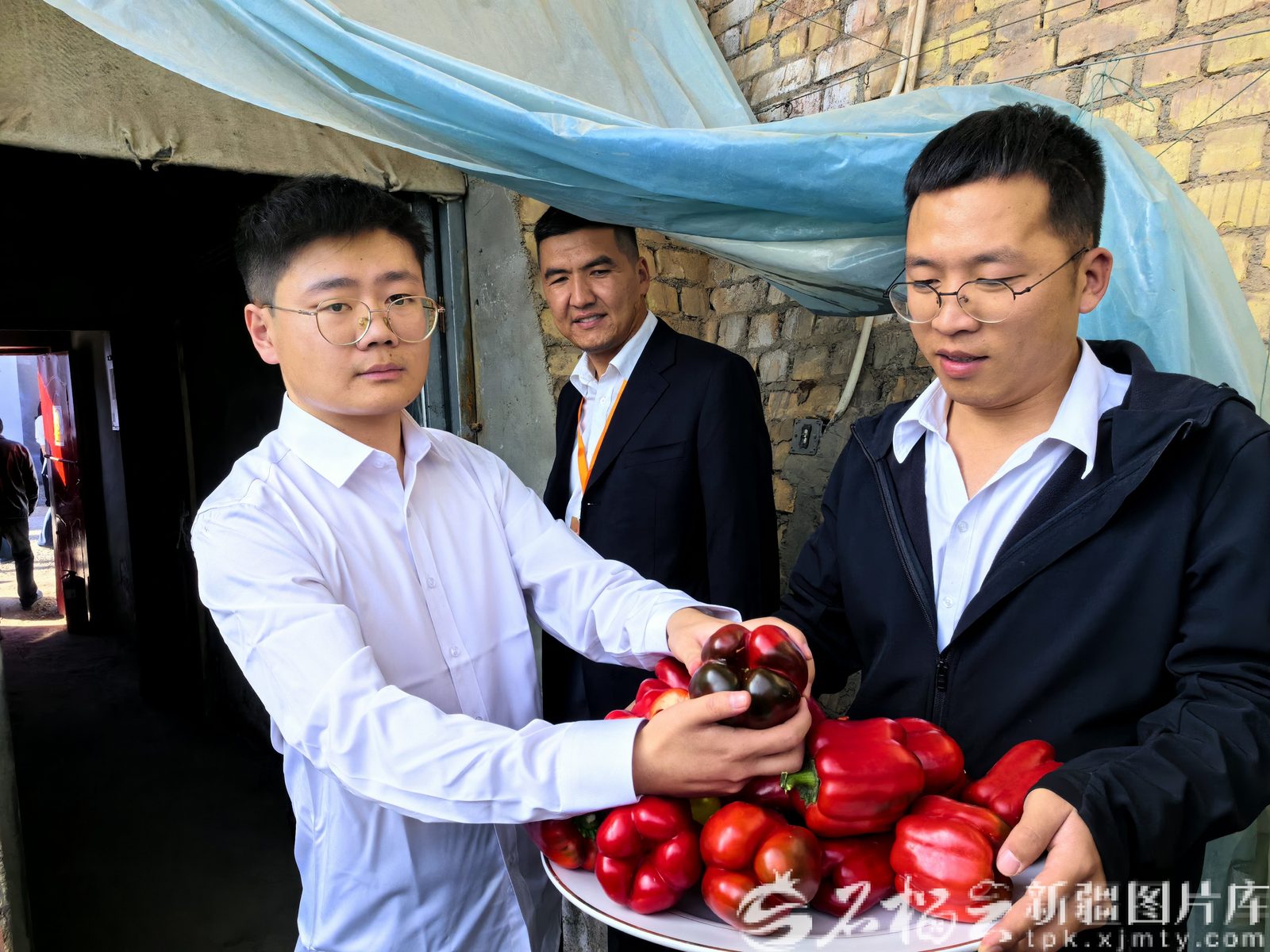
In the Bachu County Modern Agriculture Industrial Park, 85 greenhouses operated by Kashgar Wotian Biotechnology Co., Ltd. (the Xinjiang regional company of Shandong Baiyu Group) are growing colour peppers, and a 200 mu vegetable registered export production base has been completed. The peppers have begun to turn colour and are due for large-volume export in early November, mainly to Central Asia and Europe. The company entered Bachu in 2024 and first carried out deep improvement of the highly saline soil with organic matter, crude protein and organic carbon fertilisers together with effective microbial communities and halophilic bacteria; it planted for the first time in September 2025 and exported to Kyrgyzstan, Kazakhstan and Russia by the end of that year.
On output and returns, each plant yields 3.5–5 kg, or about 12 tonnes per greenhouse at 3,500 plants; after deducting greenhouse rent, seedlings, fertiliser and labour, net income can reach RMB 75,000 per greenhouse per year. On prices, the export price was about RMB 13/kg in 2025; in 2026, yellow peppers rose from RMB 7–8/kg at the start of the season to about RMB 14/kg, and red peppers from RMB 5/kg to about RMB 11/kg.
On logistics costs, one truckload of colour peppers shipped from Bachu to the Horgos port costs less than RMB 6,000, whereas sending the same volume from Shandong to Horgos costs RMB 28,000–35,000, a saving of nearly RMB 30,000 per truck. Since October, traders from Kyrgyzstan, Kazakhstan, Turkmenistan and Russia have visited the base, and many have signed purchase and sales contracts.
Source: Xinjiang Daily
17. COFCO signs more than USD 10 billion of agreements at the CIIE and adds Kazakh wheat suppliers in 2026
(6 November; source: China Agriculture Network)
On 6 November, COFCO held the launch of its Global Agricultural and Food Cooperation Initiative and an on-site signing ceremony for the ninth China International Import Expo (CIIE) at the National Exhibition and Convention Center (Shanghai), with total agreements signed exceeding USD 10 billion. The initiative sets out four propositions: open cooperation, resource sharing, stable expectations and trustworthy quality. The agreements cover various bulk agricultural products as well as quality consumer goods such as wine and beer. COFCO Chairman Li Guoqiang said the company would turn the CIIE's opening-up momentum into practical cooperation outcomes. (China Agriculture Network)
On wheat procurement, new Kazakh suppliers were signed in 2026, and the company will further explore transport modes such as containerised shipments and bulk grain. COFCO Vice President Chen Gang said that in recent years the company had "for the first time imported Kazakh wheat in bulk-grain railway wagons".
On the supply side, export statistics for the new grain harvest released by Kazakhstan's Ministry of Agriculture on 3 November show that supplies to China rose 2.6-fold in September–October 2026, from 145,000 tonnes to 373,000 tonnes; over the same period, growth to Uzbekistan and Tajikistan was 1.3% and 19%. (Ministry of Agriculture of the Republic of Kazakhstan)
Source: China Agriculture Network
18. Sinomach signs a wheat flour procurement agreement with Kazakhstan's Ken Dala
(7–8 November; source: Science and Technology Daily)
The signing ceremony of the Sinomach trading delegation at the ninth China International Import Expo (CIIE) was held on 6 November at the National Exhibition and Convention Center (Shanghai). In agricultural product supply chains, Sinomach signed a wheat flour procurement agreement with Kazakhstan's Ken Dala, "further broadening import channels for high-quality agricultural products, enriching domestic market supply and strengthening the resilience of the agricultural and food supply chain". At the same event, Sinomach signed a film production line procurement agreement with Germany's Brückner, introducing the latest generation of biaxially oriented film production lines. Sinomach has taken part in the CIIE centralised signing for nine consecutive editions, with more than 150 cooperation agreements and a total contract value exceeding USD 26 billion.
Source: Science and Technology Daily
19. Tarim University approved for an Intergovernmental Special Project of the National Key R&D Programme: China–Uzbekistan mechanised plastic-film mulching cotton planting technology integration and demonstration
(6 November; source: Tarim University)
A project led by Professor Hu Can of the School of Mechanical and Electrical Engineering at Tarim University, "Integration and Application Demonstration of Mechanised Plastic-Film Mulching Cultivation Technology for High-Yield Cotton in China and Uzbekistan under Water-Saving Conditions" (project number 2026YFE0111100), has been approved by the Department of International Cooperation of the Ministry of Science and Technology. It falls under the Intergovernmental Special Programme of the National Key R&D Programme on international science and technology innovation cooperation, and is the university's first national-level key R&D international science and technology cooperation project. The project builds on the Xinjiang Production and Construction Corps international cooperation project "Improvement and Application Demonstration of Key Cotton Sowing Technologies in Xinjiang Production and Construction Corps–Uzbekistan Toshkent" (2025BC003).
The consortium comprises Tarim University, Xinjiang Tiancheng Agricultural Machinery Manufacturing Co., Ltd., the Xinjiang Academy of Agricultural Reclamation Sciences, Northwest A&F University and the National Research University Tashkent Institute of Irrigation and Agricultural Mechanization Engineers (TIIAME) in Uzbekistan. Its entities in Uzbekistan are the Central Asian Agricultural Machinery Service Centre and Uzbekistan Tiancheng Agricultural Machinery Manufacturing Co., Ltd., both in the Akkurgan district of Tashkent.
The project has so far demonstrated the Corps-model cotton sowing technology on more than 1,450 hectares and generated orders for more than 4,000 sets of agricultural machinery for international markets. The problems to be addressed are the low cotton yields on the Uzbek side, the poor technical adaptability of plastic-film seeders and inadequate water and fertiliser management under drip irrigation beneath the film; the goal is to build a complete set of high-yield mechanised cotton cultivation technologies locally and to promote suitable and efficient agricultural machinery. The university's disclosure does not include water-saving volume targets.
Source: Tarim University
20. Diplomats from the five Central Asian countries visit the Chengdu Xinjin Yungang railway logistics park; Sichuan Port Investment signs an industrial park investment agreement with Alashankou
(9 November; source: China News Service)
According to a release by the Sichuan Provincial SASAC on 9 November (relaying Sichuan Port Investment Group), a China–Central Asia connectivity delegation visited the Xinjin Yungang Railway Logistics Park of Sichuan Port Investment Group and conducted field research at the Chengdu South Collection and Distribution Centre of the New International Land-Sea Trade Corridor and the China–Kazakhstan Chengdu Land Port Terminal. The delegation was made up of more than 10 representatives, all diplomats from Kazakhstan, Kyrgyzstan, Tajikistan, Turkmenistan and Uzbekistan.
Representatives of three countries spoke. Kazakhstan said that, building on the two-way linkage between the "China–Kazakhstan Chengdu Land Port Terminal" and the "China (Sichuan)·Kazakhstan Goods and Trade Port", it would continue to deepen two-way goods and trade cooperation between China and Kazakhstan in grain and other bulk commodities. Uzbekistan expressed the hope of further expanding railway multimodal transport corridors and advancing the construction of logistics corridors linking East Asia and Europe via Sichuan. Kyrgyzstan invited the group to invest and do business in Kyrgyzstan and to jointly build cross-border logistics corridor bases.
On 7 November, Sichuan Port Investment Group signed an industrial park investment agreement with the city of Alashankou to build a dedicated railway line, grain and oil silos, a container yard and bonded distribution warehouses, cutting export transit time by 3–5 days.
Source: China News Service
21. Xi'an Aiju builds a 1.5 million mu contract farming base in North Kazakhstan Region
(7 November; source: Xinhua)
On 7 November, Gejie News Network published a special report on the agricultural cooperation layout of Xi'an Aiju Grain and Oil Industrial Group in Kazakhstan: the company has built a 1.5 million mu high-quality contract farming base in North Kazakhstan Region and formed a transnational agricultural whole-industry-chain model of "overseas cultivation, cross-border processing, return shipment by freight train service and domestic distribution". In 2025, the second phase of Aiju's Kazakhstan grain and oil processing base was completed and put into operation, giving the base annual logistics throughput and processing capacity of more than 1 million tonnes.
On the technical side, Zhang Zhengmao, a researcher at Northwest A&F University, has taken part in building the China–Kazakhstan grain and oil crop production science and technology demonstration park in Kazakhstan since 2017. His surveys found that local wheat lacks disease resistance and lodging resistance. Zhang said frankly that "the complementarity of the two sides' strengths has made cooperation a natural outcome". With new varieties and wide-band furrow sowing technology applied in the demonstration park, wheat yields there have risen by an average of 20% to 30% over local control varieties. In addition to carrying out Silk Road agricultural exchange and cooperation at the demonstration park, Zhang's team passes cultivation techniques on to local farmers through technical training. Xi'an Aiju, for its part, organises Kazakh farmers and growers in large-scale green production through contracts and purchases their output against those contracts. "This not only contributes positively to world food security but also raises local farmers' incomes," Zhang said.
Source: Xinhua
22. 2026 Zhongyuan Agricultural Valley Seed Industry Conference: cotton–bean–grain quality and yield improvement trial project in Shurchi District, Uzbekistan disclosed
(7 November; source: China News Service)
On 7 November, the 2026 Zhongyuan Agricultural Valley Seed Industry Conference opened in Xinxiang, Henan, focusing on improved variety research, farmland efficiency, green pest control and smart agriculture, with international breeding cooperation drawing particular attention from Chinese and foreign guests.
Li Bowen, a senior engineer at Henan Zhongyuan Agricultural Valley Biotechnology Co., Ltd., speaking as the technical lead of the "Soil Improvement and New Legume Variety Trial Project in Shurchi District, Uzbekistan", said the team is carrying out quality and yield improvement trials on cotton, mung bean, maize and wheat in Shurchi District, Surxondaryo Region, Uzbekistan. "With new mung bean varieties as the representative case, our goal is to achieve two harvests a year locally and to double yields."
Source: China News Service