
China–Central Asia Agricultural Cooperation (Issue 09, 2026)
1. Uzbek Think Tank Proposes Direction for China–Central Asia Agricultural Cooperation: From Raw Material Trade to Joint Processing and Localized Production
(November 16; Source: Uzbekistan National News Agency (UzA))
The Uzbekistan National News Agency reported on November 16 that Bakhtiyor Mustafayev, deputy director of the Institute for Strategic and Regional Studies under the President, presented a report at the international forum “Global Europe Studies” held in Shanghai on November 12–13, proposing three priority directions for regional value chain cooperation, among which the item “forming regional value-added chains” directly concerns agricultural processing.
The report proposed that agricultural processing in Central Asian countries should shift from a raw-material export model to joint production, and that a complementary industrial division of labor should be formed within the region; cooperation with Eurasian partners such as China should shift from expanding mutual trade to joint investment, localized production and technology exchange, supported by joint education programs, engineer internships and applied research.
Source: Uzbekistan National News Agency (UzA)
2. Xinjiang Yumin Thornless Safflower Exports to Central Asia and Europe via China–Europe Freight Trains, Full-Industry-Chain Annual Output Value Exceeds CNY 300 Million
(November 16; Source: Xinjiang Daily)
Xinjiang Daily published on November 16 a report in its “Forging a Strong Community, One Chinese Family” series, focusing on the thornless safflower industry in Yumin County, Tacheng Prefecture, Xinjiang. The safflower planting area in Yumin County has stabilized at 150,000 mu, and deep-processed export products such as safflower seed oil and refined safflower filaments continue to be shipped to Central Asian and European markets via China–Europe freight trains; the influence of the “Yumin Thornless Safflower” regional public brand continues to extend overseas.
Processing is undertaken by Xinjiang Tianding Safflower Oil Co., Ltd., which independently developed the “four-cold” low-temperature processing technology covering cold pressing, cold refining, cold filtration and cold storage, and has launched products including safflower seed oil, safflower honey, safflower tea and safflower vinegar. The company has signed price-guaranteed purchase contracts with 650 farming households, driving nearly 50,000 mu of standardized planting and providing a stable base for export supply.
In terms of industry scale, the full industry chain generates annual output value of more than CNY 300 million and steadily raises incomes for more than 5,700 growers. The locality is advancing the integration of primary, secondary and tertiary industries through “strengthening the base with planting, adding value with processing and empowering with culture and tourism.”
Source: Xinjiang Daily
3. SCO Agricultural Technology Exchange and Training Demonstration Base Details China–Kazakhstan Wheat Cooperation: More Than 120 Wheat Lines Bred for Kazakhstan, “Xinong No. 10” Test Weight 800 g/L
(November 18; Source: SCO Agricultural Technology Exchange and Training Demonstration Base)
On November 18, the official website of the SCO Agricultural Technology Exchange and Training Demonstration Base published “Yangling Sows ‘Seeds of Talent’ for World Agriculture,” a systematic review of the wheat breeding and demonstration system that Northwest A&F University has built in Central Asia.
At the variety level, the team led by Zhang Zhengmao, a professor at the College of Agronomy of Northwest A&F University, entered the chernozem zone of northern Kazakhstan in 2017, where local wheat yields were less than 100 kg per mu. Kazakhstan’s main wheat-producing areas lie in three northern provinces at a latitude about 20 degrees higher than China’s Huang-Huai wheat region, and directly introducing Yangling varieties there reduces plant height by 30–40 cm and advances maturity by more than 10 days. The team combined conventional breeding with biomolecular technology and chromosome engineering to breed the cold-tolerant, early-maturing “Xinong No. 10,” with a grain test weight of 800 g/L against an average of 760 g/L for local varieties; in variety comparison trials, Chinese varieties outyielded local ones by up to 60%. The team has customized more than 120 high-quality wheat lines for Kazakhstan and, together with breeding resources in Gansu and Xinjiang, adopted an off-site shuttle breeding method.
At the platform level, Northwest A&F University has built 8 overseas agricultural science and technology demonstration parks in Kazakhstan, Uzbekistan and other countries, dispatched 73 batches and more than 190 experts, introduced 37 crop varieties in 6 major categories including wheat, maize, rapeseed and potato, and carried out variety comparison trials of 115 improved varieties in 13 major categories including wheat, maize and soybean, with a radiation area of more than 30 million mu. It has formulated 7 crop production standards and more than 10 production technical regulations, and this year another 3 miscellaneous grain standards were officially released in Belarus. The Silk Road Agricultural Education, Science and Technology Innovation Alliance, initiated in 2016, has grown from 59 members in 12 countries at its founding to 141 members in 25 countries.
Source: SCO Agricultural Technology Exchange and Training Demonstration Base
4. Live Cattle Exports from Yumen and Sunan, Gansu to Uzbekistan Reach 8 Batches and More Than 1,000 Head, Taking 45 Days from Signing to First Shipment
(November 18; Source: China Gansu Net)
A report on November 18 said that the latest batch of 196 high-quality beef cattle completed 21 days of quarantine inspection in Yumen City and were shipped to Uzbekistan via the Irkeshtam Port; the locality has so far dispatched more than 1,000 head of high-quality live cattle to Central Asia.
The departure marks the official landing of Yumen City’s project to export 100,000 head of live cattle to Uzbekistan and is also Gansu’s first normalized live cattle export, filling the province’s gap in large-scale live animal foreign trade exports, with Andijan Region of Uzbekistan as the destination. To date, 8 batches and more than 1,000 head have been shipped. The project took only 45 days from signing to the first live cattle export; the Yumen Municipal Commerce Bureau completed green customs clearance and the upgrading of live cattle supervision and quarantine facilities, and coordinated with customs, financial and agriculture and rural affairs departments to resolve customs registration, inspection and quarantine, and cross-border transport links one by one.
In terms of supporting industries, Qiantan Village in Minghua Town, Sunan County, drawing on gobi oasis resources, has had Baisheng Modern Agriculture and Animal Husbandry Development Co., Ltd. build a standardized alfalfa planting area and put into operation a steam corn flaking production line, with total investment of CNY 14.68 million; the gelatinization degree of corn starch reaches 80% and the digestion and absorption rate of livestock and poultry rises by 30–35%, while the protein content of the cooperative’s alfalfa hay is stable at above 16%. In July 2026, Gansu Baisheng Huanyu International Trade Co., Ltd. was newly registered to specialize in live cattle export trade. Under the “company + cooperative + farmer households” model, households participating in the industry chain see average annual income increases of more than CNY 30,000.
Source: China Gansu Net
5. Xinjiang Changji Xiaochu Food’s Annual Tomato Product Export Orders Reach 10,000 Tonnes, Covering All Five Central Asian Countries
(November 18; Source: China News Service Xinjiang Branch)
On November 18, China News Service’s Xinjiang branch reported on the results of the pilot free trade zone linkage and innovation zone in Changji City, Xinjiang. Twelve automated production lines of Xinjiang Xiaochu Food Co., Ltd. are running, producing and loading a 400-tonne tomato paste export order, and tomato product export orders have reached 10,000 tonnes since the start of this year. The company has an annual capacity of 200,000 tonnes, covering 8 major categories and more than 460 varieties including vinegar, soy sauce, tomato paste, chili sauce and compound seasonings, with monthly tomato product shipments of 400,000 cases. Products move through ports including Alashankou, Khorgos and Tianjin Port by land and sea to the five Central Asian countries as well as Russia and other countries, achieving full coverage of the five Central Asian countries; foreign trade orders have grown by more than 30% over the past three years, and foreign trade sales in 2025 were about CNY 60 million, accounting for 6% of the company’s total sales.
Institutional background: in December 2025, the people’s government of the autonomous region approved the establishment of the first batch of 5 pilot free trade zone linkage and innovation zones in Bortala Prefecture, Changji Prefecture, Bayingolin Prefecture, Aksu Prefecture and Shihezi City; the Changji Prefecture zone has implemented 70 reform pilot tasks, built an incubation base for small and medium-sized foreign trade enterprises, and 17 enterprises have moved in.
Source: China News Service Xinjiang Branch
6. China–Europe Freight Trains at the SCO Demonstration Zone in Qingdao, Shandong, Total 6,236 Arrivals and Departures; 110-TEU Palm Oil Train Reaches Uzbekistan in 10 Days
(November 19; Source: General Administration of Customs)
On November 19, the portal website of the General Administration of Customs published that, under the supervision of Jiaozhou Customs under Qingdao Customs, a China–Europe freight train loaded with palm oil, shortening and other goods departed from the multimodal transport center of the SCO Demonstration Zone. The train carried 110 standard containers, exited through the Khorgos Port in Xinjiang and finally arrived in Chukursay, Uzbekistan, taking 10 days in total.
In terms of cumulative scale, as of the end of October 2026, since construction of the SCO Demonstration Zone began in 2018, a total of 6,236 China–Europe freight train arrivals and departures have been handled, transporting 505,400 TEUs of containers and 4.27 million tonnes of import and export cargo; 22 international train routes operate on a regular basis, reaching 54 cities across SCO member states and Belt and Road partner countries and regions. In October, 96 China–Europe freight trains were operated, up 20% year on year, and freight volume that month was 7,692 TEUs, up 18.3% year on year.
On supervision models, Jiaozhou Customs relies on the national China–Europe freight train assembly center platform of the SCO Demonstration Zone and the China–Europe freight train customs clearance consultation point, applies customs supervision models such as “SCO Express Clearance” and “Railway Express Clearance” and promotes appointment-based customs clearance. Lyu Ning, deputy director of Jiaozhou Customs, said the customs will keep simplifying clearance procedures and help enterprises shorten clearance times.
Source: General Administration of Customs
7. Xinjiang Production and Construction Corps Jiuding Agricultural Products Wholesale Market Exports Fruit and Vegetables to Kazakhstan under a “TIR + Local Direct Passage” Two-Country Twin-Park Model, Cutting Transport Time by 12 Hours
(November 19; Source: Bingtuan Daily)
On November 19, Bingtuan Daily published “New ‘Ways to Play’ for an Old Market — How a Traditional Corps Market Keeps Upgrading,” disclosing the Central Asia-oriented circulation arrangement of Xinjiang Jiuding Commercial and Logistics Group.
At the Xinjiang Jiuding centralized customs inspection center, a batch of apples bound for Central Asia quickly completed customs declaration pre-entry through the Jiuding fruit and vegetable export integrated service platform, which provides merchants with front-loaded services across the entire chain from procurement and packaging to cold-chain transport and customs clearance. Complementing the front-loaded declaration service is the “two-country twin-park” centralized procurement direct passage model built on the “international road transport (TIR) + local direct passage” model, which links the Jiuding agricultural products wholesale market with the Altyn Orda market in Kazakhstan, shortening overall transport time by at least 12 hours, bringing the cargo damage rate close to zero and reducing comprehensive logistics cost per container by 15%.
The report recorded the operation on site: at six in the morning on November 16, workers at the Jiuding agricultural products wholesale market loaded fresh tomatoes, peppers and other produce onto trucks bearing the TIR mark; hours later the produce would reach the Khorgos Port in Xinjiang, and a day later it would appear on the dining tables of residents in Almaty, Kazakhstan.
Source: Bingtuan Daily
8. Ministry of Commerce: Retail Sales of Uzbek Goods on Cross-Border E-Commerce Import Platforms Up 22.6% in October
(November 20; Source: Department of E-Commerce, Ministry of Commerce)
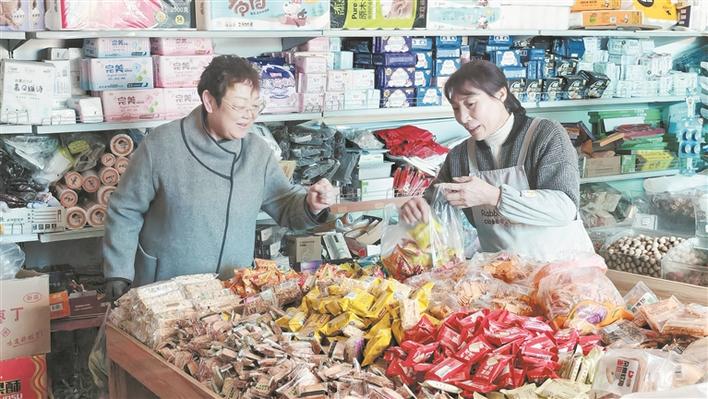
An official of the Department of E-Commerce of the Ministry of Commerce introduced the development of e-commerce from January to October 2026 on November 20, disclosing one specific flow toward Uzbekistan: on key monitored cross-border e-commerce import platforms, retail sales of Uzbek goods rose 22.6% in October, while sales of Armenian and South Korean goods rose 87.8% and 32.6% respectively in the same month.
The Central Asia-related platforms and activities include: the third “Silk Road Cloud Products” E-Commerce Month was launched during the ninth China International Import Expo, releasing a collection of typical “Silk Road E-Commerce” practice cases, a story collection and country-specific e-commerce investment guidelines; the “Silk Road E-Commerce” Cooperation, Innovation and Development Promotion Conference helped Chinese e-commerce platforms reach 12 cooperation intentions with enterprises of partner countries; and localities carried out activities in parallel, including the ASEAN Good Products Online Shopping Festival, the China–Arab Good Products Fair, the Lancang–Mekong Good Products Free Shopping event, Silk Road Cloud Products Benefiting Beijing and the SCO Cloud Products E-Commerce Festival.
Source: Department of E-Commerce, Ministry of Commerce
9. Kazakhstan Agriculture Minister: Grain Exports to China Rise to 436,000 Tonnes, Up 1.8-Fold
(November 20; Source: Ministry of Agriculture of the Republic of Kazakhstan)
On November 20, the Ministry of Agriculture of Kazakhstan released a grain export briefing by Minister Aidarbek Saparov entitled “Kazakhstan Increases Grain Exports to China, Uzbekistan, Tajikistan and Afghanistan.”
The full figures for the four destinations are: to Uzbekistan up 8.8% to 1.39 million tonnes; to Tajikistan up 9.6% to 417,000 tonnes; to China up 1.8-fold to 436,000 tonnes; and to Afghanistan up 1.6-fold to 632,000 tonnes. It follows that exports to China rank third among the four markets, below Uzbekistan’s 1.39 million tonnes and Afghanistan’s 632,000 tonnes, and above Tajikistan’s 417,000 tonnes.
In terms of total volume and pace, Kazakhstan’s exports of grain and flour (in grain equivalent) this year total about 16 million tonnes, against 15.3 million tonnes in the previous season; in the current season (2026/27), 3.28 million tonnes were exported from September to November 10, up 7.4% year on year. On a total of 16 million tonnes, the 436,000 tonnes to China account for about 2.7% of total grain exports. Saparov said the task is to consolidate positions in traditional markets, open up new directions and provide farmers with predictable sales conditions.
Source: Ministry of Agriculture of the Republic of Kazakhstan
10. Cooperation Project between China’s Fufeng Group and Kazakhstan’s Kazkrakhmal Produces First Batch of Deep-Processed Products
(November 20; Source: Ministry of Agriculture of the Republic of Kazakhstan)
In the processed agricultural product export briefing released by the Kazakh Ministry of Agriculture on November 20, the Chinese investment project was singled out: the ministry confirmed that “Kazkrakhmal” and China’s Fufeng have obtained the first batch of deep-processed products.
Phase one of Fufeng’s Zhambyl Region project has a corn processing capacity of 500,000 tonnes per year, and phase two is planned to raise this to 3 million tonnes per year. Kazakhstan processes more than 5 million tonnes of grain a year, of which nearly 510,000 tonnes is deep processing, and by 2029 it plans to put into operation 6 large wheat and corn deep-processing enterprises with total raw material capacity of 5.8 million tonnes per year.
Source: Ministry of Agriculture of the Republic of Kazakhstan

11. International Silk Organization Established in Hangzhou, Zhejiang; China–Uzbekistan Sericulture Technology Joint Laboratory and China–Kazakhstan Digital-Intelligent Apparel Joint Innovation Center Signed the Same Day
(November 20; Source: China News Service Zhejiang)
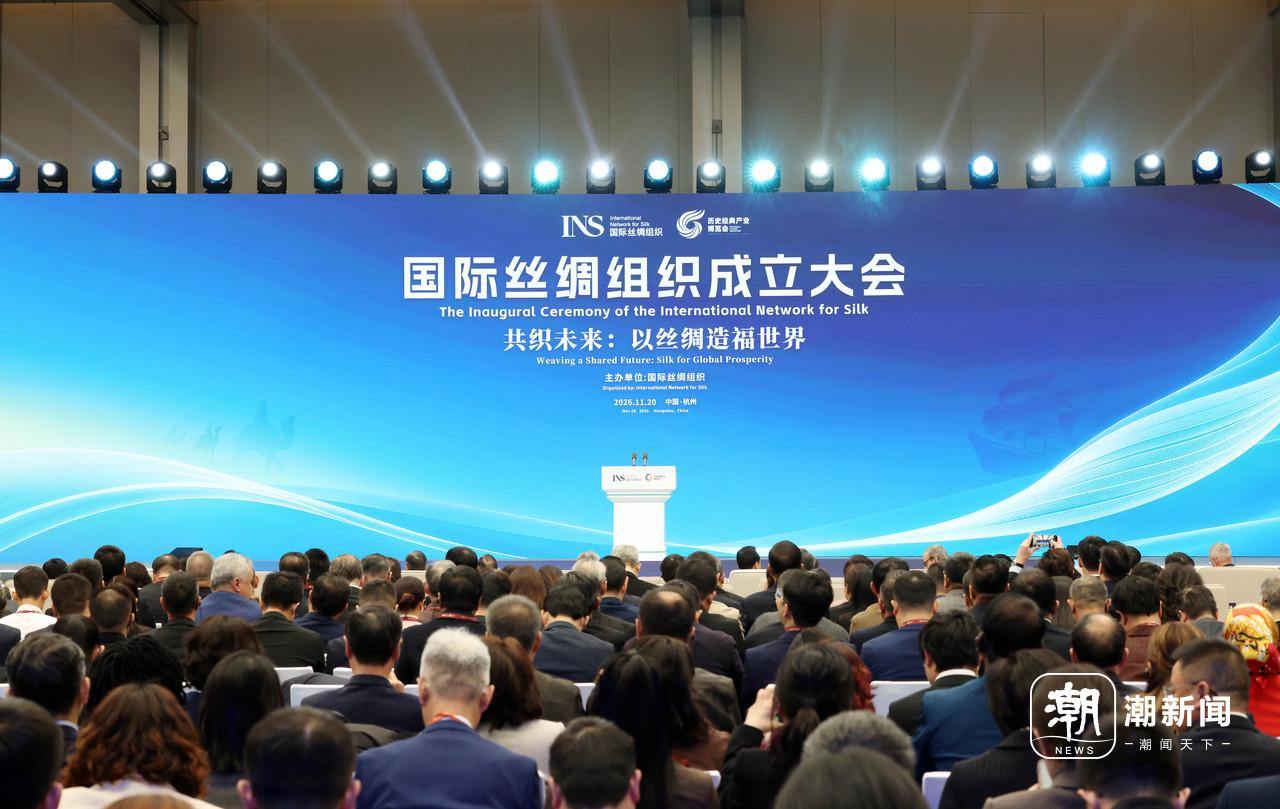
On November 20, the founding conference of the International Silk Organization was held at the Hangzhou International Expo Center in Zhejiang. Initiated by China and registered with the Ministry of Civil Affairs, the organization is the first international science and technology organization in the textile field headquartered in China, with members covering more than 20 countries. The first general assembly was held on November 19, at which Zhejiang Sci-Tech University was elected the chair institution and its president Chen Wenxing, an academician of the Chinese Academy of Engineering, was elected first chair; Zhang Guoqing, member of the Political Bureau of the CPC Central Committee and Vice Premier of the State Council, attended the founding conference and delivered remarks, and Wang Hao, Secretary of the Zhejiang Provincial Party Committee, also delivered remarks.
Two signings land directly in Central Asia: the Zhejiang Academy of Agricultural Sciences and the Uzbek Research Institute of Sericulture will jointly build a “China–Uzbekistan Sericulture Technology Joint Laboratory,” and the Hangzhou Linping New City Development and Construction Management Committee and the Kazakhstan–China Science and Education Cooperation Association will jointly build a “China–Kazakhstan Digital-Intelligent Apparel Joint Innovation Center.” Professor Valiev Sayfiddin, director of the Uzbek Research Institute of Sericulture, delivered a keynote report at the thematic seminar “Sericulture Science and Technology Innovation Empowering High-Quality Industrial Development,” introducing the state of his country’s sericulture industry and technology.
Yao Juming, president of the Zhejiang Academy of Agricultural Sciences, described China’s technological reserves, including the use of silkworm sex control technology to breed, for the first time internationally, a practical series of male-only silkworm varieties; China has become the only country in the world able to mass-produce high-grade male silkworm silk, and rearing only male progeny raises silk output by about 20% and allows cocoon silk quality to reach the top grade of 6A. In the sericulture science and technology cooperation that the academy conducts with Uzbekistan, Zambia and other countries, the relevant technologies were selected among the Ministry of Agriculture and Rural Affairs’ 100 “Belt and Road” science and technology poverty reduction achievements.
Source: China News Service Zhejiang
12. Chairman of the Uzbek Chamber of Commerce and Industry Leads More Than 160 Ranchers to Visit Ningxia, Matching Live Cattle Exports and Order-Based Trade
(November 20; Source: China News Service)
From November 17 to 20, Vakhabov Davron, chairman of the Chamber of Commerce and Industry of Uzbekistan, led a delegation to visit Ningxia, touring a number of enterprises and learning about beef cattle breeding, feed support and slaughtering and processing. On the afternoon of November 19 in Yinchuan, the delegation held talks with Ningxia’s foreign affairs, agriculture and trade promotion departments as well as local breeding, processing and trading enterprises, focusing on cattle and sheep farming, forage supply and order-based trade.
UzDaily reported on November 18, citing the chamber, that the delegation numbered “nearly 200 farmers,” and disclosed the sites visited: the delegation toured the modern ranch of Ningxia Jiuber Agricultural Development Co., Ltd., focusing on a digital management system operated on 5G technology that covers cattle rearing, feeding, milking and monitoring of health and milk production performance. The ranch is designed for 3,000 dairy cattle and a daily milk capacity of 48–50 tonnes, is equipped with 16 Swedish V300 robotic milking systems, has automated feeding, and is supported by manure collection and treatment, organic fertilizer production and wastewater recycling. The two reports gave the number of participants as “more than 160” and “nearly 200” respectively.
On trade data, according to customs statistics: Ningxia’s bilateral imports and exports with Uzbekistan in 2025 totaled CNY 18.32 million, up 75% year on year; in the first nine months of 2026 they had already reached CNY 56.34 million, up 283% year on year. So far in 2026, Ningxia has exported more than 4,000 head of live cattle to Uzbekistan, with Simmental beef cattle and Holstein dairy cattle successively entering the Uzbek market; in terms of trade structure, Ningxia exports live cattle and yarn to Central Asia and imports agricultural products such as flaxseed and feed raw materials from Central Asia.
On institutional proposals, Bai Yuzhen, director of the Foreign Affairs Office of the Ningxia Party Committee, proposed sorting out supply and demand lists, establishing a regular contact mechanism, organizing mutual visits by enterprises and expanding the number of sister cities, and on the spot invited Uzbekistan to attend the eighth China–Arab States Expo in 2027.
Source: China News Service
Attachments
- PDF中国与中亚农业合作动态·第09期.pdf4.1 MBViewDownload