
China–Central Asia Agricultural Cooperation (Issue 08, 2026)
1. Training programme on cotton production management for Central Asian countries opens; permanent training base established at the CAAS Anyang Base
(10 November; source: Institute of Cotton Research, Chinese Academy of Agricultural Sciences)
On 9 November, the opening ceremony of the 2026 training programme on cotton production management for Central Asian countries was held at the Anyang Comprehensive Innovation Base of the Chinese Academy of Agricultural Sciences (CAAS). The programme is hosted by the Department of International Cooperation of the Ministry of Science and Technology and organised by the Institute of Cotton Research (ICR), CAAS, with the Anyang Comprehensive Innovation Base, Zhengzhou University, Henan University of Science and Technology and Shihezi University as co-organisers. Nineteen cotton research and management specialists from Kazakhstan and Uzbekistan are taking part in the 15-day programme, which is based mainly in Anyang, Henan, with sessions linked to Xinxiang and Zhengzhou, followed by visits to Changji, Shihezi and Urumqi in Xinjiang. The curriculum comprises 15 special lectures, 2 panel discussions, 2 on-site teaching sessions, 3 research visits and 3 cultural excursions, covering six modules — industry development, breeding technology, cultivation management, plant protection and disaster prevention, industrial cooperation and practical validation — with a dedicated seminar on China–Central Asia cotton industry cooperation. Experts including Mao Shuchun, Song Meizhen, Cui Jinjie and Wang Qinglian are lecturing on site in Anyang.
Gao Lei, Director of the ICR, said the institute has long carried out in-depth cotton science and technology cooperation with Central Asian countries. Construction of the China–Uzbekistan cotton joint laboratory and overseas cotton demonstration parks is advancing steadily, and water-saving drip irrigation technology and the “Baimian” series of cotton varieties have been demonstrated and applied in Central Asia one after another.
Source: Institute of Cotton Research, Chinese Academy of Agricultural Sciences
2. Deputy Secretary-General of the China–Central Asia mechanism: China has built 14 ministerial-level cooperation platforms covering agriculture and other fields with Central Asian countries
(10 November; source: Xinhua)
The 2026 International Think Tank Cooperation Forum under the Belt and Road Initiative and the Fourth Silk Road (Xi’an) International Communication Conference were held in Xi’an on 10 November. Co-hosted by Xinhua News Agency, the CPC Shaanxi Provincial Committee and the People’s Government of Shaanxi Province, the forum brought together more than 300 diplomats, think tank experts, media journalists, cultural tourism specialists and business representatives from over 50 countries and regions.
Samadi Shaokhin, Deputy Secretary-General of the China–Central Asia mechanism, told the forum that China has established 14 ministerial-level cooperation platforms with Central Asian countries covering economy and trade, transportation, agriculture, energy and education. The mechanism’s secretariat entered full operation in May 2025, and centres for poverty reduction, educational exchange, desertification control and Beidou application, together with a trade facilitation cooperation platform, have been built and put into operation. Visa-free travel between China and Kazakhstan and between China and Uzbekistan has been realised, and a people-to-people train service between Xi’an and Almaty now runs on a regular schedule.
The proposed directions for cooperation in the next stage include supporting joint research between think tanks of the five Central Asian countries and China on shared regional development topics, encouraging joint interviews, joint production and joint dissemination by media, and promoting joint research and youth exchanges between universities.
Source: Xinhua
3. Hainan Free Trade Port–Kazakhstan entrepreneur economic and trade exchange held in Almaty
(10 November; source: Hainan Daily)
On 10 November, the “Hainan Free Trade Port–Kazakhstan Entrepreneur Economic and Trade Exchange”, hosted by the Hainan Provincial Council for the Promotion of International Trade, was held in Almaty. Enterprises from Hainan in agricultural technology, investment, intelligent manufacturing and food processing connected with their Kazakh counterparts, and the akim (governor) of Panfilov District in Kazakhstan’s Jetisu Region attended and presented the district’s local investment and business-attraction policies.
The policy instruments promoted by the Hainan side include: a “zero-tariff” treatment covering about 74% of tariff lines since the free trade port’s island-wide customs closure; a “double 15%” preferential regime under which both corporate income tax and individual income tax stand at 15%; and tariff exemption for value-added processing. This policy mix offers raw-material products from Kazakhstan — grains and oils, minerals, cotton and textiles — a route of “processing and landing in Hainan, direct access to the mainland Chinese market”.
Among the four major areas of cooperation, the first is jointly building an agricultural product trade and processing industry chain and advancing a “Kazakh raw materials + Hainan processing + mainland distribution” model. Six representatives of Chinese and Kazakh enterprises spoke at the meeting; during the networking session the two sides exchanged contact details and preliminarily agreed on follow-up site visits.
Source: Hainan Daily
4. Eight overseas agricultural science and technology demonstration parks built to high standards; wheat yields at the China–Kazakhstan park up 20%–30%
(11 November; source: SCO Agricultural Technology Exchange Training Demonstration Base)
The Economic Information Daily published on 11 November an article titled “Diverse, Open and Mutually Beneficial Cooperation: Chinese Technology Benefits the World”, reprinted on the official website of the SCO Agricultural Technology Exchange Training Demonstration Base. The article reveals that the SCO Agricultural Base has built eight overseas agricultural science and technology demonstration parks to high standards, forming a construction model of “science and technology leadership, enterprise as the mainstay, multi-stakeholder coordination and market orientation”.
For the China–Kazakhstan grain and oil crop production science and technology demonstration park, Zhang Zhengmao, a researcher at Northwest A&F University, went to Kazakhstan in 2017 to join the project. Targeting the insufficient disease resistance and lodging resistance of local wheat, the park introduced new varieties and wide-width furrow sowing technology, raising the park’s average wheat yield per unit area by 20%–30% relative to local control varieties. Xi’an Aiju Grain and Oil Industry Group organises Kazakh farmers and growers to plant green on a large scale under contract and buys back the output under those orders.
For the China–Kazakhstan demonstration park for saline-alkali land improvement and efficient agricultural water use, the team of Feng Hao at the College of Soil and Water Conservation Science and Engineering of Northwest A&F University completed the park in Kazakhstan in 2024. Since 2024, faculty and students of the two countries have carried out field trials in the park together, including film-mulching cultivation trials, comparative selection of soil improvement products, corn variety and density trials, intercropping pattern optimisation and irrigation method optimisation. The results show that applying soil amendments with reasonable dense planting can lower local soil salinity, while film-mulching cultivation and timely late sowing of salt- and alkali-tolerant varieties can effectively raise grain yields. According to Feng Hao, the relevant technologies and products have been applied and promoted over more than 2,000 mu; average corn yields are up more than 20% with water savings of over 30%; more than 200 people from local agricultural authorities and farm technical staff have been trained; and 10 Chinese and Kazakh graduate students have been jointly trained with universities such as the Kazakh National Agrarian University.
Source: SCO Agricultural Technology Exchange Training Demonstration Base
5. XPCC Hexi Science and Technology exports nearly 1,400 tonnes of cotton seed to Uzbekistan
(11 November; source: Corps Daily)
On 11 November, the Corps Daily front page carried an article titled “How did a single seed of cotton become a bestseller nationwide?”. Xinjiang Hexi Science & Technology Development Co., Ltd. sells about 9,500 tonnes of cotton seed a year, covering an extended planting area of more than 7 million mu, and ranked first nationally in total sales of cotton commercial seed in the 2025 national crop seed enterprise commercial seed sales information released by the National Agricultural Technology Extension Service Center of the Ministry of Agriculture and Rural Affairs.
On going global: in the 2025–2026 sales season, the company exported nearly 1,400 tonnes of cotton seed to Uzbekistan, with total exports approaching RMB 25 million; planned exports for this year (2026) have already reached 3,000 tonnes. The company has laid out more than 500 dealer outlets across Xinjiang, each region equipped with dedicated technical service staff to follow up field management.
Source: Corps Daily
6. Hutubi, Xinjiang, the “Western Capital of Seedlings”: 75,000 seedlings exported to the five Central Asian countries in 2025
(11 November; source: Science and Technology Daily)
The “Rural Tour, Looking at Vitalisation” column of the Science and Technology Daily on 11 November reported on the seedling industry of Hutubi County, Xinjiang. Locally domesticated seedlings in the county are drought-tolerant and salt-alkali tolerant, so their survival rate after export to Central Asia is high. Li Gang, head of Xinjiang Senyuanyuan Trading Co., Ltd., said the company obtained Xinjiang’s first seedling export qualification in 2025 and exported 75,000 seedlings to the five Central Asian countries over the year; Hutubi County’s seedling foreign trade sales exceeded RMB 30 million that year. From January to May 2026, the county’s seedling sales grew 42.8% year on year, with sales exceeding RMB 137 million.
Hutubi County is shifting from “selling seedlings alone” to an integrated service system of “seedling output + technical guidance + after-sales operation and maintenance + talent training”. The county has built three seedling talent innovation studios, cultivated 10 local technical experts, set up a service team of more than 20 people, and established a special joint meeting mechanism for the seedling industry to break bottlenecks in logistics, production and marketing and technology.
On export channels, Hutubi’s national-level seedling trading market recently obtained full-process import and export qualification and has shipped goods to Uzbekistan via refrigerated trucks. On the industrial base, the county’s seedling area has been streamlined to 44,000 mu with more than 130 varieties retained; after grower Jiang Zhiguo transformed his 1,200 mu of old nursery stock into a standardised base, where irrigation, pest control, pruning and lifting of seedlings follow a unified standard, the seedling pass rate rose from under 70% to 90%.
Source: Science and Technology Daily
7. Agricultural enterprise in Kazakhstan’s Zhambyl Region installs 8 sprinkler irrigation units made in China
(12 November; source: Ministry of Agriculture of the Republic of Kazakhstan)
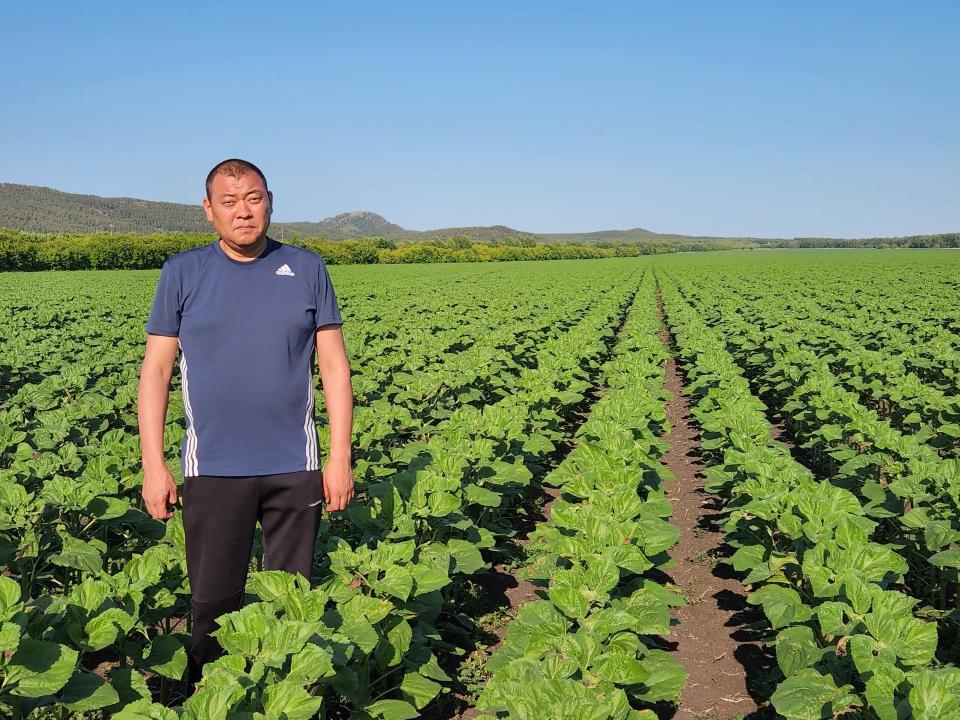
On 12 November, the Ministry of Agriculture of Kazakhstan published a feature in its “People of Labour” column on the operation of Kanat Almukhamedov, head of the agricultural firm Agrofirma Prirechnoye (ТОО «Агрофирма «Приречное»») in Zhambyl Region. The enterprise owns seven vegetable storage facilities with a total capacity of 12,000–13,000 tonnes; manages 38,000 hectares of pasture and 3,800 hectares of arable land, of which 1,800 hectares are irrigated; and runs a herd of nearly 4,000 head, mainly Kazakh white-headed and Auliekol cattle.
This year, the enterprise used the “Keng Dala 2” programme to finance spring sowing and harvesting operations; last year, with the support of a social entrepreneurship company (СПК), it installed 8 sprinkler irrigation units made in China to raise the efficiency of its irrigated land and make more rational use of water resources. The article does not disclose the equipment model, supplier or amount.
Source: Ministry of Agriculture of the Republic of Kazakhstan
8. China’s complete cotton technology promoted and applied in multiple Central Asian countries
(13 November; source: People’s Daily)
On 13 November, the People’s Daily published an article by Gao Lei, Director of the Institute of Cotton Research of the Chinese Academy of Agricultural Sciences, titled “Building a Great Cotton Granary through Scientific and Technological Innovation”. The article states that China’s cotton science and technology is moving further into Central Asia, with complete technologies such as quality cotton seed, water-saving cultivation and intelligent harvesting having been promoted and applied in multiple Central Asian countries; in September this year, the China–Uzbekistan cotton science and technology innovation demonstration base was officially inaugurated, building a regular platform for transnational joint research, technology demonstration and talent cultivation.
According to the data in the article, in the 2025/2026 season China’s cotton yield was 2,487.6 kg per hectare against a global average of 895.8 kg per hectare, 2.8 times the world average (International Cotton Advisory Committee statistics, September 2026); over the 14th Five-Year Plan period, the share of high-quality raw cotton in the main producing areas rose from 18.1% in 2016 to 58.2% in 2024; 576 cotton varieties were initially registered nationally, up 35.5% from the 13th Five-Year Plan period, of which 144 were high-quality varieties; and the mechanised harvesting rate of cotton fields nationwide exceeded 90%.
Source: People’s Daily
9. Virus-free apple seedlings from Yangling, Shaanxi, build Kyrgyzstan’s first standard dwarfed dense-planting demonstration orchard in Chuy Region
(13 November; source: SCO Agricultural Technology Exchange Training Demonstration Base)
According to an article published on 13 November on the official website of the SCO Agricultural Technology Exchange Training Demonstration Base, more than 7,000 virus-free apple seedlings from China are taking root in Chuy Region, Kyrgyzstan. Equipped with 8 quality varieties and dwarfed dense-planting technology, the orchard is the region’s first standard demonstration orchard for dwarfed dense-planting apple cultivation. Kazakhstan reference data: through joint improvement and trial promotion, wheat yield per mu rose from 80 kg to 150 kg.
The same report notes that the overseas tour exhibition of the 33rd Yangling Agricultural Hi-Tech Fair has visited Uzbekistan, Kazakhstan, Russia and Australia, taking more than 80 domestic agriculture-related enterprises abroad; this year’s fair also set up a cross-border commodity consumption experience exhibition, providing a window for quality products from various countries to enter the Chinese market.
Source: SCO Agricultural Technology Exchange Training Demonstration Base
10. Gansu Tianshui’s first large-scale apple export to Uzbekistan
(11 November; source: Tianshui Media Convergence Center)
On the afternoon of 11 November, Gansu Tianshui Land Port Construction and Development Co., Ltd. (Tianshui Land Port) held an apple export departure ceremony; the first batch of 45 tonnes of Huaniu and Fuji apples set off by refrigerated truck for Tashkent, Uzbekistan. The order was signed between Tianshui Luzhou International Trading Co., Ltd., a subsidiary of Tianshui Land Port, and Uzbekistan’s Santred Trade LLC, with a total contracted volume of 1,724 tonnes (about 95,000 cartons) worth USD 3 million, scheduled for delivery in batches by 31 December 2026; the goods exit China via the Khorgos port in Xinjiang, with a one-way journey of 7 days. The deal is the first real cross-border export operation by Tianshui Land Port under the China (Tianshui) Cross-border E-commerce Comprehensive Pilot Zone.
Source: Tianshui Media Convergence Center
11. 186 Simmental cattle from Beitun City, XPCC 10th Division, exported to Uzbekistan
(13 November; source: People’s Government of Beitun City, XPCC 10th Division)
The People’s Government of Beitun City, the 10th Division of the Xinjiang Production and Construction Corps (XPCC), announced on 13 November that on 5 November, 186 Simmental cattle from the 188th Regiment of Beitun City passed on-site inspection by Altay Customs and were dispatched to Uzbekistan via the Irkeshtam port, achieving a zero breakthrough in independent large-scale live animal export by the division and city. The export entity is Beitun Qingfang Agriculture Co., Ltd., which plans to stably supply 100,000 Simmental cattle to Uzbekistan within three years.
The quarantine flow is: the cattle were transferred out of the Northern Xinjiang Live Animal Trading Centre, passed through the import-export testing point, underwent 21 days of isolated rearing and epidemic prevention monitoring with daily health inspections, epidemic screening and environmental disinfection, and, after multiple rounds of testing meeting Uzbekistan’s market-access standards, were loaded, weighed, ear-tag information checked and dispatched. The Northern Xinjiang Live Animal Trading Centre handles 203,000 head of cattle and sheep a year; the whole division holds 81,400 head of cattle and 269,200 sheep, with 37,600 cattle and 175,500 sheep shipped in the first three quarters.
Source: People’s Government of Beitun City, XPCC 10th Division
12. XPCC 5th Division 88th Regiment’s 10,000-mu vegetable export planting base registered by the General Administration of Customs
(13 November; source: People’s Government of Shuanghe City, XPCC 5th Division)
The People’s Government of Shuanghe City, the 5th Division of the XPCC, announced on 13 November that the 88th Regiment’s 10,000-mu vegetable export planting base has officially obtained the “planting farm for exported food raw materials” registration qualification from the General Administration of Customs of China (GACC), with registration site number Y3659007PDY11D8E93.
The registered area of the base is 10,000 mu with an expected annual output of 60,000 tonnes; the varieties cover 13 categories of fruit and vegetables — carrot, potato, Chinese cabbage, cabbage, broccoli, cauliflower, onion, scallion, garlic, chilli, tomato, zucchini and celery — supplemented by edible fungi; the base spans five regimental agricultural companies and is planned on a year-round supply pattern of “early spring, summer in succession, late autumn extension”.
The base lies just over 100 km from the Alashankou port; fresh vegetables clear customs the same day and reach Central Asian markets the next day. Next steps are to improve input ledgers, pesticide residue traceability systems and epidemic and disease monitoring mechanisms, and to connect with domestic and foreign buyers.
Source: People’s Government of Shuanghe City, XPCC 5th Division
13. China’s white-feather broiler “Wode 178” signs 60,000-head grandparent stock project with Uzbekistan
(11 November; source: People’s Government of Beijing Municipality)
On 11 November 2026, the Pinggu Agricultural Zhongguancun White-feather Broiler Forum was held at the Shanghai Tower in Shanghai. At the forum, the new independently bred white-feather broiler variety “Wode 178” (jointly developed by China Agricultural University, Beijing Huadu Yukou Poultry Industry and Smart (Beijing) Food) was released and international strategic cooperation agreements were signed.
Among them, the Uzbekistan broiler grandparent stock project covers 60,000 birds, with supporting large-scale laying houses, rearing houses and a hatchery incubating tens of millions of hatching eggs a year; once completed, the project will promote 500 million commercial broilers a year to the five Central Asian countries as well as Afghanistan, Russia, Belarus and other countries and regions. The cooperation model is officially described as a full-factor output of “variety + technology + management”, simultaneously exporting supporting rearing technology, epidemic prevention and control programmes and farm management systems.
On variety performance, the parent generation produces 210 chicks per breeder hen, with a carcass profile of “four big, one small” (wings +8%, claws +20%, gizzards +20%, legs +10%, breast −15%), covering three specifications: 2.5 kg cuts, 2.0 kg fast food and 1.8 kg for the international market. The domestic market share of locally bred white-feather broiler breeding stock rose to 31% in 2025.
Source: People’s Government of Beijing Municipality
14. Yinchuan Comprehensive Bonded Zone: Kazakh flaxseed arrives in Yinchuan on a “single-voyage-through” basis
(15 November; source: Yinchuan News Media Center)
On 15 November, the Yinchuan News Network published a feature in its “Five-Year Review: Looking at the Parks” series, disclosing the closed loop of agricultural product bonded processing facing Central Asia at the Yinchuan Comprehensive Bonded Zone.
On corridors and institutions: with the “entry-port declaration + in-zone ledger” pathway opened up, Kazakh flaxseed declared at customs in Alashankou, Xinjiang, can now travel to Yinchuan on a “single-voyage-through” (yi dan dao di) basis, with clearance time cut from 15 days to within 5 days and per-truck cost down RMB 2,000. In early 2026, the first batch of “TIR + bonded” operations in China was launched in Ningxia: goods travel by TIR vehicles to Bishkek, Kyrgyzstan in just 5 days, cutting logistics costs by about 30%. The bonded zone has formed a “two zones, two platforms” pattern, strengthening three bonded processing clusters — flaxseed, forage grass and cool-climate vegetables; over five years it has achieved a cumulative import-export total of RMB 13.271 billion; for the 15th Five-Year Plan it has 22 reserved projects with total investment of RMB 3.94 billion, targeting an import-export total of more than RMB 5 billion by 2030.
At the enterprise level, Ningxia Junhai Oil Co., Ltd. sources raw materials from Kazakhstan; after arriving at the zone for primary pressing, the material is transferred to downstream plants for deep processing. The company says domestic flaxseed covers only about one-tenth of its capacity, so it imports raw materials from Central Asia year-round; in 2025 it is expected to process 32,000 tonnes of flaxseed with an output value of RMB 150 million, and in 2026 it plans to add one flaxseed refining line. On the export side, Ningxia’s cool-climate vegetables, goji berries and other distinctive agricultural products from other Chinese provinces are sorted, cold-chained and shipped in a one-stop process via the bonded zone to the Middle East, Southeast Asia and Central Asia.
Source: Yinchuan News Media Center