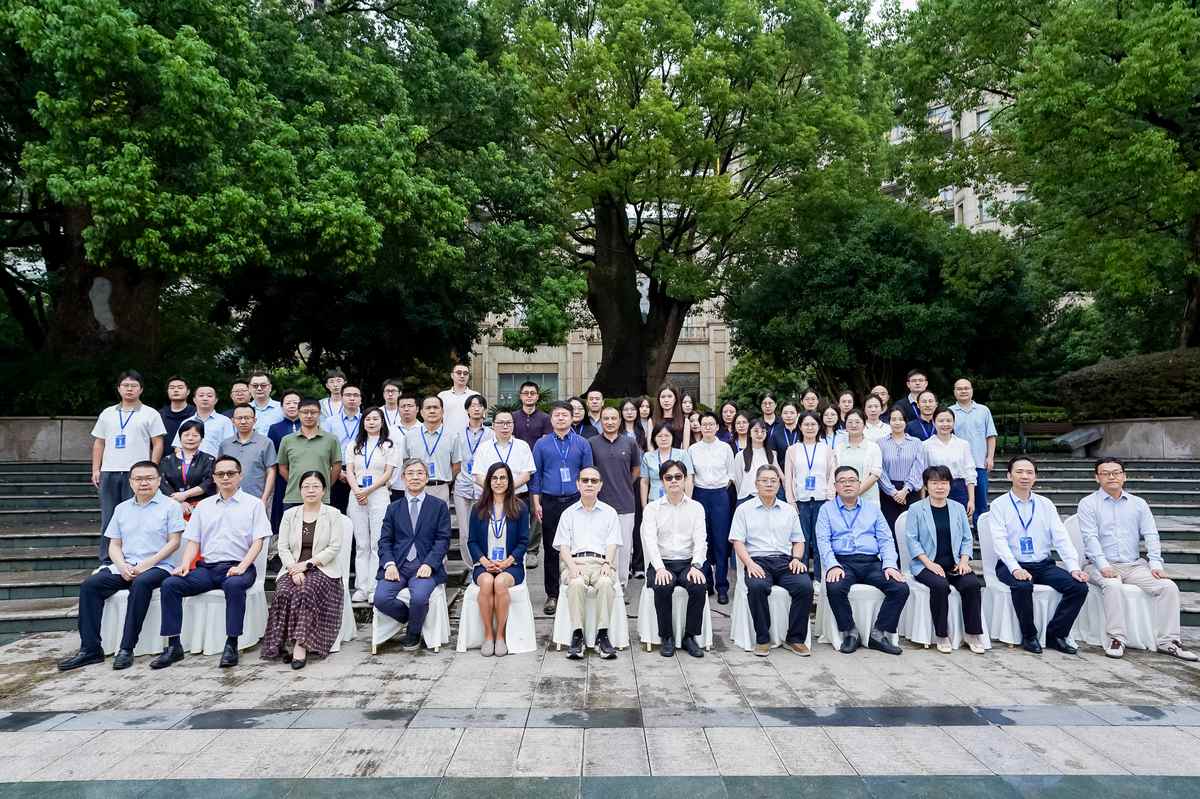
NewsGathering Global Vision to Explore the New Path of Urban Agriculture Development -- "Urban Agriculture and Urban-rural Integration Development" Seminar Successfully Held in ShanghaiFrom September 19 to 20, the seminar on "urban agriculture and urban-rural integration development" was held in Shanghai, jointly sponsored by Shanghai Academy of Agricultural Sciences, China Foreign Agricultural Economic Research Association, Rural Development Research Institute of Chinese Academy of Social Sciences and Shanghai Rural Economic Association. The conference focused on cutting-edge topics such as the high-quality development of urban agriculture, the deepening of urban-rural integration, and the transformation of urban agricultural food systems. It brought together domestic and foreign experts and scholars, representatives of government departments and industry professionals to discuss the new trends and new models of urban agricultural development under the background of megacities. New path. Based on the new stage of agricultural and rural modernization during the "Tenth Five-Year Plan" period, this seminar focuses on the background of the deepening of urbanization, the upgrading of consumption structure, the acceleration of scientific and technological revolution, and the transformation of the global food system. The exchange platform provides intellectual support for promoting the theoretical innovation and practical exploration of urban agriculture. Opening Ceremony: Re-understanding the Value of Urban Agriculture shen Xiaohui, vice president of Shanghai Academy of Agricultural Sciences, Shao Qiliang, President of Shanghai Rural Economic Association, and Hu Glacier, Secretary General of China Foreign Agricultural Economic Research Association, delivered speeches respectively. The opening ceremony of the meeting was presided over by Shi Jianchun, director of the Institute of Agricultural Science and Technology Information, Shanghai Academy of Agricultural Sciences. Shen Xiaohui pointed out that urban agriculture has gradually developed from traditional suburban agriculture to an important carrier connecting agricultural production and urban consumption, rural and urban, industry and ecology. Facing the resource constraints and diversified needs of megacities, Shanghai actively promotes the construction of high-standard farmland, modern facility agriculture, and the deep integration of agriculture, culture, business, and sports, and explores the development path of urban agriculture with Shanghai characteristics. Shao Qiliang said that in the development of megacities, urban agriculture undertakes multiple functions such as ensuring the supply of agricultural products, optimizing ecological space, inheriting local culture, and serving citizens' lives. The Shanghai Rural Economics Association will continue to play its role as a bridge, carry out research and exchanges around the key issues in the development of urban agriculture, urban-rural integration and industrial integration, and promote the transformation and application of theoretical achievements. Hu Glacier said that urban agriculture has become an important window to observe the transformation of agricultural functions and the evolution of urban-rural relations. With the changes in the stage of urban development, the connotation and extension of urban agriculture, urban-rural relations and agricultural boundaries are undergoing profound changes. It is necessary to base on a global perspective, strengthen international comparisons, and draw new ideas from the development of global urban agriculture while summarizing China's practical experience. Thinking. shi jianchun presided over the opening ceremony of the meeting. Publishing Research Results: Shanghai Urban Agriculture Practice Provides Important Sample during the meeting, researcher Zhang Lixia, deputy director of the Institute of Agricultural Science and Technology Information of the Shanghai Academy of Agricultural Sciences, released the "Shanghai Urban" Agriculture, Rural Areas and Farmers "Development Report." The report systematically combs the practical exploration of the integrated development of urban agriculture and rural industry in Shanghai, and provides an important reference for further research on the development law of urban agriculture. The report points out that the integration and development of rural industries in Shanghai presents the characteristics of full-chain value extension, multi-industry scene integration, regional spatial coordination and scientific and technological empowerment, and agricultural development is changing from a single production function to industrial chain extension, service integration and value enhancement. Keynote Report: Global Experience and Chinese Practice Inspire Each other the keynote report focuses on modern supply chain, urban agricultural food system, scientific and technological innovation, new track exploration and agricultural modernization strategy choice. Zhang Chaoxin, a researcher at the rural economic research center of the Ministry of agriculture and rural areas, pointed out that modern supply chain is not only a logistics system, but also a collaborative mechanism connecting production, processing, circulation and consumption. It needs to promote small farmers to better integrate into the modern agricultural industrial system through standard system, digital platform, organized service and risk sharing mechanism. Carmen Zuleta Ferrari, an expert on the Food and Agriculture Organization's Urban Regional Food Systems Project, pointed out from an international perspective that urban agriculture cannot be simply understood as agricultural production within cities, but should be understood within the framework of urban-rural integration and the transformation of urban agricultural food systems. She stressed that urban and rural areas are highly dependent, and urban agriculture can play an important role in ensuring food security, promoting circular economy, improving ecological environment and strengthening community ties. Wang Nan, a researcher at the Institute of Urban Agriculture of the Chinese Academy of Agricultural Sciences, looks forward to the "new track of urban agriculture facing 2030" and believes that artificial intelligence, biological manufacturing, facility agriculture and leisure agriculture will become an important direction for the future development of urban agriculture. Based on Korean experience, Professor Kim Han-ho of Seoul National University in South Korea proposed that the development of urban agriculture should not only be measured by the output of agricultural products, but should also pay attention to the values of health, social welfare and community building. The practice of South Korea shows that urban agriculture can become an important carrier to connect urban residents, improve the quality of life and promote community integration. Researcher Fang Zhiquan, an expert on major administrative decision-making consultation and demonstration of the Shanghai Municipal Government, systematically reviewed the development history of urban agriculture in China, and pointed out that urban agriculture with Chinese characteristics is a modern agricultural form formed under the background of urban-rural integration. In the future, it is necessary to further play the guarantee of supply, technological innovation and urban and rural elements. Flow and other functions. Roundtable Forum: Cross-border Discussion on the Frontier of Urban Agriculture Research on the afternoon of the 19th, the conference held a round table forum on "Frontier Research on Urban Agriculture. The forum brought together representatives of government departments, scientific research institutions, universities and enterprises. Yu Min, Wang Nan, Wang Yue, Fang Zhiquan, Nianmeng, Chen Ming, Yang Zhenshan, Zhang Yuchao, Zhang Zongyi, Hu Ligang, Hu Hao and Jia Bin conducted cross-border exchanges around the development trend, theoretical innovation and practical path of urban agriculture. Experts at the meeting believed that urban agriculture is breaking through the scope of traditional agricultural production and becoming an important link connecting urban development, rural revitalization, ecological construction and consumption upgrading. Future research needs to pay more attention to the function expansion, spatial optimization, technology empowerment, industrial integration and value realization mechanism of urban agriculture. The roundtable forum focuses on the strategic positioning, theoretical basis, practical model and future direction of urban agriculture. Experts pointed out that urban agriculture can not be simply understood as agricultural production around the city, but should be understood in the system of urban-rural integration and regional development; we should not only pay attention to the supply and guarantee of agricultural products, but also pay attention to ecological services, cultural heritage, leisure experience and social value creation. The forum realized the combination of theoretical research and practical exploration, macro strategy and micro case, and provided multi-dimensional ideas for solving the problems of urban agricultural development in mega cities. Academic Forum: Young Scholars Contributing to Diversified Research Results the academic forum held at the same time focused on the development path of urban agriculture under the constraints of mega-city land, the mechanism of agricultural carbon sequestration and emission reduction, the collective economy empowering rural industries, the high-quality development system of urban agriculture, the construction of world-class ecological islands, the reform of urban-rural integration, the upgrading of agricultural products consumption and the comparison of international experience. The first half of the academic forum focused on the development of urban agriculture under the pressure of land in megacities, the transformation of low-carbon agriculture, the development of rural collective economy and the construction of a high-quality development system for urban agriculture. The second half focused on the evaluation system of world-class ecological island construction, the experimental area of urban-rural integration development, the change of agricultural products consumption of urban residents and the comparison of international urban agricultural experience. Experts at the meeting believed that the future development of urban agriculture needs to transform from a single production function to a multi-functional system such as production, ecology, life, culture, and technological demonstration; it needs to improve the resilience of the agricultural industry chain supply chain through organization, digitization and institutional innovation; at the same time, It is necessary to explore differentiated development models based on resource endowments and development stages in different regions. Entering the Countryside: Promoting the Combination of Theoretical Research and Practice on September 20, the conference organized representatives to go to Liyao Village, Qingcun Town, Fengxian District, Shanghai Rural Revitalization Demonstration Village to conduct on-site investigations to understand the rural operation model and the integrated development practice of primary, secondary and tertiary industries, and extend theoretical discussions to agricultural and rural development. Line. Experts at the meeting said that under the background of the continuous promotion of urban-rural integration and the accelerated development of agricultural modernization, urban agriculture undertakes multiple functions such as ensuring supply, optimizing ecology, promoting income increase, and activating rural areas. In the future, it is necessary to further strengthen institutional innovation, scientific and technological empowerment and industrial integration, promote the high-quality development of urban agriculture, and provide a new practical path for the integration of urban and rural areas in mega-cities and the comprehensive revitalization of rural areas. This seminar is co-sponsored by the Shanghai Academy of Agricultural Sciences, the China Foreign Agricultural Economic Research Association, the Rural Development Research Institute of the Chinese Academy of Social Sciences, and the Shanghai Rural Economics Association. It reflects the collaborative promotion of urban agricultural research by academic associations, scientific research institutions and local practice platforms. New exploration.
NoticesNotice on Membership Dues for the Ninth Term (May 2024–May 2029)Members: hello! According to the work arrangement of the seminar, it is now launched. The 9th Session of China Foreign Agricultural Economic Research Association (May 2024-May 2029) Membership Fee Collection Work. Relevant matters are notified as follows: 1. payment standard membership fees for the current session are charged on an annual basis, as follows: member 100 yuan/year, session 500 yuan; director 300 yuan/year, session 1500 yuan; executive director 500 yuan/year, session 2500 yuan; president and Vice President 1000 yuan/year, session 5000 yuan. (II) code scanning payment scan code payment two-dimensional code is as follows (please see attachment/picture below): please indicate in the payment postscript: name mobile phone number 3. information filling (for invoicing) after completing the payment, please complete the information collection form (or provide information according to the following fields) in order to issue the invoice uniformly: https://docs.qq.com/form/page/DVERuTWpscWpZdU1j ?? The study will after unified invoice, send by mail. 4. schedule this payment notice is valid for a long time. The Secretariat will handle invoicing and mail delivery in batches according to the payment and information submission. Please arrange your time reasonably and complete the payment as soon as possible. If you need relevant supporting documents, please also contact the postscript or contact person. 5. contacts hu Lingxiao mobile phone: 18810063886 mailbox: hulingxiao@cass.org.cn yu Jialin mobile phone: 18610572166 mailbox: yujialin@cass.org.cn if you have any questions, please feel free to contact the Secretariat. Thank you members for your long-term support for the work of the research institute! so salute! Secretariat of China Foreign Agricultural Economic Research Association april 8, 2026
NoticesCall for Papers: CSFAE 2026 Annual ConferenceThe 2026 Member Congress and Academic Seminar of China Foreign Agricultural Economic Research Association (hereinafter referred to as "2026 Meeting") is scheduled to be held in Sichuan Agricultural University (Chengdu Campus) from August 17 to 19, 2026. The conference was hosted by the China Foreign Agricultural Economic Research Association, the Institute of Rural Development of the Chinese Academy of Social Sciences, and Sichuan Agricultural University, and undertaken by the School of Management of Sichuan Agricultural University. It coincides with the 120 anniversary of the founding of Sichuan Agricultural University, and this annual meeting is also included in the series of academic activities for the 120 anniversary of Sichuan Agricultural University. 2026 is the first year of China's "15th Five-Year Plan. The Fourth Plenary Session of the 20th Central Committee of the Communist Party of China and the No. 1 document of the Central Committee in 2026 have made systematic arrangements for promoting agricultural and rural modernization, improving food security capabilities, expanding high-level agricultural opening to the outside world, and deepening international agricultural cooperation. On a global scale, geopolitical conflicts, the adjustment of international trade patterns and the agricultural science and technology revolution are profoundly affecting the global food and agricultural development pattern. How to co-ordinate the domestic and international markets and resources in the complex international environment, and improve the level of China's agricultural opening and cooperation and the ability of global agricultural governance has become an important topic of concern to the academic and policy circles. In order to promote academic exchanges and promote theoretical innovation and policy research, this annual meeting plans to collect academic papers from members, experts and scholars on topics such as agricultural opening and development, global agricultural governance and agricultural modernization. 1. submission qualification all members of the Association are eligible to contribute. Non-members participating in essay-writing activities must submit an application for membership through the Association's website before submitting their contributions and indicate it on the contributions they have submitted. * The subject is an open topic for the seminar and non-member contributions are accepted. 2. Essay Themes and Topics the theme of the essay is "High-level Agricultural Openness and Global Food Security Governance: Comparative Research and Chinese Practice". The theme of the essay includes a number of topics, including but not limited: global food security governance: the evolution of the global food security landscape; energy-food-fertilizer linkage risks; geopolitics and agricultural trade security; global agricultural governance and international rules. High-level agricultural opening to the outside world: the path of high-level agricultural opening to the outside world; "Belt and Road" agricultural cooperation; South-South agricultural cooperation and development experience; global agricultural cooperation mechanism innovation. Agricultural trade system: changes in global agricultural trade pattern; development of agricultural service trade; digital trade and agricultural cross-border services; internationalization of agricultural standards. Agricultural investment and financing: agricultural foreign investment model; multinational agricultural enterprises and global supply chain; international agricultural investment and financing system; global layout of agricultural industry. New quality productivity of agriculture: new quality productivity of agriculture; digital agriculture and intelligent agriculture; agricultural science and technology innovation and industrial upgrading; modern agricultural industrial system; green transformation of agriculture; sustainable development of food system. Regional agricultural strategy *: national food security strategy; strategic hinterland and food production functional areas; "Tianfu granary" and other regional food security practices; regional agricultural development model. Special Session for International Students *: Successful Experience and Policy Practice of Agricultural Development in Various Countries; Comparison and Cooperation Space of Agricultural Development Models between China and Foreign Countries. 3. essay organization and paper evaluation (I) essay solicitation activities are organized and implemented by the paper evaluation committee under the leadership of the council. The paper evaluation committee formulates this year's essay collection and paper evaluation plan, and sets up an essay collection working group to be responsible for the management of essay collection. (II) the Association conducts academic evaluations of submitted papers that meet the requirements. The evaluation of papers adopts unified standards, follows the principles of quality first, openness and fairness, advocates academic, originality, and ideological nature, encourages foreign agricultural research and international comparisons for domestic needs, and encourages original insights and reflective papers and research reports. The (III) will:(1) give priority to speeches at the annual meeting;(2) recommend to publications such as China's Rural Economy, China's Rural Observation, Reform and World Agriculture in the name of the Research Society. (IV), the meeting will arrange the conference proceedings (electronic version) for meeting the requirements of the submitted papers. 4. submission requirements each (I) can only contribute one article as the first author or corresponding author. (II) contributions should be unpublished original works. The paper should not have been published at the time of submission. If the paper has been submitted to academic journals, the submission information should be indicated; If the submitted paper is published before the August 2026 meeting, the author shall notify the research association in time so as to facilitate corresponding processing. Please refer to the writing paradigm of academic journals such as "China's Rural Economy" and "China's Rural Observation" for (III) papers. Please refer to "China's Rural Economy" for the style of the paper, including the title, author's name and unit, Chinese abstract, keywords, text and references. The number of words in the paper is generally about 15000 words. (IV) documents are in Microsoft Word document format, please do not provide PDF version. The file name is in the form of the title of the paper_the name of the first author. At the beginning of the document, indicate the contribution topic and the publication information. The example format is as follows: submission Topics: (I) Governance of Global Food Security published information: Not published or submitted to China Rural Economy the submission mailbox of (V) papers is songjiahao@sicau.edu.cn, and the deadline for submission is July 10, 2026. Overdue submissions will not be accepted. For matters not covered, please send email songjiahao@sicau.edu.cn or contact Hu Lingxiao (18810063886) and Song Jiahao (18972270055), School of Management, Sichuan Agricultural University, Secretariat of China Foreign Agricultural Economic Research Association. Five, meeting arrangements it is planned to be held from August 17 to 19, and the specific meeting arrangements will be notified later. China Foreign Agricultural Economic Research Association march 16, 2026
NoticesCall for Papers: Urban Agriculture Symposium (2026)Urban Agriculture Seminar (2026) Call for Essay Notice in order to promote academic exchanges and practical innovation in the field of urban agriculture, and promote the sustainable development of urban agriculture, the Shanghai Academy of Agricultural Sciences, the Chinese Academy of Social Sciences-Shanghai Municipal People's Government Shanghai Research Institute, the China Foreign Agricultural Economic Research Association and the Shanghai Rural Economic Association Jointly hosted the "Urban Agriculture and Urban-Rural Integrated Development" academic seminar, which is scheduled to be held in Shanghai in mid-to-late September 2026. Now open to all kinds of universities, research institutes, enterprises and industry practitioners to solicit conference papers, invite people from all walks of life to contribute! 1. Workshop Themes urban Agriculture and Urban-rural Integration Development 2. Essay topics (including but not limited to) 1. Model innovation and policy of urban agriculture and urban-rural integration development 2. Research on urban-rural spatial reconstruction and functional integration under the background of metropolitan area. 3. The industrial system of urban modern agriculture and the integrated development of three industries 4. Digital agriculture and smart agriculture empower urban-rural integration development 5. Urban agricultural supply chain and urban and rural market circulation 6. Rural revitalization and high-quality rural development in urban suburbs 7. Integration of urban agriculture, culture and tourism, leisure agriculture and new rural formats 8. Urban and rural factor flows and market-based allocation 9. Domestic and international cases and experiences of metropolitan agriculture and urban-rural integration 10. Other related topics 3. Request for essays 1. The thesis should focus on the theme of the essay, with clear views, detailed data, and academic or practical innovation. 2. The manuscript can be written in both Chinese and English, and the number of words should not exceed 10000 words. 3. The title, abstract (within 300 words), keywords, text, references, etc. of the manuscript conform to academic standards. 4. The manuscript must be an original result that has not been published. 4. Timing 1. Deadline for submission: July 20, 2026 2. Date of employment notice: August 20, 2026 3. Date of the meeting: mid-to-late September 2026 (notice of specific arrangements) 5. Contributions please send the full text of the paper to the forum mailbox and indicate in the title of the mail: "essay subject number, author's name, paper title" the organizing committee's email address: 840939621@qq.com, please indicate the author's contact number in the email. Contact: Han Chao 17862135827 chu Yifei 17798547942
NewsChina–Russia Symposium on Smart Agriculture and Rural Digital Transformation Held in YanglingFrom January 15 to 17, 2026, the "Sino-Russian International Symposium on Smart Agriculture and Rural Digital Transformation and Development under the Wave of Artificial Intelligence" was successfully held in Yangling, Shaanxi. The conference was hosted by Northwest A & Forestry University of Science and Technology, and jointly organized by China Foreign Agricultural Economic Research Association, School of Economics and Management of Northwest A & Forestry University, and Department of Economics of Moscow State University. The conference was held offline, with main forums and parallel forums. Experts and scholars from China, Russia, Belarus, Uzbekistan and other countries focused on artificial intelligence-enabled agricultural production, comparison of digital agriculture and rural digital transformation, agricultural product trade and supply chain optimization, In-depth discussions were conducted on topics such as the modernization of rural governance and the construction of Sino-Russian agricultural science and technology cooperation mechanisms. At the opening ceremony of the meeting, Professor Zhang Hongming, Vice President of Northwest A & F University, Professor Viktor Kovalev, Vice President of Ural State University of Economics, Russia, Researcher Hu Glacier, Secretary General of China Foreign Agricultural Economic Research Association, and Dean of School of Economics and Management of Northwest A & F University Professor Shi Baofeng delivered speeches respectively. Participants agreed that under the background of the accelerated evolution of artificial intelligence technology and the in-depth adjustment of the global agricultural system, strengthening the comparative research and cooperation in the field of agricultural science and technology and policy between China and Russia is of great practical significance for improving the level of agricultural modernization and enhancing the resilience of regional food and food systems. In the main forum report, the participating experts generally believed that digital technology and artificial intelligence are becoming the key forces to promote the transformation of agricultural food systems. Professor Fan Shenggen of China Agricultural University pointed out that the global agricultural food system is facing multiple challenges of food security, sustainable development and structural transformation. The complementarity of resource endowment, technological path and institutional arrangement between China and Russia provides an important basis for deepening cooperation. Associate Professor Roman Romashkin of Moscow University systematically analyzed the application trend of artificial intelligence in agricultural scientific research and production from the perspective of data-driven and knowledge network, and believed that China has become one of the most influential partners in Russian agricultural AI research and cooperation. Focusing on Sino-Russian agricultural trade and industrial chain cooperation, former associate researcher Ruiling of the Rural Economic Research Center of the Ministry of Agriculture and Rural Affairs pointed out that with the support of digital technology and artificial intelligence, Sino-Russian agricultural trade is gradually changing from traditional commodity exchange to "trade-logistics-data-The new stage of coordinated development of" service "evolves, and the construction of cross-border logistics channels and institutional opening will become the key to improving the efficiency of cooperation. Professor Victor Kovalev further stressed that China and Russia have obvious complementary advantages in remote sensing monitoring, risk assessment and agricultural digital application. Through joint research and platform cooperation, it is expected to provide demonstration experience for agricultural modernization in countries along the "Belt and Road Initiative" route. Zhu Yuchun, a professor at Northwest A & F University, pointed out that the development goals of digital agriculture between China and Russia are the same but the paths are obviously different. In the future, we can better serve food security and sustainable agricultural development by promoting the transformation of digital agricultural cooperation from project-based to mechanism-based. In the parallel forum, the participating experts formed a number of consensuses around China-Russia and "Belt and Road" agricultural cooperation: new qualitative productivity should be used as the guide to promote the upgrading of agricultural product trade structure and industrial chain coordination; artificial intelligence and digital infrastructure construction should be used to improve agricultural products Trade efficiency and quality credibility; relying on the practical basis of smart farms and digital farms, promote demonstration cooperation in the fields of precision agriculture and digital agriculture. During the meeting, the participants agreed that this seminar closely follows the frontier topics of agricultural reform in the context of artificial intelligence, and systematically deepens the exchanges and mutual learning between China, Russia and countries along the "Belt and Road" in the field of smart agriculture and rural digital transformation. It has laid a solid foundation for the future expansion of practical cooperation in joint research, trade cooperation, talent training and policy dialogue. Experts at the meeting suggested that the next step should focus on strengthening scientific and technological coordination in the fields of agricultural artificial intelligence, digital agriculture and precision agriculture, improving the Sino-Russian agricultural policy and standard dialogue mechanism, and promoting the upgrading of agricultural product trade from "point transactions" to "stable supply throughout the year". And relying on Xinjiang, Heilongjiang, Shaanxi and other regions to promote demonstration applications, to provide replicable and extusable development experience for "Belt and Road" agricultural cooperation.
MeetingsNotice: China–Russia Symposium on Smart Agriculture and Rural Digital TransformationUnder the background of the accelerated evolution of artificial intelligence technology and the deep promotion of global agricultural digitization, intelligent agriculture and rural digital transformation are becoming an important direction of agricultural modernization in various countries. China and Russia are both important agricultural countries, and they have broad space for cooperation in agricultural science and technology innovation, rural governance modernization and agricultural product trade system construction. In order to deepen the exchanges and cooperation between China and Russia and countries along the "Belt and Road" in the field of agricultural science and technology and policy, the "International Symposium on the Development of Smart Agriculture and Rural Digital Transformation under the Wave of Artificial Intelligence" will be held on January 15-17, 2026. Held in Yangling, Shaanxi. The relevant matters of the meeting are introduced as follows. 1. meeting basic information conference Name 英文: China-Russia International Symposium on Smart Agriculture and Rural Digital Transformation Development under the Wave of Artificial Intelligence english: International Conference on Sino-Russian Smart Agriculture and Rural Digital Transformation Development in the AI Era meeting time january 15, 2026 (Thursday)-January 17 (Saturday) venue northwest Sci-Tech University of Agriculture and Forestry (Yangling, Shaanxi, China) form of Meeting offline Meetings conference Language chinese/English/Russian (with simultaneous interpretation) participation fee no registration fee will be charged for the meeting; the travel expenses of domestic representatives shall be covered by themselves. 2. Conference Organizing Unit organizer northwest Sci-Tech University of Agriculture and Forestry co-organizers moscow State University undertaker sino-Russian Agricultural Education Science and Technology Innovation Alliance of Northwest Agriculture and Forestry University college of Economics and Management, Northwest Agriculture and Forestry University china-Russia Agricultural Science and Technology Development and Policy Research Center, Northwest Agriculture and Forestry University china Foreign Agricultural Economic Research Association department of Economics, Moscow State University eurasian Food Safety Center of Moscow State University support Unit timiyatiev State Agricultural University, Russia stavropol State Agricultural University saint Petersburg State Agricultural University omsk State Agricultural University 3. important time node january 10, 2026 (Saturday) by the end of receiving the host guest information, attendance receipt and meeting report PPT and other materials meeting mailbox: CRC_ASTPR@hotmail.com january 15, 2026 (Thursday) meeting Report january 16, 2026 (Friday) formal meeting january 17, 2026 (Saturday) visit and study activities 4. Meeting Objectives based on the era background of the development of artificial intelligence and digital technology, this conference systematically compares the development paths and policy practices of China and Russia around key issues such as smart agriculture, rural digital transformation, agricultural trade and supply chain optimization, and explores A new model of agricultural science and technology cooperation for the "Belt and Road. The meeting aims: build a high-end platform for agricultural science and technology and policy exchanges between China and Russia and related countries; promote mutual learning and learning between agricultural AI technology, digital governance experience and policy tools; promote the institutionalization and long-term development of scientific and technological cooperation, policy coordination and personnel training; to provide intellectual support for building a more open, inclusive and sustainable new pattern of Sino-Russian agricultural cooperation. We sincerely welcome experts, scholars, government departments and business representatives from China, Russia, the European Union, Central Asia and other countries and regions to participate in the exchange. 5. Conference Features highlight the international perspective: Focus on Frontier Issues of Sino-Russian and "the belt and road initiative" Agricultural Cooperation stickling to the theme of artificial intelligence: The system presents the latest trends in the development of agricultural science and technology. emphasis on comparative research deepening Sino-Russian Experience Exchange and Institutional Mutual Learning focus on practice orientation: form actionable policy recommendations and cooperation programs 6. meeting theme setting (proposed) new Opportunities and Challenges of Sino-Russian Agricultural Science and Technology Cooperation in the Era of Artificial Intelligence cooperation Model of Agricultural AI Technology R & D and Application agricultural Science and Technology Policy Comparison and Standard Docking agricultural Science and Technology Cooperation Mechanism for "the belt and road initiative" A Comparative Study of Smart Agriculture and Rural Digital Transformation between China and Russia development Path and Technology Model of Smart Agriculture the Impact of Rural Digitalization on Governance System digital Divide and Differentiated Transformation Strategy sino-Russian Agricultural Products Trade and Supply Chain Optimization Empowered by Artificial Intelligence application of AI in Agricultural Trade and Logistics intelligent Supply Chain and Blockchain Traceability Mechanism trade adaptation strategies in the context of climate change comparison of Chinese and Russian Experiences on Rural Governance Modernization and Artificial Intelligence Application evolution and Innovation of Rural Governance System AI the Path of Improving the Efficiency of Public Service and Governance international exchange mechanism of governance experience future-oriented China-Russia Agricultural Talent Training and Construction of Scientific and Technological Cooperation Platform the Ability Structure of Agricultural Talents in the AI Age sino-Russian Agricultural Science and Technology Cooperation Platform and Long-term Mechanism international Talent Exchange and Joint Training Mode 7. Meeting Schedule the detailed meeting schedule will be released separately. Please pay attention to the follow-up notice of the public number of the China Foreign Agricultural Economic Research Association. 8. electronic receipt form (see attachment) welcome to pay attention and forward the information of this meeting let's discuss the future path of smart agriculture and rural digital transformation in China and Russia in the era of artificial intelligence.
NewsUrban Agriculture and Future Development Symposium Held in ShanghaiFrom September 20 to 21, the "Urban Agriculture and Future Development" seminar hosted by the China Foreign Agricultural Economic Research Association and related institutions was successfully held in Shanghai. This seminar focuses on the frontier theory, practical innovation and future trend of urban agriculture, and brings together experts and scholars from government departments, scientific research institutions, leading enterprises, financial institutions and other fields. Through keynote reports, round-table forums, academic seminars and field research, the participants set up a cross-field and multi-level exchange and cooperation platform to empower urban agriculture to integrate urban and rural areas and contribute to agricultural modernization. Opening Ceremony: Anchoring Strategic Values, Drawing Blueprints for Development on the morning of September 20, the opening ceremony of the seminar was held as scheduled. Shi Jianchun, director of the Institute of agricultural science and technology information, Shanghai Academy of Agricultural Sciences, presided over the opening ceremony. Shen Xiaohui, vice president of Shanghai Academy of Agricultural Sciences, Wang Xiaoxia, executive vice president of Shanghai Research Institute of Chinese Academy of Social Sciences and Shanghai Municipal People's government, and Du Zhixiong, Secretary of the Party committee of the Institute of rural development, Chinese Academy of Social Sciences, delivered speeches respectively. Shen Xiaohui pointed out that the Shanghai Academy of Agricultural Sciences takes "serving the high-quality development of agriculture and serving the high-quality life of citizens" as its mission, takes urban agriculture as its core direction, focuses on the three "new tracks" of characteristic provenance, intelligent manufacturing and green ecology, speeds up the research on intelligent agricultural technology and the transformation of achievements, and helps Shanghai to build a benchmark for the high-quality development of urban agriculture. Wang Xiaoxia emphasized that Shanghai, as a megacity, urban agriculture needs to be led by technological innovation, serve the city, drive the countryside, explore the integration model of "production guarantee, ecological conservation and cultural inheritance", and form a reproducible and extentable experience. Starting from the changes in urban and rural population, Du Zhixiong proposed that urban agriculture should shift from "survival agriculture" to "quality agriculture" to better meet the needs of citizens for high-quality agricultural products, ecological space and leisure experience, and help urban and rural integration and common prosperity. Keynote Report and Sub-forum: Analysis of Urban Agriculture Development from Multiple Perspectives the seminar mainly includes two parts: keynote report and sub-forum (round table forum and academic forum). Keynote Report Session, hosted by researcher Hu Glacier, director of the Agricultural Products Trade and Policy Research Office of the Institute of Rural Development of the Chinese Academy of Social Sciences, Ferrari Carmen Zuleta, an expert on the (FAO) Urban Regional Food System Project of the United Nations Food and Agriculture Organization, specially made a video report for the seminar, which analyzed the construction and optimization path of the urban food system from a global perspective. Du Zhixiong, a researcher at the Institute of Rural Development of the Chinese Academy of Social Sciences, analyze the impact of population structure change on urban agriculture, and propose that modern urban agriculture should be extended to the city interior (roof farm) and the city area, and tap the value of "both flat and urgent"; Fang Zhiquan, the second-level inspector of Shanghai Agricultural and Rural Committee, shared the development experience of urban agriculture in Shanghai for more than 40 years, proposed the goal of "5 high and 1 strong", and suggested that Shanghai urban agriculture should learn from Dutch technology transformation and Japanese six industrial experience, create "sharp knife advantage" in agricultural science and technology; Wang Nan, chief scientist of the strategic planning team of the Institute of Urban Agriculture, Chinese Academy of Agricultural Sciences, analyzed the global food crisis and the trend of science and technology and ecology from the perspective of food system and urban-rural integration, and shared Chengdu's "15-30 minutes fresh food radius" practice. Professor Qian Guixia of Inner Mongolia University, Chen Lina, associate researcher of Guangzhou Experimental Station of Chinese Academy of Tropical Agricultural Sciences, Zhang Yuchhao, chairman of Zhongnong Imagination (Beijing) Agricultural Technology Co., Ltd., and other experts and scholars also made wonderful reports from the perspectives of urban agricultural innovation trend, agricultural ecological product value realization, urban agricultural tertiary industry integration, and intelligent greenhouse development, It presented a feast of thought for the participants. Round Table Forum, it was presided over by Fang Zhiquan, second-class inspector of Shanghai Agricultural and Rural Committee. Wang Zhen, former vice president of Shanghai Academy of Social Sciences, executive deputy director of Yangtze River Delta and Yangtze River Economic Belt Research Center, executive vice president and researcher of Yangtze River Delta zero carbon smart village alliance, Hu Lingxiao, associate researcher of Rural Development Research Institute of Chinese Academy of Social Sciences, Kang Zhihua, deputy director of Agricultural Economics and Development Research Institute of Jiangsu Academy of Agricultural Sciences, Jiang Guanghai, deputy general manager of Inclusive Finance Department of Shanghai Rural Commercial Bank and vice president of Shanghai, shi Haibo, deputy director and associate researcher of the Institute of Agricultural Economics and Information of the Anhui Academy of Agricultural Sciences, and Zhang Lixia, deputy director and researcher of the Institute of Agricultural Science and Technology Information of the Shanghai Academy of Agricultural Sciences, and other experts, focused on the policy support, financial services, and technological empowerment of urban agriculture. The topics were discussed to discuss the multi-dimensional path and practical plan for the development of urban agriculture. Academic Forum, it was presided over by researcher Ma Jia, director of the Agricultural Economics Office of the Institute of Agricultural Science and Technology Information, Shanghai Academy of Agricultural Sciences, and researcher Zhong Qunying of Jiangxi Academy of Social Sciences and Professor Xie Yumei of Jiangnan University served as commentators. Scholars such as Pang Jintao of Sichuan Academy of Social Sciences, Peng Lewei of Shanghai Academy of Agricultural Sciences, Wang Bohan of Jilin University, Li Baokai of Planning and Design Institute of Nanjing Agricultural University, and Pang Junlong of Yunnan Agricultural University conducted academic reports and exchanges on typical cases of urban agriculture, sustainable development, food security, planning and design, and agricultural benefit distribution mechanism. The on-site academic atmosphere is strong, which stimulates new research perspectives and academic vitality. Research Activities: Field Investigation on Typical Models of Urban Agriculture Development on September 21, the participants went to Qingpu District, Shanghai to carry out research activities. They visited Dongshe Village, a demonstration village of Rural Revitalization in Liantang Town, Qingpu District, and had an in-depth understanding of the local rural industry operation mode and the development path of the integration of primary and tertiary industries. Through on-site observation and exchange, they further deepened their understanding and cognition of the development practice of urban agriculture. The successful holding of this "Urban Agriculture and Future Development" seminar has built a high-level exchange and cooperation platform for experts, scholars and practitioners in the field of urban agriculture. Through ideological collision and practical discussion, the meeting further consolidated consensus, clarified the direction, injected impetus, and provided strong support for promoting the high-quality development of agriculture.
(United States) Reciprocal Tariff Cuts Take Effect; Soybeans Remain ExcludedGlobal Agricultural Watch Issue 1 | Current Observation: United States | October 1, 2026 On September 28, the Ministry of Commerce of China and the White House of the United States simultaneously announced a list of reciprocal tax reductions of about US $30 billion each for "non-sensitive goods", totaling about US $60 billion, and tariffs on more than 90% of goods were reduced to the most-favored-nation tax rate. Corn, wheat, sorghum and other U.S. agricultural products were selected, but soybeans are not on the list and still face a 10% tariff increase. 1. policy background China suspended purchases of U.S. soybeans for nearly five months in June 2025 and resumed in late October. U.S. Department of Agriculture data show that the 2025/26 market annual U.S. soybean exports fell 18.2 percent year-on-year, while shipments to China fell 45 percent to 12.4 million tons. At the end of October 2025, the two sides reached a one-year trade truce in Busan, South Korea, which was originally scheduled to expire on November 10, 2026. In May this year, the White House said China agreed to purchase at least 25 million tons of US beans and at least US $17 billion of US agricultural products annually from 2026 to 2028. On September 24, the heads of state of China and the United States held their second meeting this year in Washington. The economic and trade teams of the two countries subsequently negotiated and reached a consensus on reciprocal tax cuts and the extension of the truce. The Commerce Department said the extension of the truce provided space for subsequent consultations. Key points of 2. list Tax reduction method. The two sides each recommended a list of about US $30 billion. Based on 2024 import data, about 90% of their commodities will no longer be subject to additional tariffs and will be levied at the most-favored-nation tax rate. It is expected to be implemented simultaneously, but no effective time has been announced. According to the Office of the U.S. Trade Representative, this could lead to improved market access for about 30 percent of U.S. exports to China. List of Chinese. More than 1600 commodities are involved, including corn, wheat, sorghum, meat, dairy products, vegetable oil and oil meal (including soybean oil and soybean meal), and tariffs on fish and seafood, logs and wood products, cosmetics, medical devices, etc.; the trade volume of agricultural products and related products in 2024 is about 17 billion US dollars, which is roughly equivalent to China's annual purchase commitment of 17 billion US dollars. Non-seed soybeans are not included, 10% of the tariff is retained, and the combined tax burden after the 3% MFN tariff is about 13%, while Brazilian soybeans are only about 3%. The American Soybean Association (ASA) believes that the elimination of tariffs can enhance the competitiveness of U.S. soybeans. U.S. list and mechanism arrangements. The U.S. list covers Chinese consumer goods such as toys, small appliances, tableware, bedding, holiday decorations, and child safety seats. The two sides will set up a China-US Trade Council to promote "30 billion-to -30 billion" reciprocal tax cuts, and set up an agricultural working group to meet for the first time before the end of the year; the truce will be extended to January 10, 2027; and the energy sector will only involve coal. 3. Influence on China and Observation Points First, the cost of feed grain imports is expected to fall, but the actual pull or limited. After the restoration of the most-favored-nation tax rate for corn, wheat and sorghum, the cost disadvantage of grain sources in the United States has narrowed significantly, while the domestic pig stock has contracted, feed consumption has weakened, and the elasticity of import demand has declined. Second, soybeans remain off the list, and short-term purchases may still be dominated by state-owned channels. China has purchased more than 12 million tons, close to half of its annual commitment. Industry insiders report that the 10% tariff makes it difficult for private crushing enterprises to absorb it. Even if the tariff is abolished, the CIF price of US-Pakistan soybeans is roughly the same (about US $595/ton). Some analysts believe that the soybean will be treated separately, leaving room for China's follow-up consultations. Third, as of July 2026, Brazil accounted for 72.1 percent of China's soybean imports, the logistics and contractual arrangements formed by the abundance of South America have strong inertia, and the global oil and grease pattern will not be quickly reversed. Tax reduction is good for domestic vegetable oil refining and feed processing enterprises to control the cost of raw materials. Follow-up can be observed: whether the first meeting of the Agricultural Working Group before the end of the year touches on soybean tariffs; changes in the pace of Chinese procurement and the participation of state-owned and private enterprises; extension arrangements before the expiration of the truce on January 10, 2027; and planting decisions by U.S. farmers to 2027 the planting season. Source: The official website of the Ministry of Commerce of China, the list of tax reductions published by the White House and the Office of the Trade Representative (USTR); Reuters, NBC News, "World Grain" (World Grain), etc., September 28-30, 2026. Compilation: Secretariat of China Foreign Agricultural Economic Research Association.
(EU) EUDR Product List Finalized, with Implementation Due by Year-EndOn 17 September 2026, the European Commission Authorizing Regulation (EU)2026/2102 was published in the Official Journal of the European Union and entered into force on 18 September 2026, finalizing the list of products in Annex I of the EU Zero Deforestation Products Regulation (EUDR). As the European Parliament and the Council did not raise any objection before the deadline of the objection period on September 13, the product scope of this regulation, which has been postponed twice since its promulgation in 2023, will no longer change and enter the final stage before its formal implementation at the end of the year. This round of adjustment does both subtraction and addition. The items removed from the list include cow leather and hide, retreaded tires, seed soybeans, vulcanized rubber products, conveyor belts and transmission belts, aircraft and motor vehicle seats, etc. Instant coffee, some palm oil derivatives (including palm oil soap) and frozen cow tongue will be added. The new categories will only be applicable from December 30, 2027. The regulations also specify exemptions, covering waste, second-hand and used goods, packaging materials, medical uses, and samples and products for analysis and testing. The reasons for the adjustment given by the European Commission include limited economic value, insufficient influence of operators, and encouragement of recycling. The implementation schedule will remain unchanged: large and medium-sized enterprises and all downstream operators (regardless of scale) will be applicable from December 30, 2026; micro and small enterprises established before December 31, 2024 can be extended to June 30, 2027; Timber products governed by the original EU Timber Regulation will be applicable from December 30, 2026 regardless of the size of the enterprise. The deadline for determining whether a product is under control is December 31, 2024, and products harvested or born before June 29, 2023 are not subject to this Regulation. For China, the impact of EUDR is concentrated on three levels. First, compliance costs rise: seven types of controlled commodities and their derivatives to enter the EU market, must submit due diligence statements and land-level geographical coordinates, domestic rubber tires, wood furniture, paper packaging and other industries export enterprises have been asked by customers to provide origin coordinates information. Second, the trade pattern shift: on the one hand, the export of related products to the EU is blocked, on the other hand, high deforestation risk sources may be diverted to China and other markets, forming a double squeeze. Third, rule spillover: the zero deforestation requirement is evolving from an EU regional rule to the default standard for global commodity trade. In response, the Brazilian Chamber of Foreign Trade has launched an official socio-environmental analysis report for the country's soybean, beef, coffee, timber, palm oil, rubber and cocoa exporters. The follow-up focus is on the operation of the EU Information System (TRACES) and the enforcement efforts of member states after its implementation on December 30, as well as the availability of traceability data for China's relevant export industries. Source: Directorate-General for the Environment of the European Commission; Regulation of the Official Journal of the European Union (EU)2026/2102; Shanghai Securities News, September 2026.
(United States) Soybean Futures Hit a Three-Year High as China Buys the New CropIn late August 2026, the Chicago Board of Trade (CBOT) soybean futures price rose above $12.6 a bushel, once approaching $13, a new high since December 2023. At the same time, the United States Department of Agriculture (USDA) continuously confirmed export sales to China: 488000 tons on August 3, 238000 tons on August 7, 244000 tons on August 12, and 333000 tons on August 26, all of which were delivered in the 2026/27 market year. This means that after the stagnation of procurement in 2025, China's bookings for new US soybeans have restarted. The upward price support comes from both sides of supply and demand. On the demand side, China's procurement volume is obviously large, and state-owned enterprises play a major role in it. On the supply side, USDA's August supply and demand report lowered the U.S. soybean yield to 52.7 bushels per acre in 2026/27, with a production forecast of 4.52 billion bushels. In late August, the excellent and good crop rate dropped from 61% to 60%. In addition, China's main soybean producing areas encountered extreme high temperatures and heavy rainfall during the growing period, threatening quality and yield, which may further push up import dependence. Record production expectations constitute a reverse suppression, limiting the upside of prices. It should be pointed out that China still retains a 10% counter-tariff on U.S. soybeans, and the combined tax burden after the MFN tax rate is significantly higher than that of South American sources, so commercial buying continues to shift to Brazil. The USDA Overseas Agriculture Bureau report shows that Brazil's shipments to China from June to August 2026 hit a record high for the same period, and China's domestic profits are still negative. This means that the current round of U.S. soybean purchases is more of a policy procurement tinge-the market generally links it to the Chinese procurement arrangement disclosed by the U.S. side after the meeting in Kayama in October 2025, but the arrangement has not been formally confirmed by the Chinese side so far, and the pace of implementation has become the biggest uncertainty in the market. There are three follow-up observation points: first, whether the U.S. harvest season output can meet the USDA forecast, second, whether the continuity of China's reserve procurement and tariff adjustment, and third, the progress of Brazil's new planting and its quotation competitiveness. Source: USDA export sales report and August supply and demand report; Chicago Board of Trade quotes; Reuters, August 2026.
(Indonesia) B50 Biodiesel Mandate Takes Effect, Lifting Palm-Oil DemandIndonesia has officially implemented the B50 biodiesel policy since July 1, increasing the blending ratio of palm oil-based biodiesel in diesel from 40% to 50%, becoming one of the countries with the highest mandatory blending ratio in the world (neighboring Malaysia's current standard is B15). The policy sets a three-month transition period. The national oil company Pertamina plans to clear B40 inventory within two months, and all distribution points will switch to B50 from October 1. The Indonesian government has incorporated B50 into the overall framework of energy security, import substitution and palm oil industry upgrading. The Ministry of Energy and Mines predicts that switching B50 in 2026 will reduce the consumption of fossil diesel by about 4 million kiloliters and save about 157.28 trillion rupiah (about US $8.8 billion) in foreign exchange for fuel imports. Indonesia also plans to stop importing diesel from July 1. On the raw material side, the Indonesian Palm Oil Association estimates that B50 requires about 16 million tons of crude palm oil (CPO) per year, an increase of about 3 million tons from about 13 million tons of B40. Indonesia's total palm oil production in 2025 is about 56.55 million tons, of which CPO is about 51.66 million tons. The focus of the policy after landing is on cost and suitability. B50 subsidies rely on palm oil export tax and export levy income, the recent fall in international crude oil prices, palm oil prices remain high, the spread between the two increased subsidy pressure. In terms of terminal adaptation, users of heavy diesel equipment such as mining and logistics reported that a high proportion of biodiesel may lead to an increase in fuel consumption (tests show about 3%-5%) and accelerated wear and tear of components, thus shortening the maintenance cycle. Indonesia's Ministry of Energy and Mines said that the durability test of B50 on heavy equipment has accumulated for more than 900 hours, and there has been no engine failure due to fuel quality, so it is technically ready for promotion. As the world's largest producer and exporter of palm oil, Indonesia's domestic demand expansion will reduce its export supply elasticity. Palm oil is China's largest import of vegetable oil varieties, the international price upward will be through the import cost and oil price difference, to the downstream transmission to soybean oil, vegetable oil alternative consumption. Source: Indonesian Ministry of Energy and Mineral Resources; Antara News Agency; Xinhua News Agency, July 2026.
(EU) New Rules on NGT Crops AdoptedThe European Parliament and the Council of the European Union formally adopted a new regulation on new genome technology (NGT) crops (Regulation (EU) 2026/1388) on June 17, establishing a new framework for the regulation of gene-edited crops in the EU. The regulation will take effect 20 days after its publication in the official gazette of the European Union and will apply from July 17, 2028. Before it is officially applied, the relevant plants and their food and feed will still be managed according to the current genetically modified regulations. The new regulations divide NGT plants into two categories: one category of NGT plants is considered to be equivalent to varieties obtained from traditional breeding, and shall be regarded as conventional variety management after verification by member states. genetically modified regulations are not applicable. only seeds and other propagation materials need to be marked, and their offspring need not be checked again; The second category of NGT plants contains more complex genetic modifications, and the continued application of genetically modified regulations must be subject to risk assessment and authorization, and traceability and identification management. Plants with specific traits, such as herbicide tolerance or production of known insecticidal substances, are excluded from one category. The new rules also introduce patent transparency arrangements: developers of a class of NGT plants are required to submit relevant patent information to a public database and may voluntarily declare their intention to license; the European Commission will develop a code of conduct for patents and set up an expert group to assess the impact of patents on access to genetic resources and innovation, with the participation of the European Patent Office. Member States may opt out of the cultivation of Class II NGT plants on their territory; NGT plants may not be used for organic agriculture. The current EU genetically modified regulations were formulated in 2001, earlier than NGT technology. After the European Court of Justice ruled in 2018 that gene-edited crops should be managed according to genetic modification, the European Commission proposed this amendment in 2023. Supporters believe that the new regulations will help improve the competitiveness of the EU seed industry and agricultural sustainability, while opponents have doubts about patent and labeling arrangements. After the new regulations come into effect, the supporting authorization procedures and other implementation rules still need to be completed before the 2028 applicable date. Source: European Commission Directorate General for Health and Food Safety; EU Council press release; Science | Business, June 2026.
(United States) Agricultural Purchase Deal during the China Visit; China Pledges $17 Billion a YearUS President Trump paid a state visit to China from May 13 to 15. This is the first visit by a US president to China since 2017. The White House released the results list on May 18, and agriculture and agricultural trade have become important results areas of the meeting. According to the contents released by the White House, China has promised to purchase at least US $17 billion of US agricultural products every year in 2026 (converted according to the remaining time after the visit), 2027 and 2028. The commitment is independent of the soybean purchase agreement reached in October 2025. China has also restored the registration of more than 400 U.S. beef companies to China and added some new registrations, restarted the import of poultry products from highly pathogenic avian influenza-free areas identified by the U.S. side, and promised to speed up the handling of non-tariff barriers and markets for some U.S. agricultural products. Access issues. According to the interpretation of the Ministry of Commerce on May 20, China and the United States reached a series of positive consensus on promoting the resolution of non-tariff barriers and market access issues of some agricultural products, and agreed in principle to include relevant products in the framework arrangement of reciprocal tax reduction (each with a scale of US $30 billion or more), and set the guiding goal of expanding two-way trade of agricultural products. The U.S. side promised to promote the lifting of the automatic detention measures for Chinese dairy products and three types of aquatic products exported to the United States, and to accept the experimental export of Chinese media bonsai to the United States. In terms of mechanism construction, the two sides agreed to establish an intergovernmental trade council and an investment council to provide a normalized platform for trade and investment issues, and promote economic and trade consultations from "crisis response" to "institutional management". In addition, the Chinese side will introduce 200 Boeing aircraft in accordance with the principle of commercialization. For Sino-US agricultural trade, this round of consensus has released a signal of easing at both ends of tariff arrangements and market access. China emphasizes that no matter what reason the United States will impose or replace tariffs on China in the future, the level should not exceed the arrangements determined in previous consultations; the actual pace of implementation of relevant procurement commitments and the progress of non-tariff barriers will be the focus of follow-up observation. Source: White House list of results; Xinhua News Agency (interpretation of the Department of Commerce, US and US); Reuters, May 2026.
Yi Fujin et al.: Market Division in the U.S. Crop Insurance SystemYi Fujin 1,2 muye Group 1,2 sun Zhengyuan 1,2 long Wenjun 3 1. China Rural Development Research Institute, Zhejiang University 2. School of Public Administration, Zhejiang University 3. Rural Economic Research Center, Ministry of Agriculture and Rural Affairs Abstract The research on the system of agricultural insurance in developed countries can provide useful reference for the improvement of China's agricultural insurance system. Starting with the analysis of the development course of crop insurance in the United States, combined with the development and changes in recent years, this paper systematically combs the operation mechanism of grass-roots agents under the public-private partnership model in the United States, and expounds the ways and paths for the government, enterprises and related associations to provide support and protection for crop insurance business. The study found that the agency model characterized by specialized division of labor and the three-dimensional service network are the cornerstones of the efficient operation of crop insurance in the United States. Although the direct insurance model of agricultural insurance in the United States is different from that of China, some of the experience of the United States in carrying out business still helps China to further promote the division of labor in all aspects of agricultural insurance, promote the integration of public resources, and achieve cost savings and efficiency. Keywords crop insurance; United States; operation mechanism; agency mode Original report: china Academy of Rural Development, Zhejiang University (2026-09-15)| World Agriculture 2026 No. 9, DOI: 10.13856/j.cn 11-1097/s.2026.09.005
Sui Xuechao and Hu Lingxiao: Decentralizing Origin Markets for Farm ProductsSuixue Chao Hu Lingxiao school of Economics, Hefei University of Technology; Institute of Rural Development, Chinese Academy of Social Sciences abstract in view of the practical proposition of the construction of the market system of the agricultural product origin in the agricultural industry agglomeration area, the theoretical research and policy design both show a tendency to take the large-scale centralized wholesale market as the leading factor, but the field survey found that some agricultural industry agglomeration areas have the phenomenon of decentralization of the market system of the agricultural product origin. Based on the case of Anhui Province and County, this paper analyzes how the distributed field market gradually replaces the large-scale centralized wholesale market and forms a decentralized origin market system. According to the framework of transaction cost analysis, this paper analyzes the internal logic of the decentralization of the market system of origin, and reveals the mechanism of the two-way cooked noodles transaction led by the origin broker to promote the decentralization of passenger flow, the scale and professional development of the field market to promote the decentralization of logistics, and the wide application of modern communication tools to promote the decentralization of information flow. From the perspective of trading order, this paper analyzes the performance of the market system of origin after decentralization, and finds that competitive market structure, embedded trading and agency brokerage model jointly shape the new trading order, effectively maintain the relationship of competition, stability and coordination between market subjects, and ensure the continuous and effective operation of the market. The construction of a market system for the origin of agricultural products should be based on local conditions and classified policies. In agricultural industrial agglomeration areas with specific conditions, the policy focus can be moderately tilted to the construction of the field market. Source: China Rural Observation, No. 4, 2026, pp. 86-105.
Tao Ran and Yu Jialin: Rural Collective Construction Land Entering the MarketTao Ran Yu Jialin school of Humanities and Social Sciences, The Chinese University of Hong Kong (Shenzhen); Institute of Rural Development, Chinese Academy of Social Sciences abstract orderly promoting the reform of rural collective operating construction land into the market is a key measure to improve the system and mechanism of urban-rural integration development. On the basis of measuring the scale and distribution of rural collective operating construction land, this paper analyzes the difficulties faced by rural collective operating construction land entering the market from a new perspective of land use control. In the industrial, commercial, affordable rental housing and other operational uses, rural collective operating construction land has problems such as insufficient competitiveness and slow progress in entering the market. Further, this paper analyzes the relationship between the entry of rural collective operating construction land into the market and the expropriation of land for development, and points out that under the background that the entry of rural collective operating construction land into the market is restricted by use control, excessive restrictions on the expropriation of land for development will inhibit the maximization of the value of rural collective operating construction land. According to whether it is located within the scope of urban construction land determined by land use planning, this paper divides the rural collective operating construction areas into two types: "in-circle" and "out-of-circle", and puts forward two direct and indirect entry schemes suitable for "in-circle", as well as a remote entry scheme suitable for "out-of-circle", in order to further optimize land management and release the potential of land elements to support economic development. Keywords rural collective operating construction land into the market; land use control; piece development provenance: China Rural Watch 2026, No. 4, pp. 3-21.
Chen Ao et al.: How Party-Building Activates Farmers' AgencyChen Ao, Zhao Yifu, Zhang Haipeng, Wang Lihong institute of Agricultural Economics and Development, Chinese Academy of Agricultural Sciences; Institute of Rural Development, Chinese Academy of Social Sciences abstract activating farmers' subjectivity is the key to achieving effective governance. At present, the contradiction between the continuous strengthening of grass-roots party building and the lack of farmers' subjectivity has become a prominent problem restricting the modernization of rural governance. This paper integrates the new institutional economics and field theory, constructs the "system-practice" mutual construction framework under the leadership of party building, takes the civil direct "1234" work method in Kang County, Longnan City, Gansu Province as a typical case, and discusses the internal mechanism of party building leading to activate the subjectivity of farmers. The study found that the party building leads the activation of farmers' subjectivity, which stems from the fact that the party organization takes value guidance, organization construction and interest connection as the institutional basis, and forms a "mutual shaping" relationship with the governance practice of farmers in cognition, action and capital through the vertical coordination of the party organizations at the county, township and village levels. The "system-practice" mutual structure under the guidance of Party building is gradually carried out along the structural layer, normative layer, operational layer and efficiency layer of the rural governance system, promoting the establishment of subject identity, the awakening of subject consciousness and the expansion of subject ability in turn, thus ensuring the manifestation of subject role and enabling farmers' subjectivity with autonomy, consciousness, initiative and creativity to realize layer-by-layer activation. This paper reveals the institutional roots of the activation of farmers' subjectivity, expands the theoretical cognition of grass-roots party building to enhance the effectiveness of rural governance, and provides decision-making support for the exploration of the path of party building leading the modernization of rural governance in the new period. Keywords party building leading; farmers' subjectivity; new institutional economics; field theory; effective governance source: agricultural economic problems, 2026, no 7 (total no 559), pp. 63-76.
Zhu Jing and Wang Tianzi: Shifts, Pressures, and Responses in China's Grain ImportsZhu Jingwang Tianzi college of Economics and Management, Nanjing Agricultural University; Philosophy and Social Science Laboratory of Jiangsu Province -- "Big Food Safety Governance and Policy Intelligence" Laboratory of Nanjing Agricultural University abstract in the context of the in-depth adjustment of the global political and economic pattern and the tightening of domestic agricultural resource constraints, China's grain imports have shifted from sustained high-speed growth to a new stage of high-scale shocks and phased decline. In this process, the structure of imported varieties presents the characteristics of the coexistence of soybean-led continuation and the phased expansion of feed grains, and the structure of import sources presents the trend of accelerating concentration to Brazil and the marginal expansion of emerging food sources. At the same time, the interweaving of multiple external factors has not only significantly pushed up the cost of China's grain imports, but also increased the risk pressure on grain imports, including geopolitical games and extreme climate risks that have added uncertainty to the acquisition of external grain sources, the vulnerability of key nodes in global cross-border logistics has highlighted the risk of transport disruption, and the inversion of domestic and foreign grain prices has created a competitive squeeze on domestic production capacity. Firmly grasp the initiative of food import security and build a highly resilient food import supply chain system: first, to promote the diversification of import sources and the deepening of international cooperation, and to enhance the ability to guarantee external food sources; second, to strengthen the layout of overseas channels and key nodes Guarantee to enhance the resilience of cross-border logistics; the third is to promote the coordination of import trade and domestic production, and strengthen the security of the supply of key varieties; fourth, it is necessary to improve the market early warning and reserve adjustment mechanism and improve the ability to respond to international price fluctuations. Keywords food security; trade pattern; realistic challenges; supply chain resilience source: World Agriculture 2026 No. 7 (Total No. 567), pp. 17-26.
Xu Weicong et al.: Data-Factor Valuation and the Resilience of Agricultural Global Value ChainsXu Weicong, Lin Fa Qin, Zhang Han northwest Sci-Tech University of Agriculture and Forestry; China Agricultural University abstract under the dual background of the intensification of global trade friction and the reshaping of the agricultural trade pattern by the digital economy, enhancing the resilience of the agricultural global value chain is the key to ensuring national food security and industrial competitiveness, while the ability to value data elements is a powerful grasp of forging the resilience of the value chain. Based on the panel data of 7 agricultural sectors in 55 countries from 2016 to 2021, this paper constructs the comprehensive measurement index of agricultural global value chain resilience and the evaluation system of the value of data elements, and analyzes the deep relationship between the two from the perspective of spatial spillover. The study found that the ability of data element value in the process of enhancing the resilience of agricultural global value chain will produce positive spatial spillover effect, driving the upstream and downstream links of the chain to enhance the resilience of the synergy. The mechanism test shows that this spatial spillover effect is mainly achieved through three paths: enhancing the correlation between upstream and downstream industries, optimizing the matching structure of supply and demand, and improving the efficiency of cross-domain resource allocation. Heterogeneity analysis shows that the spatial spillover effect of data element value-based ability on the value chain resilience of developed countries, deep processing industry and high value-added links is more obvious, and the spatial spillover effect of the value-based ability of digital service elements is stronger than that of digital product elements. The conclusion of the study provides important theoretical support and policy reference for the resilience of agricultural global value chain based on the value ability of data elements. Keywords valorization ability of data elements; resilience of agricultural global value chain; industrial association; resource allocation res.: Finance and Trade Research, Volume 37, No. 6 (Total No. 276), pp. 49-68, 2026.